

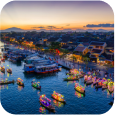








The Mekong Delta is one of Vietnam’s most distinctive regions—an intricate network of rivers, canals, orchards, and riverside towns where life still flows to the rhythm of the water. Among its most iconic experiences are the floating markets in mekong delta, where trading boats gather at sunrise to sell fruit, vegetables, breakfast dishes, and everyday goods directly from the river.
Visiting a floating market is more than a sightseeing stop. It’s a window into a water-based culture shaped by geography and tradition—where boats function as vehicles, shops, and meeting points. This guide covers what floating markets are, which ones are worth your time, when to go for the best atmosphere, and how to visit in a respectful way that supports local communities.
What Are Floating Markets (and Why Do They Matter)?
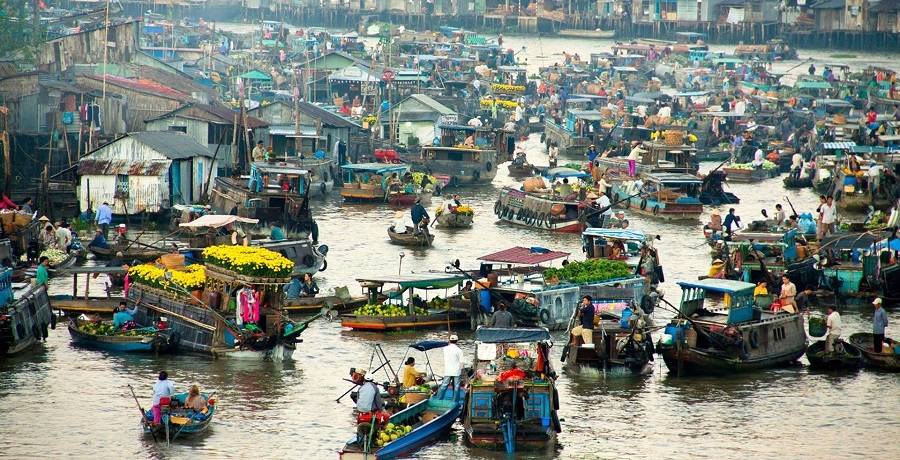
Floating markets developed because waterways were historically the fastest and most practical way to move goods in southern Vietnam. Traders from orchard villages would load fruit and produce onto boats, then head toward larger canal intersections where buyers and sellers could meet. Instead of a land-based marketplace, the river became the trading floor.
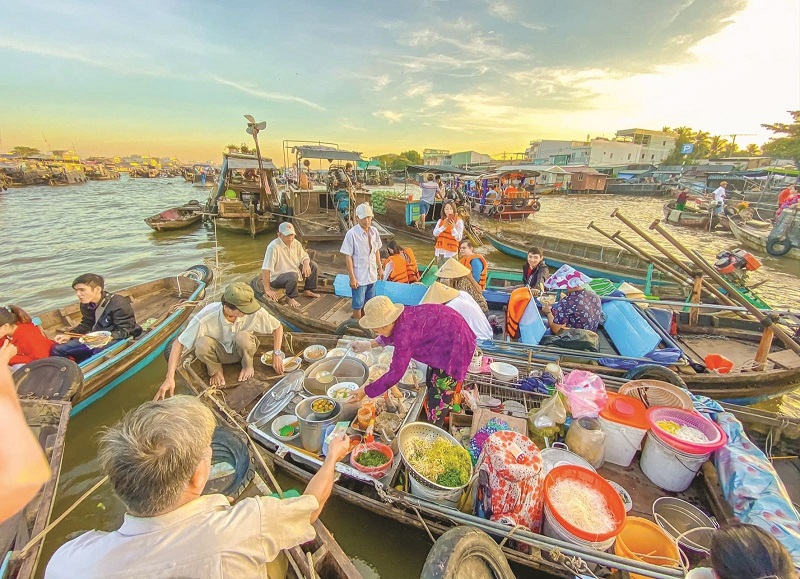
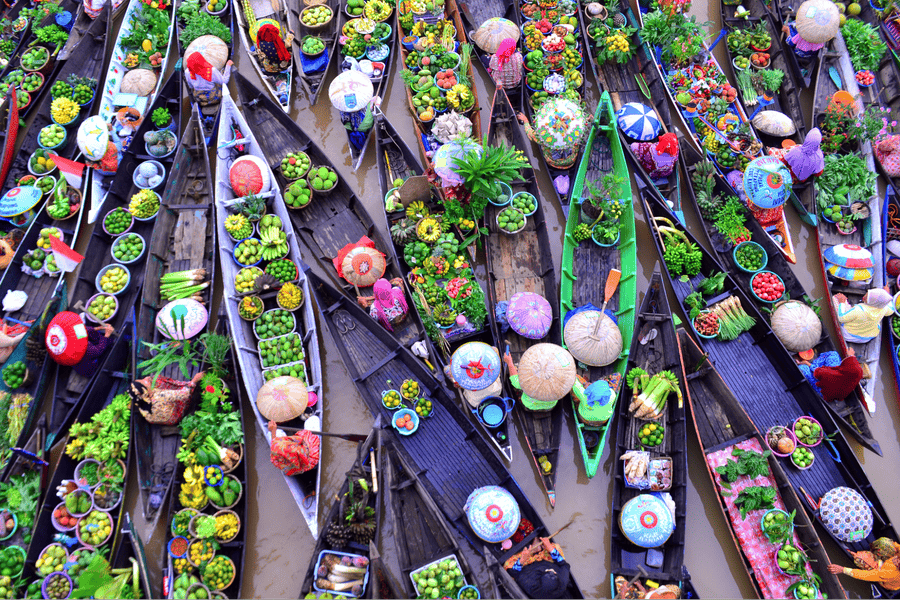
Today, the floating markets in mekong delta still reflect this river economy. Some boats specialize in one item—pineapples, pumpkins, coconuts, watermelons—while smaller boats act like “mobile cafés,” delivering Vietnamese coffee or bowls of noodle soup to shoppers and traders.
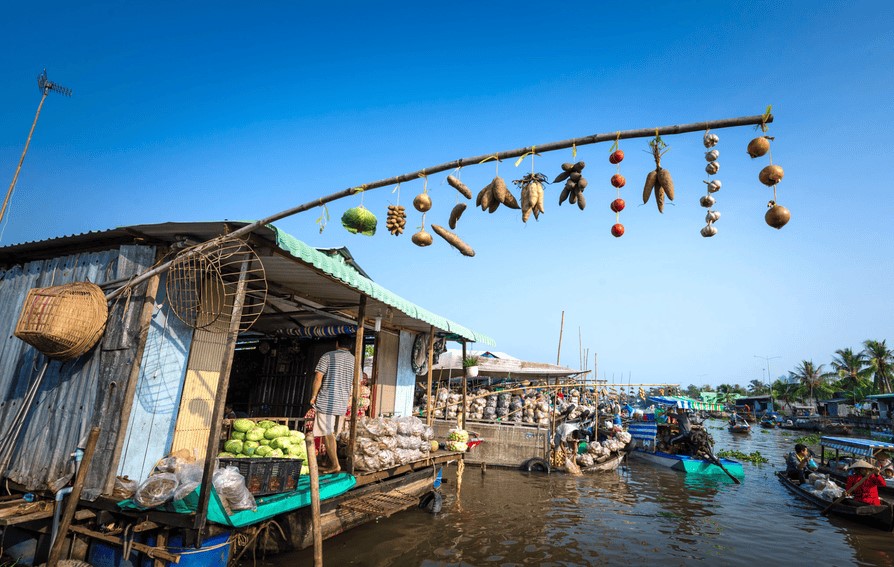
A signature detail you’ll often notice is the “cây bẹo”—a tall pole mounted on a boat with a sample product hung high (like a pineapple or melon) so buyers can identify what’s for sale from a distance. It’s a simple, clever system designed for busy waterways.
Best Floating Markets in the Mekong Delta
Not all floating markets feel the same. Some are larger and easier to visit, while others are quieter and more local. These are the best options to consider.
1) Cai Rang Floating Market (Can Tho)
Cai Rang is the most well-known and the easiest floating market to visit. It’s often the first choice for travelers because it offers classic “busy market on the water” scenes, especially at sunrise.
Why it’s worth visiting:
-
Iconic Mekong Delta atmosphere
-
Convenient access from Can Tho
-
Great sunrise photography
-
Plenty of food boats (coffee, hủ tiếu noodles, snacks)
What to expect: Cai Rang has changed over the years—there are fewer wholesale trading boats than in the past—but it remains the most recognizable of the floating markets in mekong delta and is still a memorable early-morning experience.
2) Phong Dien Floating Market (Can Tho)
Phong Dien is smaller and often feels more relaxed. Many visitors prefer it because the pace can be calmer and the canals around it are scenic.
Why it’s a great alternative:
-
More intimate, less crowded feel
-
Better chance to see smaller trading boats
-
Easy to combine with quiet canal cruising and orchard stops
Tip: Go early and ask your boat operator to include smaller canals for a more peaceful and photogenic route.
3) Long Xuyen Floating Market (An Giang)
Long Xuyen is less touristy and can feel more like a working market rather than a “tour highlight.” It’s ideal if you want something off the beaten path and have extra time.
Why consider Long Xuyen:
-
Strong local atmosphere
-
Great documentary-style photography
-
A different perspective on river commerce
Best Time to Visit Floating Markets
The most important rule is simple: go early.
Ideal time window
-
5:30 AM – 7:30 AM is the best time for activity and soft light
-
By 9:00 AM, trading typically slows down and the heat increases
Best season
You can visit year-round, but conditions vary:
-
Dry season (roughly December–April): easier weather, clearer skies
-
Rainy season (roughly May–November): greener landscapes and dramatic skies, with occasional showers
If you want the most atmospheric experience of the floating markets in mekong delta, choose a sunrise departure.
How to Visit (Without Confusion)
Use Can Tho as your base
Can Tho is the most convenient base for visiting Cai Rang and Phong Dien. It has good hotels, easy transport, and boat departures are simple to arrange.
Choose shared tour or private boat
-
Shared tours: budget-friendly, can feel busy, fixed timing
-
Private boats: flexible, better for photography, easier to explore smaller canals
A private boat is often worth it if you want a calmer ride and the freedom to slow down, reposition for photos, or add stops.
Before heading south, you may also enjoy our guide to Ho Chi Minh City
What to request from your boat route
For a more complete morning, aim for:
-
floating market visit (Cai Rang or Phong Dien)
-
small canal cruise (quieter and scenic)
-
optional orchard stop or local workshop (rice noodles, cocoa, coconut products)
What to Eat on the Water
One of the best parts of visiting the floating markets in mekong delta is having breakfast directly from a boat. It’s simple, local, and memorable.
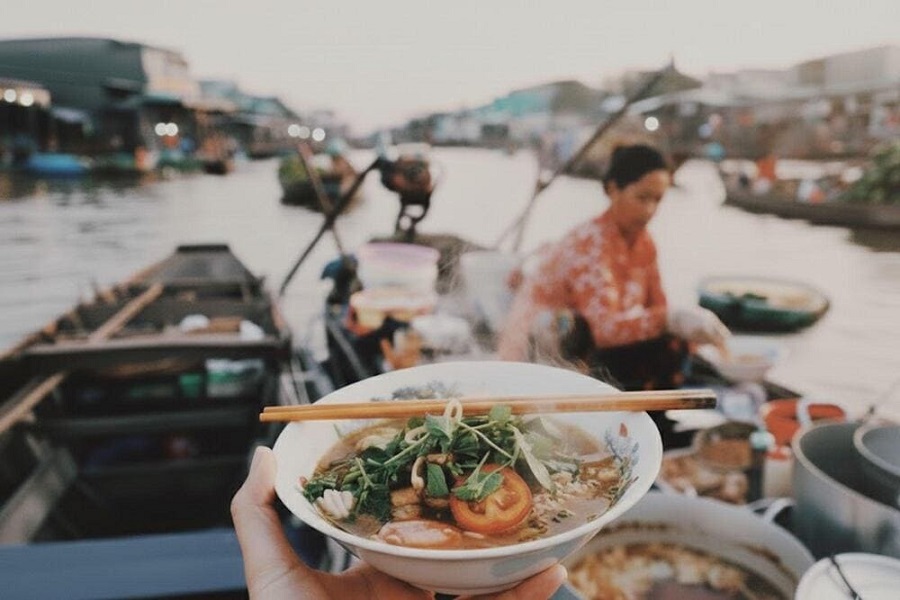
Popular options include:
-
Hủ tiếu (southern noodle soup)
-
Bánh mì (Vietnamese sandwich)
-
Fresh pineapple prepared on the spot
-
Vietnamese iced coffee from a small “floating café”
Bring small cash in Vietnamese dong for convenience, and enjoy the friendly, everyday rhythm of the market.
Photography Tips (for Better Market Photos)
To capture strong images:
-
Go at sunrise for soft light and reflections.
-
Use a fast shutter speed to freeze moving boats.
-
Shoot wide for atmosphere, then zoom in for details (hands, fruit piles, cooking boats).
-
Be respectful—ask before taking close-up portraits.
-
Protect your gear with a waterproof bag, especially in rainy season.
If photography is a priority, a private boat gives you more control and time to wait for the best moments.
Responsible Travel: How to Visit Respectfully
Floating markets are living communities, not staged attractions. Visiting thoughtfully helps keep the experience positive for both visitors and local families.
Simple ways to travel responsibly:
-
Buy something small (coffee or fruit) to support vendors
-
Avoid loud behavior and don’t block trading boats
-
Ask before photographing faces up close
-
Choose operators who respect the market’s rhythm (no chasing boats or intrusive stops)
When approached respectfully, visiting the floating markets in mekong delta becomes a cultural experience rather than a quick photo stop.
Suggested Half-Day Itinerary (Easy and Effective)
4:45–5:15 AM – Depart from Can Tho pier
5:30–6:45 AM – Floating market experience (Cai Rang or Phong Dien)
6:45–7:15 AM – Breakfast on the water (coffee + noodle boat)
7:15–8:15 AM – Cruise through smaller canals and riverside villages
8:15–9:00 AM – Optional stop: orchard or local workshop
9:30 AM – Return to hotel
This itinerary captures the best activity window and avoids the late-morning slowdown.
Where to Stay
If your main goal is to experience the floating markets in mekong delta, stay in Can Tho for easy early departures and simple logistics.
For more Vietnam travel inspiration and updates, follow Maverick Journeys on Facebook: https://www.facebook.com/maverick.journeys.vietnam/
Final Thoughts
The floating markets in mekong delta remain one of Vietnam’s most distinctive cultural experiences. Even as the region modernizes, sunrise boat scenes, river breakfast boats, and fruit-laden traders still offer a meaningful glimpse into southern Vietnam’s water-based way of life.
If you can only visit one market, start with Cai Rang for the classic experience. If you prefer something quieter, choose Phong Dien. Whichever you pick, go early, stay respectful, and let the river set the pace.