










Golden rice terraces spilling down mountain slopes. Cooler mornings in Hanoi. Mist drifting through highland valleys. Buckwheat flowers appearing between the rocky mountains of Ha Giang.
Autumn reveals a different side of Vietnam.
For international visitors, Vietnam Autumn Travel can be especially rewarding from September to November, particularly in Northern Vietnam. The intense heat of summer gradually eases, harvest season transforms mountain landscapes, and several destinations enter some of their most photogenic months.
But there is something important to understand before planning your trip.
Vietnam is a long country with several climate zones. September to November does not mean the same weather everywhere. While Northern Vietnam often enjoys some of its most attractive seasonal conditions, parts of Central Vietnam can experience significant rainfall and storms during this period.
Choosing the right destination therefore matters.
Here are eight beautiful places to experience Vietnam between September and November — and what makes each one special.
1. Hanoi – Autumn Atmosphere, Street Food and Local Life
If there is one Vietnamese city closely associated with autumn, it is Hanoi.
After the humid summer months, the capital gradually becomes more comfortable for exploring on foot. September to November often brings cooler conditions and a softer atmosphere to the city.
But Hanoi in autumn is about more than temperature.
Walk around Hoan Kiem Lake in the morning and watch the city slowly wake up. Wander through the Old Quarter, stop at a sidewalk café, explore the tree-lined streets or spend an afternoon around West Lake.
This is also a wonderful season for food.
One of Hanoi’s distinctive autumn specialties is cốm, young green rice traditionally associated with the season.

What to Do in Hanoi in Autumn
Spend a morning around Hoan Kiem Lake and the Old Quarter, explore quieter streets away from the main tourist areas, try seasonal food and make time for Hanoi’s café culture.
Autumn is also a good season to slow down.
Instead of trying to visit ten attractions in one day, leave space for simply walking through the city and observing everyday life.
Best time: September to November
Best for: Culture, food, photography and first-time visitors
For more ideas, explore our Hanoi Travel Guide.
2. Mu Cang Chai – Golden Rice Terraces at Harvest Time
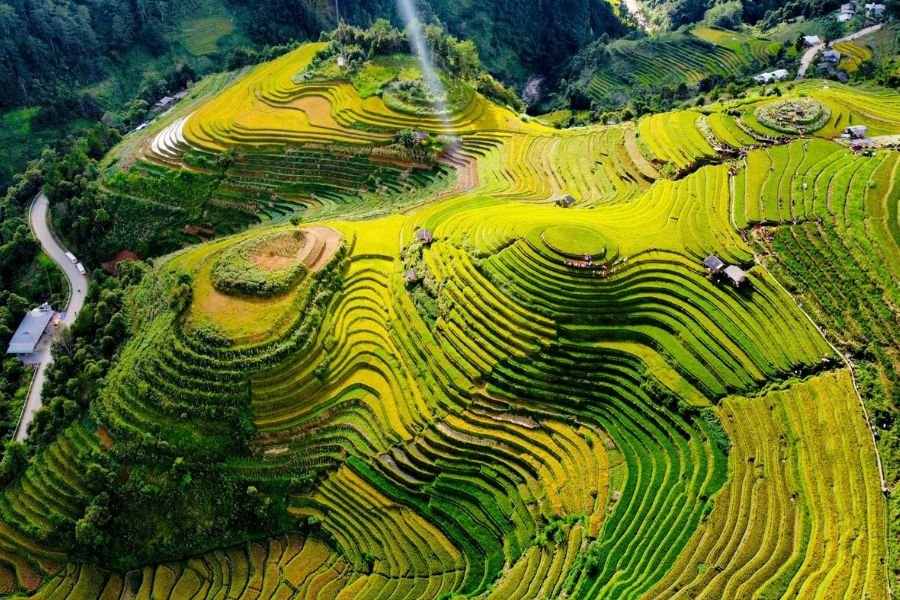
For landscape lovers, Mu Cang Chai can be one of the highlights of a Vietnam autumn journey.
Located in the mountainous northwest, the area is famous for spectacular terraced rice fields. During harvest season, hillsides that were green through summer begin turning shades of yellow and gold.
The result is one of Northern Vietnam’s most recognizable landscapes.
Mountain roads curve above valleys covered in terraces. Small villages appear between the fields. Farmers work across hillsides shaped by generations of agriculture.
Where to See the Rice Terraces
La Pan Tan, Che Cu Nha and the landscapes around Khau Pha Pass are among the areas travelers commonly explore.
Photographers often aim for early morning or late afternoon, when softer light adds depth and texture to the terraces.
However, harvest dates are agricultural rather than fixed tourist schedules.
The exact moment when fields become golden — and when they are harvested — varies between locations and from year to year.
If golden rice is the main purpose of your trip, check current local conditions shortly before traveling.
Best time: September to early October for typical harvest scenery
Best for: Rice terraces, photography and mountain landscapes
3. Sapa – Rice Terraces, Trekking and Mountain Mornings
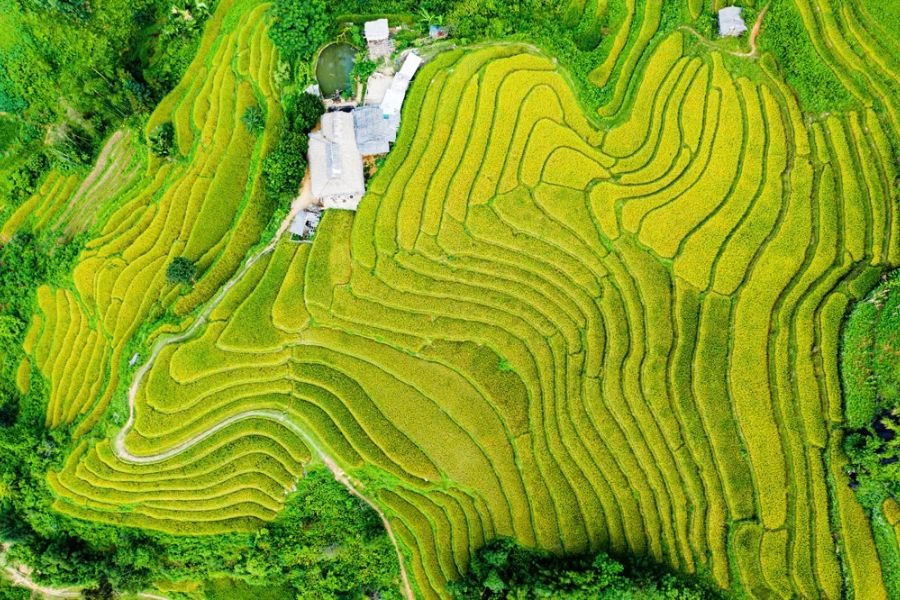
Sapa is one of Northern Vietnam’s most established mountain destinations, and autumn offers a compelling combination of scenery and outdoor activities.
The surrounding valleys are shaped by terraced rice fields and ethnic minority villages, with the Hoang Lien Son mountains creating a dramatic backdrop.
September and early autumn can be particularly beautiful as the rice fields move toward harvest.
But Sapa is not only about seeing the landscape from a viewpoint.
The best way to experience the region is often on foot.
Trek Beyond Sapa Town
Consider spending part of your trip trekking through valleys and villages rather than remaining entirely in Sapa town.
Depending on your itinerary, traveling with a local guide can provide valuable context about the landscape, communities and agricultural traditions.
Weather in the mountains can change quickly, so pack layers and light rain protection even when the forecast looks promising.
And remember that rice harvest timing varies between valleys.
By later autumn, the scenery may look very different from the famous golden-rice photographs seen online.
Best time: September to October
Best for: Trekking, mountain scenery and cultural experiences
4. Pu Luong – Slow Travel Among Rice Terraces and Villages
If you want rice terraces and mountain scenery but prefer somewhere quieter than Vietnam’s most famous highland destinations, consider Pu Luong.
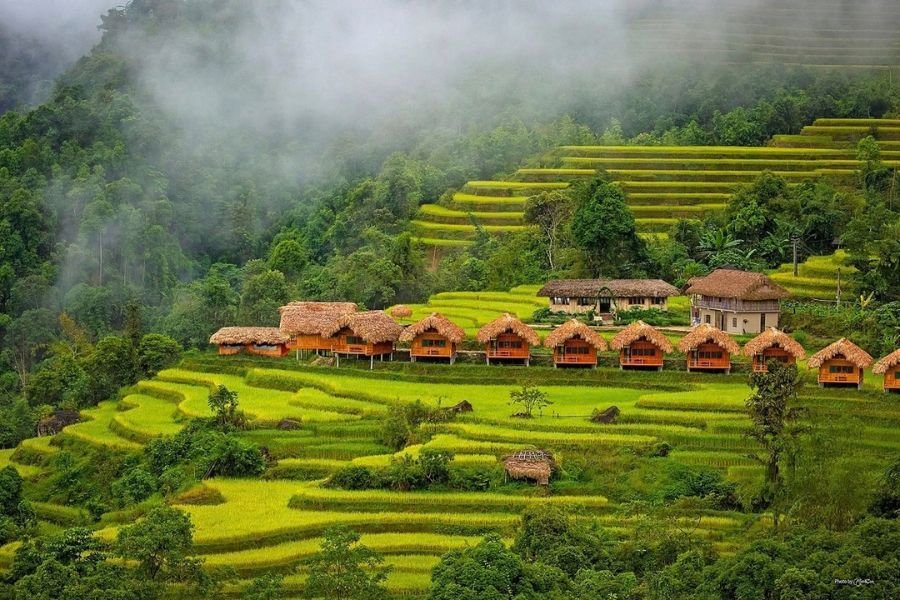
Located southwest of Hanoi, Pu Luong combines terraced fields, forested mountains, traditional villages and rural homestays.
It is especially well suited to travelers who do not need a long checklist of attractions.
Wake up overlooking the valley.
Walk between villages.
Watch the light change over the rice fields.
Have dinner at your accommodation and listen to the countryside become quiet after dark.
That slower rhythm is part of the experience.
How Long Should You Stay?
For many travelers, two nights and three days provides a comfortable introduction without making the journey feel rushed.
It gives you time for a trek or village walk while still leaving space to enjoy your accommodation and surroundings.
Best time: September to October, depending on rice conditions
Best for: Slow travel, couples, nature and village stays
Read our complete Pu Luong Travel Guide for more practical planning advice.
5. Ha Giang – Mountain Roads and Buckwheat Flower Season
Ha Giang feels different from almost anywhere else in Vietnam.
Here, the landscape becomes increasingly dramatic as roads climb through limestone mountains, deep valleys and high passes.
The famous route through Dong Van and Meo Vac includes some of Northern Vietnam’s most spectacular scenery, including Ma Pi Leng Pass and views toward the Nho Que River.
Autumn adds another seasonal attraction.
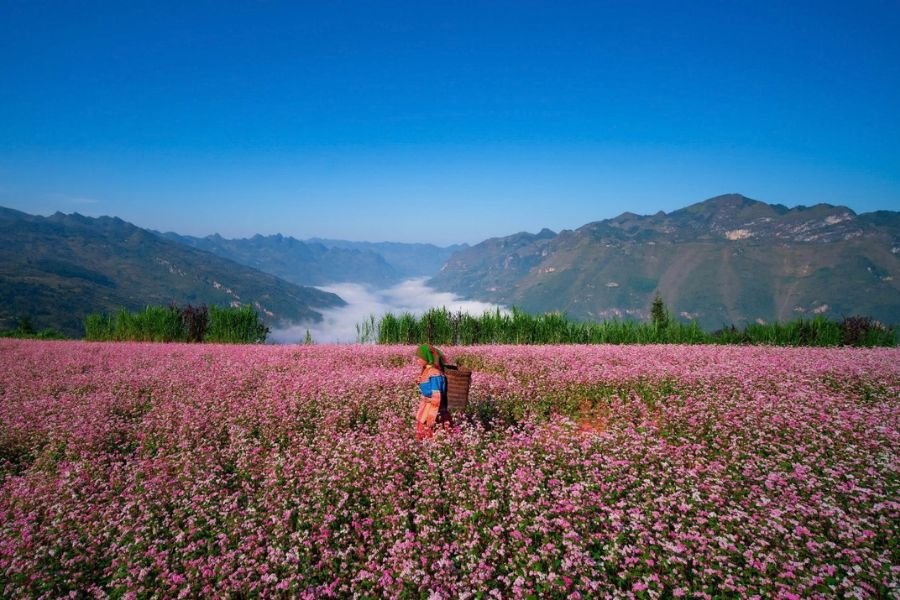
As the season progresses, buckwheat flowers appear in parts of the province, adding soft shades of pink and white to Ha Giang’s rugged mountain landscapes.
Do You Need to Ride a Motorbike?
No.
The Ha Giang Loop is strongly associated with motorbike travel, but visitors do not have to ride themselves.
Mountain roads require experience, appropriate driving credentials and confidence in changing road and weather conditions.
If you are not an experienced and appropriately licensed rider, traveling with an experienced driver or joining an organized trip allows you to enjoy the landscape without operating the motorcycle yourself.
Best time: October to November
Best for: Mountain scenery, road trips, photography and adventure
6. Ninh Binh – Limestone Landscapes in Softer Weather
Ninh Binh is not an autumn destination in exactly the same way as Mu Cang Chai or Sapa.
You should not travel here expecting endless golden mountain terraces.
What Ninh Binh offers instead is a combination of limestone karsts, rivers, temples and countryside within relatively easy reach of Hanoi.
A boat journey through Trang An or Tam Coc provides a completely different landscape from Northern Vietnam’s mountain destinations.
Climb to the Hang Mua viewpoint and the scale of the region becomes much clearer: rivers winding between limestone formations and agricultural land stretching across the valley floor.
Why Include Ninh Binh in an Autumn Itinerary?
Because it complements the mountains.
A Northern Vietnam autumn trip does not need to consist entirely of rice terraces.
Combining Hanoi, Ninh Binh and one mountain destination creates more variety while keeping travel logistics manageable.
Best for: Boat journeys, limestone scenery, photography and short trips from Hanoi
7. Ha Long Bay – Limestone Islands and an Autumn Cruise
Autumn can also be a rewarding time to experience one of Vietnam’s most famous landscapes.
From September to November, conditions in Northern Vietnam gradually become cooler, making a cruise through Ha Long Bay an attractive addition to an autumn itinerary.
Spend a night on the water rather than rushing through a short day trip if your schedule allows.
Watching the limestone islands change color as the sun goes down — and waking up surrounded by the bay the following morning — creates a very different experience from seeing Ha Long on a quick day excursion.
Keep Your Schedule Flexible
Weather still matters.
Storms and poor conditions can affect cruise operations, particularly during transitional weather periods.
Keep an eye on forecasts and follow instructions from your cruise operator and local authorities.
Best time: September to November, weather permitting
Best for: Couples, first-time visitors, cruises and iconic scenery
For more ideas on combining Ha Long Bay with other destinations, explore our guide to the Best Places to Visit in Vietnam.
8. Da Lat – A Cooler Highland Escape
Autumn in Da Lat is different again.
Located in Vietnam’s Central Highlands, the city is known for cooler temperatures, pine-covered landscapes, coffee culture and countryside attractions.
Travelers should, however, arrive with realistic weather expectations.
September and October can still bring plenty of rain to Da Lat, while conditions generally begin transitioning toward a drier period later in the year.
That does not mean you cannot visit earlier in autumn.
It simply means you should plan with flexibility.
Why Visit Da Lat in Late Autumn?
By November, Da Lat can become particularly appealing for travelers who enjoy cooler highland destinations.
Spend time exploring cafés, countryside landscapes, flower gardens and nearby waterfalls.
Bring a light jacket for cooler mornings and evenings, and keep some flexibility in your daily plans.
Best time within this guide: November
Best for: Couples, cafés, highland scenery and slower travel
Vietnam Autumn Travel: September vs October vs November
Choosing the right month depends on what you want to experience.
| Month | Particularly Good For | Things to Consider |
|---|---|---|
| September | Hanoi, Mu Cang Chai, Sapa | Golden rice timing varies; some areas still see rain |
| October | Mu Cang Chai, Sapa, Pu Luong, Northern mountains | Excellent transition month, but check local harvest timing |
| November | Hanoi, Ha Giang, Da Lat | Cooler north; seasonal flowers in Ha Giang; Da Lat begins moving toward drier conditions |
There is no single “best” month for the entire country.
The advantage of Vietnam Autumn Travel is being able to build an itinerary around the landscapes and conditions you prefer.
What About Hoi An, Hue and Central Vietnam?
This is where careful travel planning becomes important.
Hoi An and Hue are outstanding destinations, but September to November overlaps with the wetter part of the year in Central Vietnam.
Heavy rain, storms and flooding can affect travel during this period.
This does not mean you must avoid Central Vietnam completely.
Many travelers still have enjoyable trips during these months.
However, avoid building an inflexible itinerary around guaranteed sunshine.
Monitor weather forecasts close to your travel dates, leave some flexibility in your plans and follow local advice if storms or flooding are forecast.
For autumn specifically, travelers seeking classic seasonal scenery may prefer to prioritize Northern Vietnam.
If Central Vietnam remains part of your itinerary, our Hoi An Travel Guide and Hue Travel Guide can help with your planning.
What to Pack for Vietnam in Autumn
Packing depends heavily on your route.
For Hanoi and lower elevations, lightweight clothing combined with a light layer is generally useful.
Mountain destinations require more preparation.
Temperatures can feel significantly cooler in the early morning and evening, particularly at higher elevations.
Bring comfortable walking shoes, a lightweight waterproof layer, sun protection and clothing you can layer.
A small waterproof bag for electronics is also useful when trekking or traveling through mountain regions.
If your itinerary includes Central Vietnam, stronger rain protection becomes more important.
How Long Do You Need for an Autumn Trip?
For a short trip of around one week, avoid trying to cover the entire country.
A route such as Hanoi → Ninh Binh → Pu Luong provides culture, limestone landscapes and countryside without excessive travel.
With 10 days, you could combine Hanoi with Ninh Binh and a mountain destination such as Sapa or Ha Giang.
With two weeks, there is much more room to include several regions without turning every second day into a transfer day.
For help building a longer route, see our Vietnam Itinerary.
Is Autumn a Good Time to Visit Vietnam?
Yes — with an important qualification.
Autumn can be an excellent time to visit Vietnam, especially if Northern Vietnam is a priority.
September and October bring golden rice landscapes to parts of the northern highlands, Hanoi becomes increasingly pleasant for city exploration, and November offers a different side of destinations such as Ha Giang.
But Vietnam’s geography means you should never treat nationwide weather as uniform.
A beautiful dry morning in Hanoi tells you little about conditions in Hoi An, Da Lat or Phu Quoc.
Plan region by region.
That one principle can make a major difference to an autumn trip.
Vietnam Autumn Travel FAQ
When Is Autumn in Vietnam?
For travel planning, September through November is commonly treated as the autumn period, particularly in Northern Vietnam.
However, seasonal conditions differ significantly between the country’s regions.
Where Is the Best Place to See Golden Rice Fields?
Mu Cang Chai is one of the strongest choices, particularly around the typical September-to-early-October harvest period.
Sapa, Pu Luong and other northern highland areas can also offer beautiful rice landscapes, but exact harvest timing varies by location and year.
Is Hanoi Worth Visiting in Autumn?
Yes.
Autumn is one of the most atmospheric periods for exploring Hanoi, with cooler conditions than midsummer, seasonal food and excellent opportunities for walking around the city.
Is November Too Late for Autumn Travel in Vietnam?
No.
November can be particularly attractive for Hanoi and Ha Giang, while Da Lat begins transitioning toward its drier period.
However, most famous golden rice harvest scenes in Northern Vietnam occur earlier, so do not expect September-style rice terraces everywhere in November.
Is Central Vietnam Good in October and November?
It can still be visited, but travelers should be prepared for rainfall and potentially disruptive weather.
Hue and Hoi An experience wetter conditions during this period, so itinerary flexibility is important.
What Is the Best Autumn Itinerary for First-Time Visitors?
For travelers particularly interested in autumn scenery, a Northern Vietnam-focused itinerary works well.
Hanoi can provide the cultural base, Ninh Binh adds limestone landscapes, and Sapa, Pu Luong, Mu Cang Chai or Ha Giang can add mountain scenery depending on the month and available time.
Final Thoughts: Why Experience Vietnam in Autumn?
Autumn in Vietnam is not defined by one landscape.
In Hanoi, it can mean cooler mornings, long walks and seasonal flavors.
In Mu Cang Chai and Sapa, it can mean mountains covered in ripening rice.
In Pu Luong, it can mean waking up above a quiet valley.
And in Ha Giang, autumn brings dramatic roads, rocky mountains and seasonal flowers.
The key to planning Vietnam Autumn Travel is understanding that the season changes as you move across the country.
Don’t try to chase perfect weather everywhere.
Choose the landscapes and experiences that matter most to you, check local conditions close to your travel dates and leave enough time to enjoy each destination without rushing.
Sometimes the most memorable part of autumn in Vietnam is not a famous viewpoint at all.
It is a misty mountain morning, a quiet Hanoi street or a golden field you discover along the way.