








Imagine traveling through the mountains of northern Vietnam, where dramatic limestone peaks rise above peaceful villages and delicate pink flowers brighten the rocky hillsides. This is Ha Giang during buckwheat flower season — one of the most beautiful times to discover Vietnam’s northern highlands.
Every autumn, Ha Giang buckwheat flowers bring shades of white, pink, and purple to the rugged landscapes of the Dong Van Karst Plateau. Against the gray limestone mountains, these tiny blossoms create a remarkable contrast that attracts photographers, nature lovers, and adventurous travelers.
But this season offers much more than beautiful photographs. It is also an opportunity to explore traditional villages, experience local culture, and discover some of Vietnam’s most spectacular mountain scenery.
In this guide, you’ll discover when the flowers bloom, the best places to see them, and practical tips for planning an unforgettable Ha Giang adventure.
When Is Ha Giang Buckwheat Flower Season?
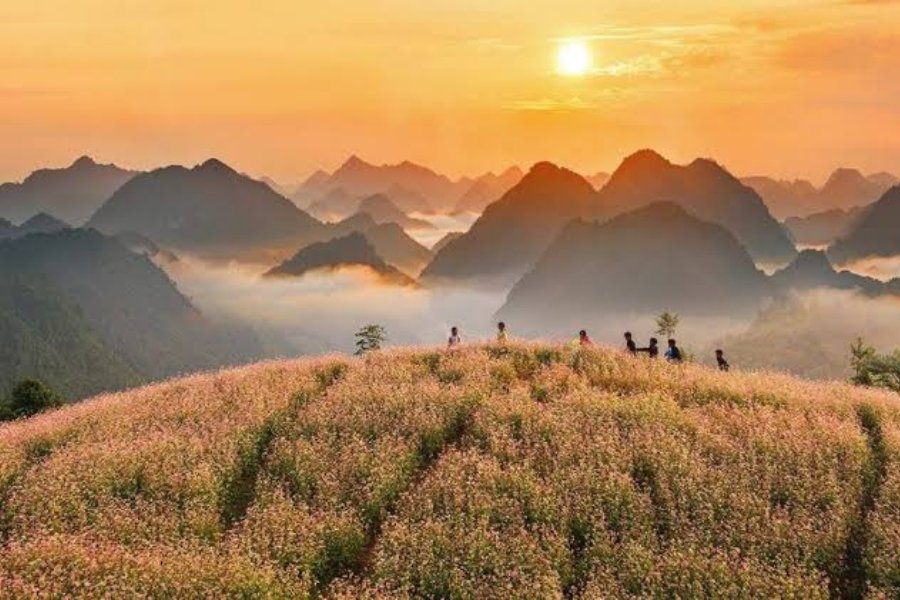
The Ha Giang buckwheat flower season generally runs from October to December, although the exact blooming period varies depending on weather conditions, altitude, and planting schedules.
For travelers hoping to see colorful fields, late October through November is usually the best time to visit.
The flowers gradually change color as they mature, beginning with delicate white blossoms before turning pale pink, deeper pink, and sometimes reddish-purple.
What to Expect Throughout the Season
- Early October: Early blossoms may appear in selected cultivated fields.
- Late October: More fields begin flowering, creating patches of white and pink across the mountains.
- November: Often the most rewarding period for flower viewing and photography.
- December: Later blooms may remain in some locations, depending on planting and weather conditions.
Not every field blooms at the same time. Local farmers may plant buckwheat on different schedules, so the best viewing locations can change from week to week.
Travel tip: Before your trip, check with a local guide or accommodation provider to find out which flower fields are currently in bloom.
Why Are Buckwheat Flowers Special in Ha Giang?
Known locally as hoa tam giác mạch, buckwheat flowers have become one of the most recognizable symbols of autumn in Ha Giang.
Unlike flowers grown purely for decoration, buckwheat has traditionally been cultivated as a food crop in Vietnam’s northern highlands.
Its seeds can be processed into flour and used in traditional dishes, including buckwheat cakes.
The flowers are small and delicate, but when they bloom together across mountain fields, they create beautiful carpets of color.
Their appearance is especially striking against the limestone formations of the Dong Van Karst Plateau.
For local communities, buckwheat is more than a seasonal attraction. It reflects the relationship between agriculture, food traditions, and everyday life in the mountains.
7 Best Places to See Ha Giang Buckwheat Flowers
Some of the most popular flower-viewing locations are found around the Dong Van Karst Plateau, where cultivated fields meet dramatic mountain landscapes.
Here are seven places worth including in your journey.
1. Sung La Valley — A Beautiful Valley of Flowers
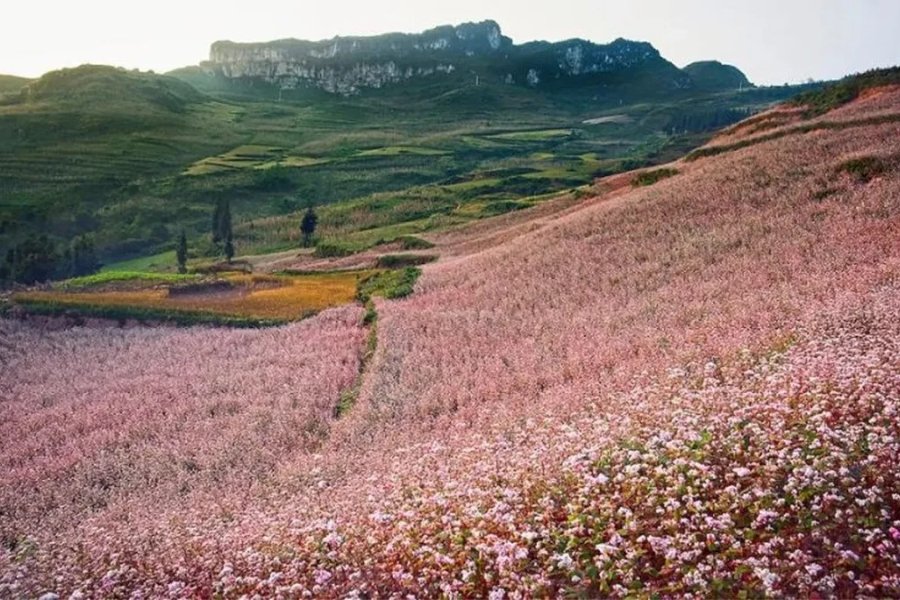
Sung La Valley is one of the most famous places to admire Ha Giang buckwheat flowers.
Surrounded by limestone mountains, the valley features traditional houses, cultivated fields, and peaceful villages.
During flower season, pink and white blossoms add color to the rocky landscape, creating beautiful photography opportunities.
One of the area’s highlights is Lung Cam Cultural Village, where travelers can discover traditional architecture and learn about local community life.
Why visit? Sung La combines seasonal flowers, mountain scenery, and cultural experiences in one memorable destination.
Photography tip: Visit early in the morning for softer natural light and a quieter atmosphere.
2. Pho Cao — Traditional Villages and Mountain Scenery
Pho Cao is another rewarding stop along the route toward Dong Van.
The area is known for its traditional houses, rural landscapes, and dramatic mountain surroundings.
During the flowering season, buckwheat fields may appear alongside village roads and agricultural areas.
Compared with some of the busier photography destinations, Pho Cao can offer a more peaceful atmosphere.
Take time to explore the surroundings, admire the traditional architecture, and appreciate everyday life in the highlands.
Why visit? Pho Cao is ideal for travelers who enjoy quiet villages, cultural experiences, and natural scenery.
3. Lung Cu — Flowers Near Vietnam’s Northern Frontier
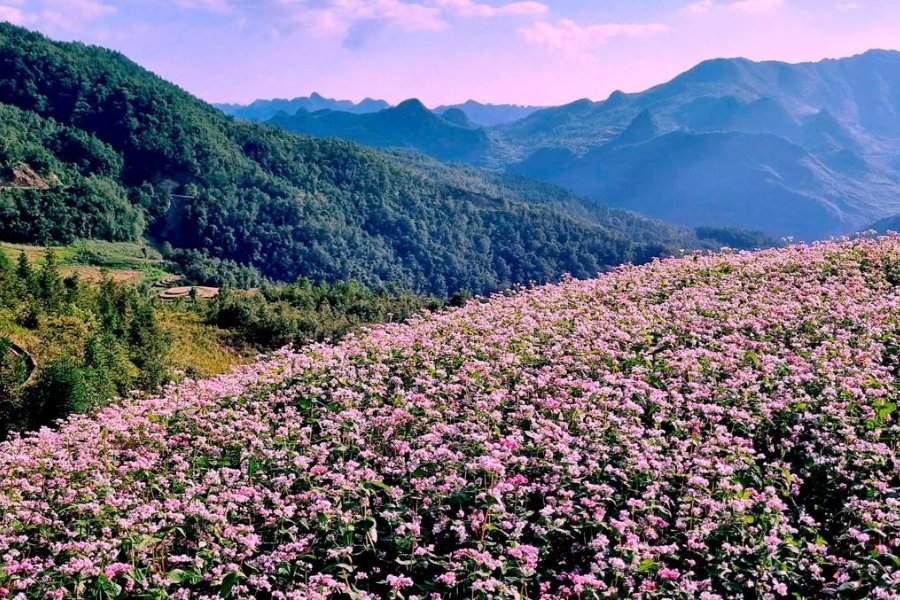
Lung Cu is famous for its flag tower and mountainous location near Vietnam’s northern border.
During buckwheat season, flower fields in the surrounding area can create beautiful foregrounds for photographs of the landscape.
The journey to Lung Cu is also memorable, featuring winding roads, traditional villages, and panoramic mountain views.
Visitors can combine flower viewing with a visit to Lung Cu Flag Tower and nearby settlements.
Why visit? Lung Cu offers a distinctive combination of seasonal flowers, northern mountain scenery, and cultural landmarks.
4. Dong Van — Flowers, Heritage, and Local Culture
Dong Van is one of the main destinations for travelers exploring the northern section of the Ha Giang Loop.
Its historic old quarter, surrounding limestone mountains, and traditional villages make it an excellent place to spend a night.
During flower season, visitors can explore cultivated fields outside town while discovering local food and cultural experiences.
The surrounding Dong Van Karst Plateau is recognized for its remarkable geological heritage and distinctive mountain landscapes.
Don’t miss the opportunity to wander through Dong Van Old Quarter in the evening or explore the local market if your visit coincides with market day.
Why visit? Dong Van combines convenient accommodation, cultural attractions, and access to nearby flower-viewing locations.
5. Ma Pi Leng Pass — Dramatic Views Beyond the Flowers
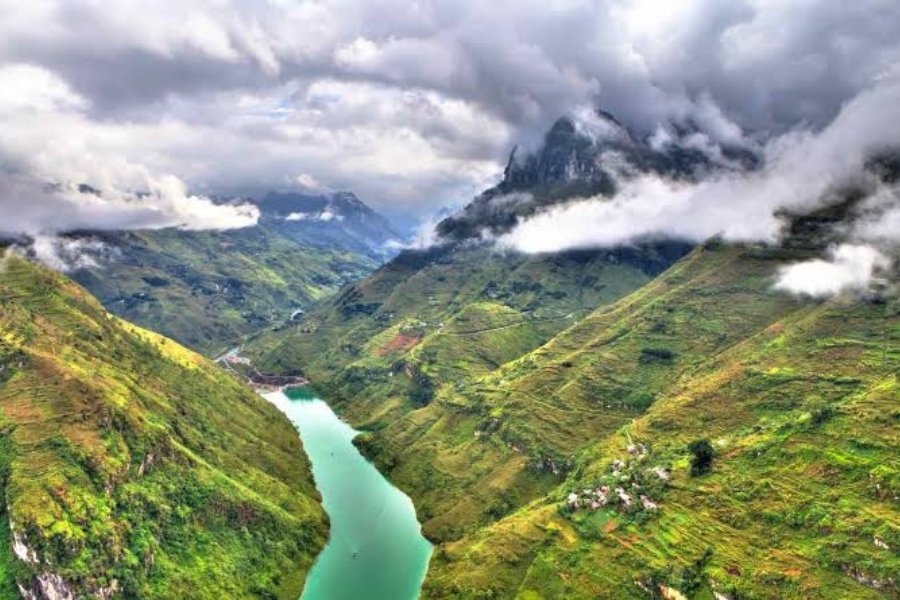
Ma Pi Leng Pass is one of the most spectacular mountain roads in Vietnam.
Its steep slopes, winding roads, and breathtaking views toward the Nho Que River make it a highlight of the Ha Giang Loop.
Although the pass itself is better known for dramatic scenery than extensive flower fields, buckwheat can be found in selected cultivated areas along the wider route.
The combination of rugged mountains and seasonal colors makes this region particularly photogenic.
Why visit? Even if the flowers are limited during your visit, the mountain scenery alone makes Ma Pi Leng worth experiencing.
Safety tip: Stop only at safe viewpoints and avoid standing on roads or near unprotected cliff edges for photographs.
6. Thach Son Than — Flowers Among Limestone Formations
Thach Son Than is another well-known seasonal photography area on the Dong Van Karst Plateau.
Here, buckwheat fields can be seen against unusual limestone formations, creating an impressive contrast between delicate flowers and rugged rock.
The surrounding scenery highlights the geological beauty that makes northern Ha Giang so distinctive.
Because cultivated fields and visitor access may change each year, ask local guides which locations are currently suitable for flower viewing.
Why visit? Thach Son Than is particularly appealing to photographers looking for unusual mountain landscapes.
7. Suoi Thau Steppe — A Different Side of Ha Giang
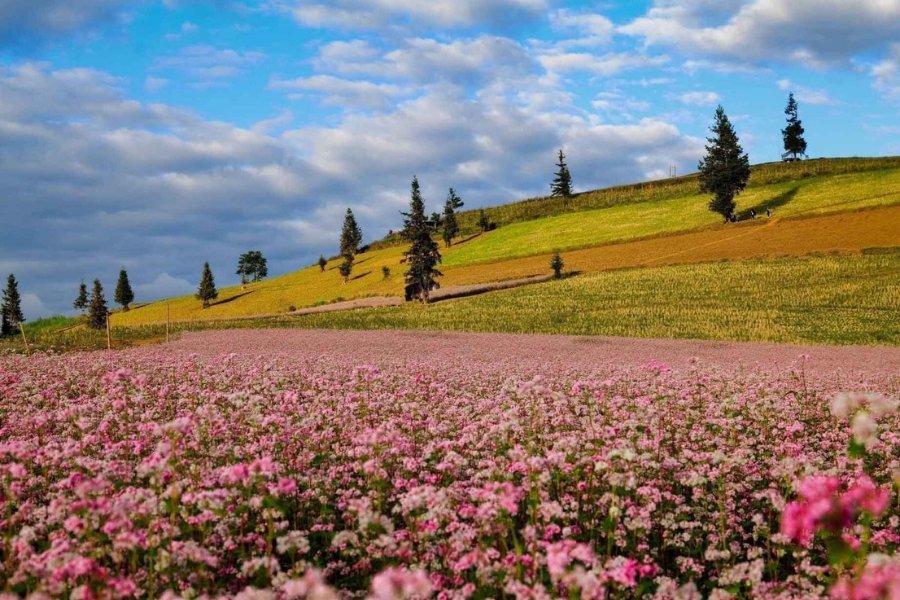
For travelers with extra time, Suoi Thau Steppe offers a different landscape from the classic Dong Van route.
Located in the Xin Man area, it features open grasslands, distant mountains, and seasonal flowers.
During the blooming season, buckwheat flowers can add soft pink and white colors to the expansive scenery.
However, Suoi Thau is not a convenient stop on the standard three- or four-day Ha Giang Loop. Visiting generally requires a separate detour and additional travel time.
Why visit? Suoi Thau is ideal for travelers seeking open landscapes and a less conventional northern Vietnam itinerary.
Ha Giang Buckwheat Flower Festival: What to Expect
The buckwheat flower festival celebrates the natural beauty and cultural traditions of Vietnam’s northern highlands.
Seasonal activities have included cultural performances, traditional music, local food, crafts, and community events.
For travelers, the festival offers an opportunity to experience more than the flowers themselves.
You may discover traditional performances, regional cuisine, and cultural displays representing communities living across the Dong Van Plateau.
Festival dates and individual activities can vary from year to year, so check the latest local announcements before planning your visit.
If your journey coincides with festival activities, consider spending an additional evening in Dong Van.
Accommodation can become busier during popular weekends, making advance reservations a sensible choice.
How to Plan a Ha Giang Buckwheat Flower Trip
One of the easiest ways to explore the main flower-viewing areas is to include them in a Ha Giang Loop itinerary.
Most international travelers begin their journey in Hanoi before heading north to the Ha Giang area.
A three- or four-day journey can cover many of the region’s most famous landscapes, although longer trips allow more time for photography and cultural experiences.
Suggested 4-Day Ha Giang Itinerary
Day 1: Ha Giang – Quan Ba – Yen Minh
Begin your journey through the northern mountains, stopping at scenic viewpoints and traditional villages.
Enjoy the dramatic landscapes around Quan Ba before continuing toward Yen Minh.
Day 2: Yen Minh – Pho Cao – Sung La – Dong Van
Explore some of the region’s best-known buckwheat flower areas.
Visit traditional villages, admire mountain scenery, and spend the evening in Dong Van Old Quarter.
Day 3: Dong Van – Lung Cu – Ma Pi Leng – Meo Vac
Visit Lung Cu and explore the surrounding mountain landscapes.
Continue toward Ma Pi Leng Pass, where spectacular views of the Nho Que River create one of the most memorable moments of the journey.
Day 4: Meo Vac – Return to Ha Giang
Travel back through the highlands, allowing time for scenic stops and breaks along the route.
This itinerary is a suggested framework rather than a fixed schedule. Travel times, road conditions, and overnight stops should be adjusted with an experienced local operator.
If you’re planning a longer journey across the country, explore our Best Places to Visit in Vietnam guide for more destination inspiration.
How to Explore Ha Giang Safely
The Ha Giang Loop is famous for winding mountain roads, steep passes, and remote landscapes.
These features make the journey exciting, but they also require careful planning.
Guided Motorbike Tours
Guided motorbike tours are popular among adventurous travelers.
An experienced local rider can navigate challenging mountain roads while passengers enjoy the scenery.
This is a practical option for visitors who do not have the appropriate motorcycle licence or sufficient riding experience.
Private Car Tours
A private car with a local driver offers a comfortable alternative.
It is particularly suitable for couples, families, photographers, and travelers who prefer not to explore the mountains by motorbike.
You can still enjoy mountain viewpoints, traditional villages, and seasonal flower fields without riding yourself.
Self-Driving
Self-driving should only be considered by experienced riders with the legally required licence and suitable insurance coverage.
Mountain roads can become challenging during fog, rain, roadworks, or landslides.
Always check local conditions and avoid riding beyond your experience level.
What to Pack for Ha Giang in November
Autumn is generally a favorable time to explore northern Vietnam, but temperatures can vary significantly between valleys and higher elevations.
Early mornings and evenings may feel particularly cold.
Consider packing:
- Warm layers and a windproof jacket
- Comfortable walking shoes
- Light rain protection
- Sunscreen and sunglasses
- A reusable water bottle
- A power bank and camera
- A small daypack for sightseeing
If you’re traveling by motorbike, appropriate protective equipment is essential.
Check the weather forecast before departure, particularly if your itinerary includes high mountain passes.
Photography Tips for Ha Giang Buckwheat Flowers
The delicate colors of buckwheat flowers create wonderful photography opportunities, especially when combined with the surrounding mountain scenery.
Visit during golden hour. Early morning and late-afternoon light can bring out the soft pink and purple tones of the flowers.
Include the surrounding landscape. Mountains, traditional houses, and stone walls can add depth and context to your photographs.
Experiment with different perspectives. Try close-up photographs of individual blossoms as well as wider compositions showing entire fields.
Respect cultivated areas. Avoid stepping on flowers or damaging crops when taking pictures.
Ask before photographing local residents. Respecting people’s privacy is an important part of responsible travel.
For more scenic inspiration, discover our favorite Vietnam Photography Spots across the country.
Responsible Travel During Flower Season
As Ha Giang becomes increasingly popular, responsible tourism is important for protecting its landscapes and supporting local communities.
Many buckwheat fields are cultivated by farmers, and some are opened to visitors for a small entrance or photography fee.
Always respect posted signs, ask permission before entering private fields, and pay any clearly stated fees.
Choose locally operated accommodations and services where practical.
Avoid leaving rubbish along mountain roads, village paths, or cultivated areas.
When visiting traditional villages, dress respectfully and be considerate of residents’ privacy.
Small actions can help preserve the natural beauty and cultural traditions that make Ha Giang special.
Is Ha Giang Worth Visiting Outside Buckwheat Season?
Absolutely.
Although autumn flowers are a major attraction, Ha Giang offers spectacular scenery throughout the year.
Spring brings different blossoms and fresh greenery.
Summer creates lush mountain landscapes, although heavy rainfall can make some roads more challenging.
Early autumn can bring golden rice terraces in parts of the wider region.
Winter offers atmospheric mountain scenery, but cold weather and fog may affect visibility.
Even if your travel dates do not coincide with peak flowering, the region’s mountain passes, traditional villages, and cultural experiences make it a rewarding destination.
For travelers planning a longer holiday, our Vietnam 2 Week Itinerary offers ideas for combining northern Vietnam with other highlights across the country.
Frequently Asked Questions
What month is best for Ha Giang buckwheat flowers?
Late October and November are generally the best months for widespread blooms. Some fields may flower earlier or remain colorful into December, depending on local conditions.
Where can I see buckwheat flowers in Ha Giang?
Popular locations include Sung La Valley, Pho Cao, Lung Cu, Dong Van, and selected areas around the Dong Van Karst Plateau. Suoi Thau is another option for travelers with additional time.
How many days do I need to explore Ha Giang?
Three to four days is a common duration for the classic Ha Giang Loop. Four days generally allows more time for photography, village visits, and flower-viewing stops.
Can I visit Ha Giang without riding a motorbike?
Yes. Travelers can explore the region with a private car and local driver or join a guided tour.
Are buckwheat flower fields free to visit?
Some fields can be viewed from public roads, while others may charge an entrance or photography fee. Always respect private property and local regulations.
Is November a good time to visit Ha Giang?
Yes. November is typically one of the most popular months because of the buckwheat flowers and generally cooler conditions. However, mountain weather can change quickly.
Final Thoughts: Discover Ha Giang in Bloom
The beauty of Ha Giang buckwheat flowers lies not only in their delicate colors but also in the extraordinary landscapes surrounding them.
From the peaceful villages of Sung La to the dramatic mountain scenery of Ma Pi Leng, autumn reveals a distinctive side of northern Vietnam.
Whether you’re planning a photography adventure, a guided mountain journey, or a cultural experience, Ha Giang offers memories that extend far beyond flower season.
Ready to discover Ha Giang at its most colorful?
Let Maverick Journeys help you plan a Vietnam adventure that brings together beautiful landscapes, authentic local experiences, and a journey designed around your interests.