










Vietnam is one of those countries where you can put your camera away for five minutes—and immediately wish you hadn’t.
Golden rice terraces wrap around mountain valleys. Limestone peaks rise from emerald water. Ancient streets glow beneath hundreds of lanterns, while beaches, waterfalls, caves, temples, and buzzing cities create completely different scenes from north to south.
For photographers and travelers who love capturing memorable moments, the variety is extraordinary.
This guide brings together 20 of the best Vietnam photography spots, including famous landmarks and spectacular natural landscapes, plus practical tips on when and where to capture them.
Whether you are shooting with a professional camera or simply documenting your journey on your phone, these are the places worth keeping on your Vietnam photography list.
20 Best Vietnam Photography Spots at a Glance
| Destination | Best For | Best Photo Time |
|---|---|---|
| Ha Giang | Mountain roads | Early morning |
| Sapa | Rice terraces | Golden hour |
| Hanoi Old Quarter | Street photography | Early morning |
| Train Street | Urban scenes | Daytime |
| Ninh Binh | Karst landscapes | Sunrise |
| Ha Long Bay | Seascapes | Sunrise/sunset |
| Ban Gioc Waterfall | Waterfall photography | Morning |
| Hue | Imperial architecture | Early morning |
| Hoi An | Lanterns & heritage | Sunrise/evening |
| Da Nang | Coastline | Sunrise |
| Golden Bridge | Architecture | Early morning |
| Ly Son Island | Volcanic coastline | Sunrise |
| Da Lat | Misty landscapes | Sunrise |
| Mui Ne | Sand dunes | Sunrise |
| Ho Chi Minh City | Urban photography | Blue hour |
| Mekong Delta | Local life | Early morning |
| Phu Quoc | Beaches | Sunset |
| Con Dao | Island landscapes | Golden hour |
| Phong Nha | Caves & mountains | Morning |
| Pu Luong | Rice terraces | Golden hour |
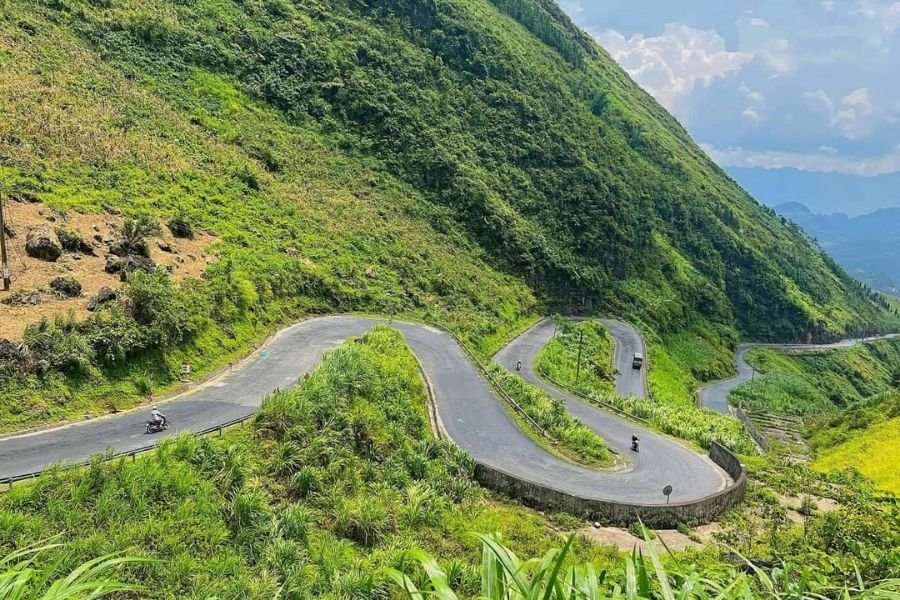
1. Ha Giang Loop – Vietnam’s Epic Mountain Roads
📍 Ha Giang Province
Few landscapes in Vietnam are as dramatic as Ha Giang.
Mountain roads twist between limestone peaks, deep valleys, traditional villages, and terraced fields near the Chinese border.
The legendary Ma Pi Leng Pass is particularly photogenic, with viewpoints overlooking the mountains and Nho Que River far below.
Best photo: Mountain road + surrounding peaks
Best time: Early morning or late afternoon
Photography Tip
Don’t focus only on the famous viewpoints. Villages, markets, roadside landscapes, and everyday moments often produce more memorable photographs than the standard Instagram compositions.
2. Sapa Rice Terraces
📍 Lao Cai Province
Sapa’s terraced landscapes are among northern Vietnam’s most recognizable images.
Rice fields cascade down mountainsides around villages such as Lao Chai and Ta Van, changing dramatically with the seasons.
During the greener months, the terraces create layers of vivid color. Closer to harvest, golden fields transform the valleys again.
Best photo: Layered rice terraces overlooking a valley
Best time: Sunrise or late afternoon
Weather changes quickly in the mountains, so mist can either hide the view completely or create an atmospheric photograph.
3. Hanoi Old Quarter
📍 Hanoi
Some of the best Vietnam photography spots aren’t grand landscapes at all.
Hanoi’s Old Quarter rewards photographers who pay attention to everyday life.
Street vendors carrying baskets, steaming bowls of noodles, narrow shopfronts, motorbikes, balconies, colonial details, and tiny sidewalk cafés provide endless subjects.
Best photo: Everyday street life
Best time: 6:00–8:00 AM
Early morning is particularly rewarding because the streets are coming to life without the intensity of midday traffic.
4. Hanoi Train Street
📍 Hanoi
Few urban scenes are as unusual as a railway running through a narrow residential neighborhood.
Train Street has become one of Hanoi’s most photographed locations, but access and safety controls have changed over time.
Never enter restricted railway areas simply to recreate a social-media photograph.
Best photo: Railway perspective through the neighborhood
Photography tip: Follow current local access rules and safety instructions.
A great photograph is never worth putting yourself—or others—in danger.
5. Trang An & Tam Coc – Ninh Binh
📍 Ninh Binh Province
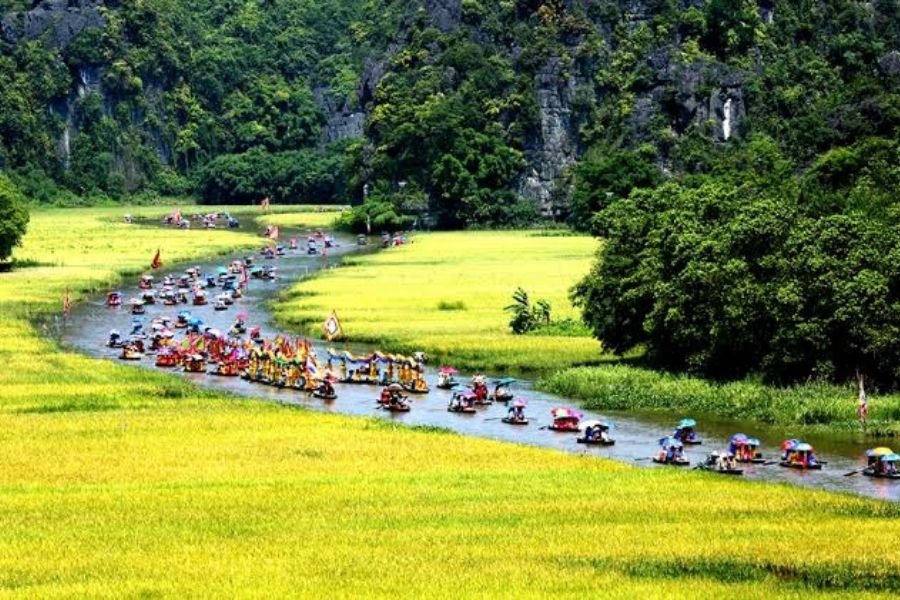
Often described as “Ha Long Bay on land,” Ninh Binh combines limestone karsts with rivers, rice fields, temples, and caves.
A boat journey through Trang An provides water-level perspectives, while Hang Mua offers one of the region’s most famous elevated views.
Best photo: Limestone mountains reflected in the river
Best time: Early morning
For landscape photography, Ninh Binh deserves at least one full day rather than a rushed stop from Hanoi.
6. Ha Long Bay
📍 Quang Ninh Province
Thousands of limestone formations rising from the Gulf of Tonkin make Ha Long Bay one of Vietnam’s most recognizable landscapes.
Cruising through the bay provides constantly changing compositions as islands overlap in the distance.
Best photo: Limestone islands from a cruise deck
Best time: Sunrise and sunset
Cloudy weather isn’t necessarily bad for photography here. Mist can create beautiful layers between the karsts.
7. Ban Gioc Waterfall
📍 Cao Bang Province
Near Vietnam’s northern border, Ban Gioc is one of the country’s most spectacular waterfalls.
Water cascades across multiple limestone levels surrounded by green mountains and agricultural landscapes.
The scale is best captured by including elements such as boats or people in the frame.
Best photo: Wide waterfall panorama
Best time: Morning
If you enjoy nature photography, Cao Bang deserves more than a quick waterfall visit. The surrounding countryside is equally impressive.
8. Hue Imperial City
📍 Hue
Hue offers a completely different photographic palette.
Imperial gates, weathered walls, ornate temples, courtyards, royal tombs, and the Perfume River reflect the city’s history as Vietnam’s former imperial capital.
Best photo: Traditional architecture framed by gates
Best time: Early morning
Hue is particularly suited to photographers interested in architectural details rather than only sweeping landscapes.
9. Hoi An Ancient Town
📍 Quang Nam Province
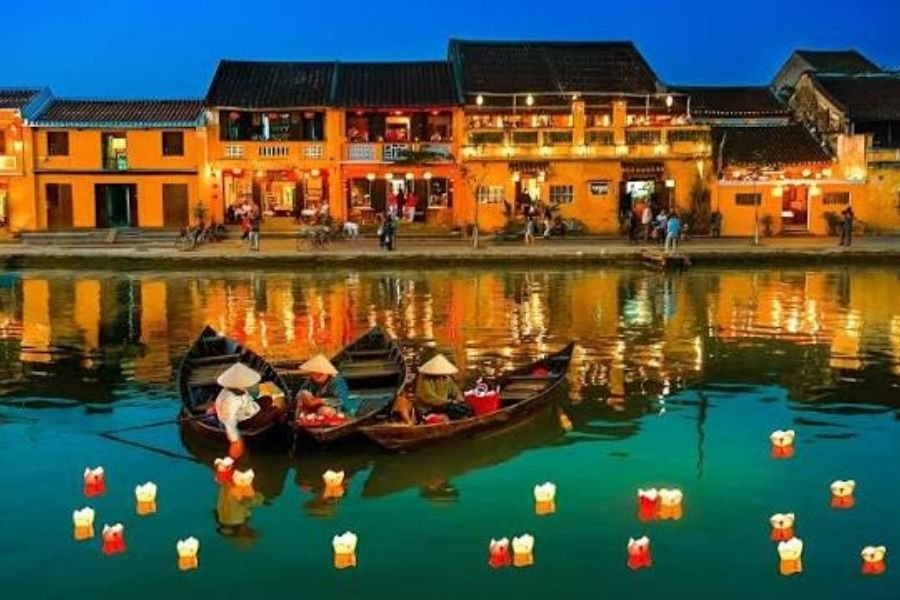
Hoi An is easily one of the most recognizable Vietnam photography spots.
Yellow heritage buildings, wooden shutters, bicycles, lanterns, bougainvillea, and the Thu Bon River create an exceptionally photogenic townscape.
But timing changes everything.
Arrive around sunrise and you can photograph quiet streets before the crowds arrive. Return after sunset for an entirely different atmosphere as lanterns illuminate the Ancient Town.
Best photo: Yellow heritage streets and lanterns
Best time: Sunrise + evening
10. Son Tra Peninsula & Da Nang Coastline
📍 Da Nang
Da Nang combines modern cityscapes with long beaches and mountain scenery.
Son Tra Peninsula provides elevated views across the coastline, while My Khe Beach is particularly beautiful around sunrise.
Best photo: Da Nang coastline from Son Tra
Best time: Sunrise
Clear days offer the widest views, but atmospheric cloud formations can add drama to coastal photographs.
11. Golden Bridge – Ba Na Hills
📍 Da Nang
Supported visually by two enormous stone hands, the Golden Bridge has become one of Vietnam’s most recognizable contemporary attractions.
Its dramatic architecture works particularly well with misty mountain conditions.
Best photo: Wide view showing the bridge and giant hands
Best time: As early as possible
The challenge here is crowds. Arriving early gives you the best chance of cleaner compositions.
12. Ly Son Island
📍 Quang Ngai Province
Ly Son offers a less familiar side of coastal Vietnam.
Volcanic formations, cliffs, clear water, fishing communities, garlic fields, and dramatic coastal viewpoints make the island particularly interesting for landscape photographers.
Best photo: Volcanic coastline and blue sea
Best time: Sunrise
For travelers seeking less obvious photography locations, Ly Son is well worth considering.
13. Da Lat
📍 Lam Dong Province
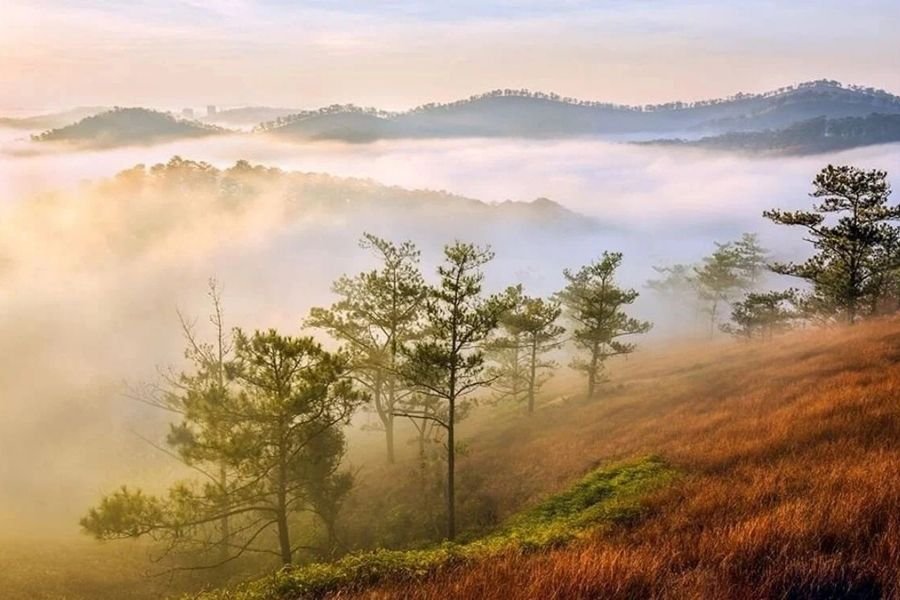
Pine forests, mountain roads, lakes, greenhouses, cafés, flowers, and morning mist give Da Lat an atmosphere unlike most other Vietnamese cities.
Sunrise photographers often head outside the city in search of mist-filled valleys.
Best photo: Mist over pine-covered hills
Best time: Sunrise
Bring an extra layer—the early mornings here can feel surprisingly cool compared with southern Vietnam’s lowlands.
14. Mui Ne Sand Dunes
📍 Binh Thuan Province
Mui Ne’s dunes create landscapes that can feel almost disconnected from tropical Vietnam.
The White Sand Dunes are particularly impressive when low-angle sunlight creates shadows across the ridges.
Best photo: Minimalist dune patterns
Best time: Sunrise
Avoid the harsh middle-of-the-day light if photography is your priority.
15. Ho Chi Minh City
📍 Southern Vietnam
Vietnam’s largest metropolis offers endless opportunities for urban photography.
Motorbike-filled intersections, modern skyscrapers, historic architecture, markets, cafés, and narrow alleys reveal very different sides of the city.
Best photo: City skyline transitioning from daylight to night
Best time: Blue hour
For street photography, explore beyond the major landmarks. Saigon often becomes most interesting in the spaces between its famous attractions.
16. Mekong Delta
📍 Southern Vietnam
The Mekong Delta is about people as much as landscapes.
Boats carrying produce, riverside houses, orchards, markets, narrow canals, and everyday scenes make it ideal for documentary-style travel photography.
Best photo: Local river life
Best time: Early morning
Photography should always be respectful. Ask before taking close portraits, particularly when photographing vendors or people at work.
17. Phu Quoc Island
📍 Kien Giang
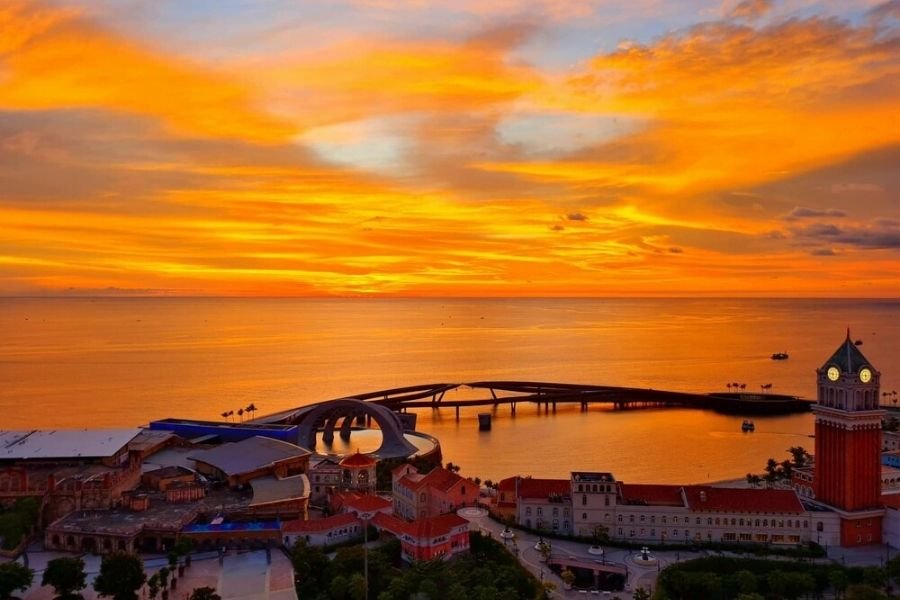
Phu Quoc provides the classic tropical side of a Vietnam photography trip.
Palm trees, sandy beaches, fishing villages, sunsets, and surrounding islands offer plenty of possibilities.
Best photo: Tropical beach at sunset
Best time: Golden hour and sunset
Instead of photographing only resort beaches, consider exploring quieter coastal areas for more natural compositions.
18. Con Dao
📍 Ba Ria–Vung Tau
Con Dao combines turquoise water, forested mountains, winding coastal roads, beaches, and a powerful historical legacy.
The road running around the island provides some particularly impressive ocean views.
Best photo: Coastal road surrounded by mountains and sea
Best time: Morning or late afternoon
Con Dao is also an important historical destination, so allow time to understand the island beyond its scenery.
19. Phong Nha-Ke Bang
📍 Quang Tri
Phong Nha-Ke Bang is a dream destination for photographers who prefer dramatic nature.
Limestone mountains, rivers, jungle, and extraordinary cave systems create some of Vietnam’s wildest landscapes.
Even without entering the most challenging caves, the countryside around Phong Nha offers spectacular photographic opportunities.
Best photo: River with limestone mountains
Best time: Morning
20. Pu Luong Nature Reserve
📍 Thanh Hoa Province
Pu Luong combines rice terraces, mountain valleys, traditional villages, and winding countryside roads.
Compared with Sapa, the region can feel quieter and more rural.
During the right season, vibrant rice fields form striking patterns across the hillsides.
Best photo: Terraced fields and village landscapes
Best time: Golden hour
Pu Luong is especially rewarding for travelers who prefer slow travel and landscape photography away from Vietnam’s major cities.
Photography Tips for Traveling in Vietnam
Finding the best Vietnam photography spots is only part of the experience. A few practical habits can dramatically improve your photographs.
Wake Up Early
Sunrise isn’t only about good light.
Markets are active, streets are quieter, temperatures are cooler, and many destinations have fewer visitors.
Don’t Ignore Bad Weather
Clouds, fog, and rain can completely transform a scene.
Ha Long Bay in mist or Da Lat under low clouds may actually produce more atmospheric images than a perfectly clear day.
Photograph Everyday Vietnam
Some of your favorite photographs may not come from famous attractions.
A bowl of pho steaming on a sidewalk, an old apartment building, a bicycle passing through Hoi An, or morning coffee in Hanoi can tell a stronger travel story.
Respect People
Always consider whether someone is comfortable being photographed.
A market vendor, monk, farmer, or resident is a person—not a photography prop.
Put the Camera Down Sometimes
Not every moment needs to become content.
Some of Vietnam’s best travel experiences happen when you stop looking through a screen.
When Is the Best Time for Photography in Vietnam?
There is no single perfect month because Vietnam stretches across several climate zones.
Northern mountains, central Vietnam, and southern islands can experience very different weather at the same time.
For photography, it is better to research the season for the specific destinations on your itinerary rather than looking for one “best month for Vietnam.”
Generally, sunrise and the hour before sunset provide softer light than midday.
For rice terraces, flowers, waterfalls, or seasonal landscapes, timing becomes even more important.
Frequently Asked Questions
What is the most photographed place in Vietnam?
Ha Long Bay, Hoi An, Ninh Binh, and Ha Giang are among Vietnam’s most recognizable photography destinations. The best choice depends on whether you prefer landscapes, architecture, street photography, or local life.
Is Vietnam good for photography?
Absolutely. Vietnam offers an unusually diverse range of subjects, including mountains, rice terraces, beaches, caves, historic cities, temples, markets, modern urban landscapes, and everyday street life.
Can I use a drone in Vietnam?
Drone operation in Vietnam is regulated and may require authorization. Do not assume that because you see drone footage online you can legally launch a drone at the same location. Check current regulations and local restrictions before flying.
Is it okay to photograph local people?
Street scenes are commonly photographed, but close-up portraits should be approached respectfully. Ask permission whenever appropriate, particularly in villages, markets, homes, and religious settings.
Capture Vietnam, But Experience It First
The best Vietnam photography spots aren’t necessarily the places with the most Instagram posts.
Sometimes they are.
Ha Long Bay at sunrise, Hoi An beneath glowing lanterns, or Ha Giang’s mountain roads deserve their reputation.
But Vietnam’s real photographic appeal comes from its variety.
A misty mountain morning can be followed by a chaotic city street. A quiet temple courtyard can lead to a bustling market. A fishing village can feel worlds away from a modern skyline.
Use this list as inspiration, but leave space for the unexpected.
Because sometimes the best photograph of your Vietnam journey is the one you never planned to take.
Plan Your Vietnam Photography Journey
Want to experience Vietnam’s famous landscapes and discover places beyond the standard tourist trail?
Maverick Journeys can help you create a personalized itinerary combining spectacular scenery, local culture, hidden destinations, and unforgettable experiences throughout Vietnam.
Start planning your Vietnam journey and discover the country through your own lens.