










Choosing between Sapa vs Ha Giang is one of the hardest decisions when planning an adventure in Northern Vietnam.
Both destinations promise spectacular mountains, ethnic minority cultures and landscapes that feel worlds away from the busy streets of Hanoi. Yet the experiences they offer are surprisingly different.
Sapa is known for cascading rice terraces, mountain trekking, village stays and Fansipan, the highest peak in Vietnam. It is relatively easy to reach from Hanoi and has a well-developed range of hotels, restaurants and tourism services.
Ha Giang feels more remote and road-trip oriented. Its defining experience is the Ha Giang Loop, where mountain roads twist between limestone peaks, deep valleys and spectacular passes such as Ma Pi Leng.
So which one should you add to your Vietnam itinerary?
The answer depends on your travel style, available time and what you actually want to experience.
This Sapa vs Ha Giang comparison covers scenery, trekking, road trips, culture, accessibility, accommodation, costs and the best time to visit — helping you decide which Northern Vietnam adventure fits your trip.
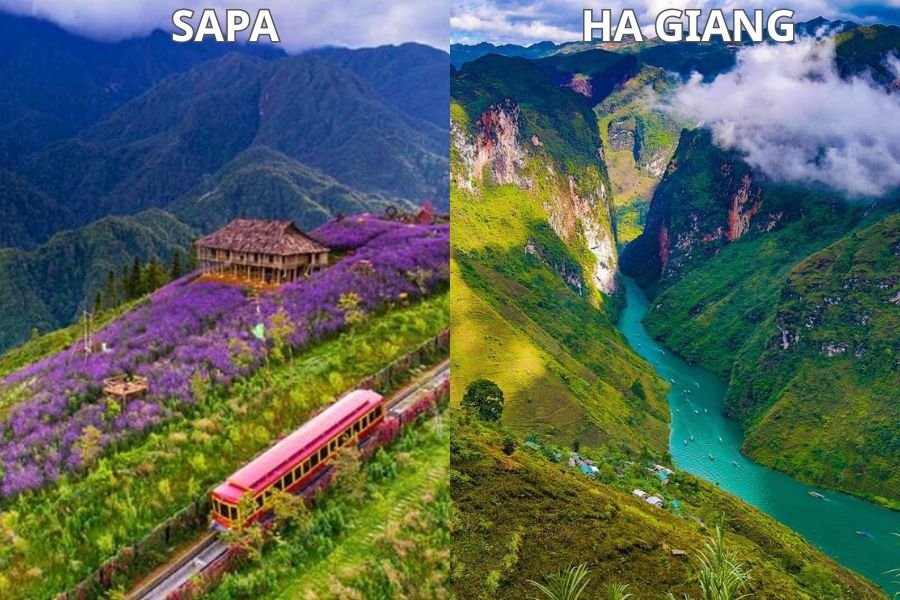
Sapa vs Ha Giang at a Glance
Before getting into the details, here is a quick comparison.
| Experience | Sapa | Ha Giang |
|---|---|---|
| Signature scenery | Rice terraces & valleys | Karst mountains & passes |
| Main experience | Trekking | Road trip |
| Typical stay | 2–3 days | 3–4+ days |
| Access from Hanoi | Easier | Longer journey |
| Tourism infrastructure | Well developed | More limited |
| Famous attraction | Fansipan | Ha Giang Loop |
| Rice terraces | Excellent | Good in selected areas |
| Trekking | Excellent | Available, but less central |
| Road-trip experience | Secondary | Major highlight |
| Travel style | Flexible | More adventurous |
| Accommodation | Wide range | Guesthouses & homestays |
| Good for first visit | Easy to incorporate | Requires more planning |
The simplest distinction is this:
Sapa is a destination you explore. Ha Giang is a journey you experience.
That difference should shape your decision more than any attempt to decide which place is simply “more beautiful.”
1. Sapa: Rice Terraces, Trekking and Mountain Life
Set among the mountains of Lao Cai Province, Sapa has been one of Northern Vietnam’s best-known mountain destinations for decades.
The town overlooks deep valleys where rice terraces cascade down the hillsides, backed by the Hoang Lien Son mountain range.
Vietnam Tourism describes Sapa as sitting at the head of a deep valley surrounded by rice terraces, rivers and green mountains, with Fansipan rising above the area.
But the town itself is only the starting point.
Travel beyond central Sapa and you can spend your days trekking between rice fields, walking through valleys, staying in mountain homestays and exploring communities across the surrounding highlands.
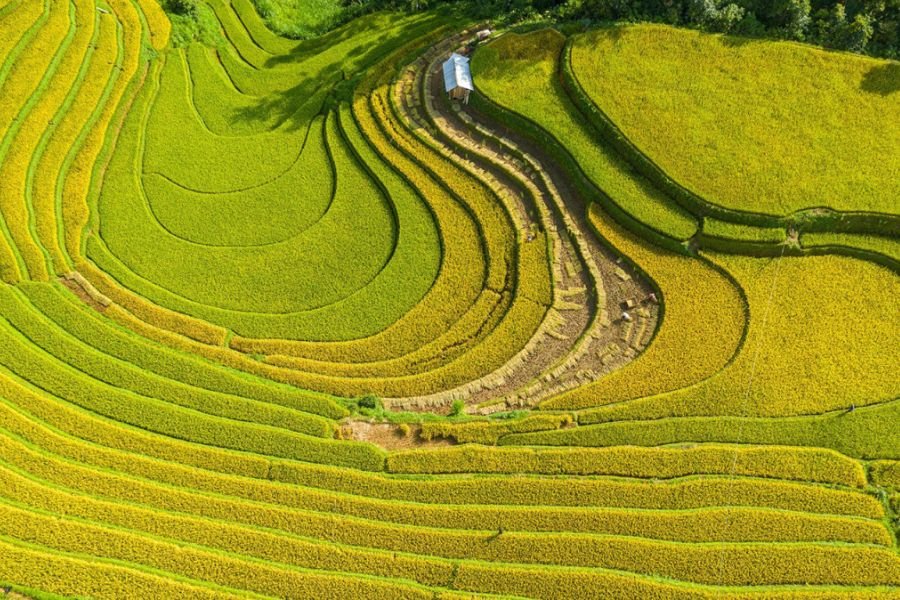
What Are the Best Things to Do in Sapa?
Trekking is one of Sapa’s defining experiences.
Muong Hoa Valley and the areas around Lao Chai and Ta Van offer trails through terraced landscapes, villages and mountain scenery. In autumn, parts of the valley turn golden as the rice approaches harvest. Vietnam Tourism specifically highlights trekking through Muong Hoa Valley and the surrounding villages during Northern Vietnam’s early autumn.
Another major attraction is Fansipan.
At 3,143 metres, Fansipan is Vietnam’s highest mountain. Travelers who do not want a full summit trek can use the cable-car system to reach the upper mountain area.
Other Sapa experiences include local markets, waterfalls, mountain viewpoints and overnight stays outside the town center.
For travelers who prefer walking through a landscape rather than spending most of the day moving along mountain roads, Sapa has a strong appeal.
2. Ha Giang: Where the Road Becomes the Adventure
Ha Giang offers a very different introduction to Northern Vietnam.
Here, the road is not simply transportation between attractions.
The road is the attraction.
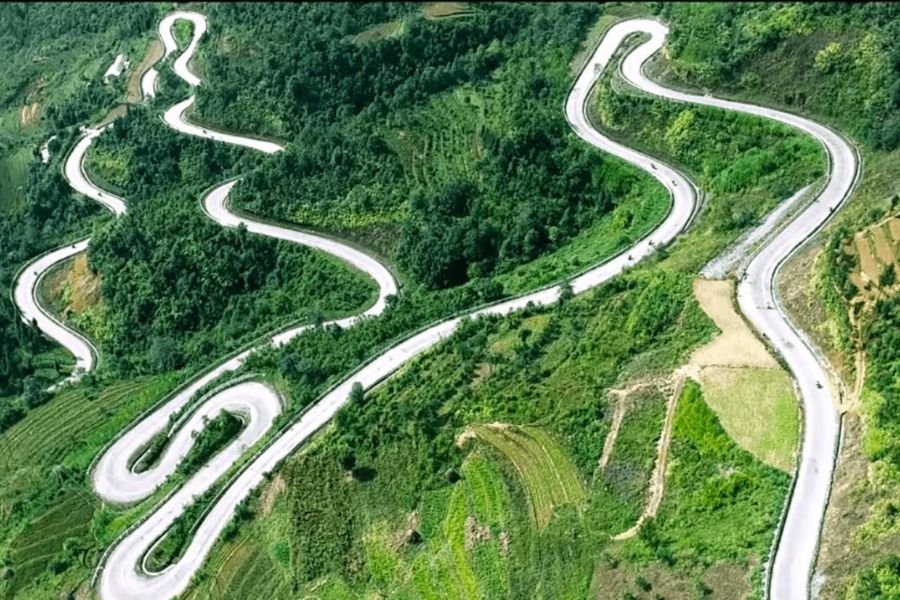
The famous Ha Giang Loop passes through extraordinary mountain landscapes, with travelers commonly moving through places such as Quan Ba, Yen Minh, Dong Van and Meo Vac.
The route crosses sections of the Dong Van Karst Plateau and some of Vietnam’s most dramatic mountain passes.
One of the most famous is Ma Pi Leng Pass.
The road between Dong Van and Meo Vac winds above enormous valleys and the Nho Que River below. Vietnam Tourism’s four-day Ha Giang itinerary specifically highlights the Dong Van–Ma Pi Leng section for its huge peaks, canyons and panoramic views.
This creates a completely different rhythm from Sapa.
Instead of choosing a hotel and taking excursions from one base, you are constantly moving.
Wake up.
Get on the road.
Cross another pass.
Stop at a viewpoint.
Continue through a village.
Arrive somewhere new for the night.
Then do it again the following day.
For many travelers, that continuous sense of movement is exactly what makes Ha Giang unforgettable.
3. Sapa vs Ha Giang: Which Has Better Scenery?
But comparing them directly can be misleading because the landscapes are fundamentally different.
Sapa Scenery
Sapa is characterized by:
Rice terraces • deep valleys • mountain villages • streams • Fansipan
The terraces are the visual signature.
During the growing season they create layers of intense green. As harvest approaches, the landscape can shift toward gold.
Vietnam Tourism identifies September and October as particularly attractive months for Sapa’s rice terraces and April–May for generally pleasant weather and clearer skies.
Ha Giang Scenery
Ha Giang is characterized by:
Limestone peaks • mountain passes • deep canyons • winding roads • remote valleys
The scale feels different.
Instead of looking down over layered rice terraces, you may find yourself standing on a road carved into a mountainside with enormous limestone formations stretching across the horizon.
Ha Giang also has rice terraces, particularly around areas such as Hoang Su Phi. Vietnam Tourism notes that Hoang Su Phi is known for steep terraced landscapes across narrow valleys and mountain slopes.
Which Landscape Matches Your Trip?
If your dream of Northern Vietnam involves golden rice terraces, trekking trails and mountain villages, Sapa closely matches that image.
If it involves dramatic passes, enormous limestone peaks and roads disappearing into the mountains, Ha Giang offers that experience.
4. Sapa vs Ha Giang for Trekking
For travelers who want to spend significant time hiking, Sapa is particularly easy to build around trekking.
You can choose anything from a relatively short walk to a longer route through valleys and villages.
Vietnam Tourism identifies trekking as one of Sapa’s principal activities, including routes around villages such as Cat Cat and Ta Phin and overnight treks through the rice terraces.
Staying overnight outside central Sapa can make the experience even more immersive.
You wake up in the mountains instead of commuting from town to the trailhead every morning.
Ha Giang also offers opportunities for hiking and walking, but the classic Ha Giang itinerary is more road-oriented.
That means the question is less about whether trekking exists in both places and more about how central trekking is to your trip.
If you want your Northern Vietnam adventure to revolve around walking, Sapa is easier to structure around that goal.

5. Sapa vs Ha Giang for an Epic Road Trip
This is where Ha Giang becomes fundamentally different.
The Ha Giang Loop is usually planned as a multi-day journey.
Vietnam Tourism publishes a four-day itinerary through the region, including Dong Van and Ma Pi Leng Pass, illustrating how much of the experience comes from moving through the landscape rather than staying in one location.
There is one important consideration: road safety.
Northern Vietnam’s mountain roads can be steep, narrow and challenging. Travelers should not assume that riding a scooter at home or elsewhere automatically prepares them for mountain conditions.
If you do not have appropriate riding experience and the legally required licence or permit for Vietnam, use an experienced local driver or another suitable transport option.
You do not need to personally ride a motorbike to experience Ha Giang.
Sapa has scenic mountain roads too, but they usually connect trekking areas, villages and viewpoints.
In Ha Giang, the road trip itself is one of the main reasons to go.

6. Culture and Local Communities
Neither destination should be viewed simply as a beautiful background for photographs.
Both Sapa and Ha Giang are home to diverse ethnic minority communities with their own languages, traditions, clothing and cultural practices.
Around Sapa, travelers may encounter H’Mong, Dao, Giay and other communities through village stays, trekking routes and local markets.
Tourism is much more established here, creating both opportunities and challenges.
You can easily arrange locally guided walks and homestays, but popular villages also receive substantial visitor numbers.
Ha Giang often feels less concentrated.
Communities are spread across a large mountainous region, and markets, villages and agricultural landscapes form part of the Loop experience.
Whichever destination you choose, practice respectful travel:
Ask before photographing people, buy directly from local makers where practical, respect private homes and agricultural land, and remember that traditional clothing is part of living cultures rather than simply a tourism prop.
A meaningful trip to Northern Vietnam should be about more than collecting viewpoints.
7. Sapa vs Ha Giang: Which Is Easier from Hanoi?
Sapa generally has simpler logistics.
Vietnam Tourism notes that buses and limousine vans regularly travel between Hanoi and Sapa, with a journey of approximately five to six hours. The overnight train to Lao Cai followed by a road transfer to Sapa is another established option.
This makes Sapa relatively easy to add to a wider Vietnam itinerary.
Ha Giang requires a larger block of time because arriving in Ha Giang is only the beginning of the experience.
The Loop then takes you farther into the mountains over several days.
This difference matters enormously if you only have a week or two in Vietnam.
Our Vietnam 2 Week Itinerary is useful for understanding how much time Northern Vietnam can realistically take within a full-country trip.
Trying to squeeze too many mountain destinations into one itinerary often means spending more time in transit and less time actually experiencing them.
8. How Many Days Do You Need?
How Long Do You Need in Sapa?
For most first-time visitors, 2–3 days works well.
With two days, you can experience one main trekking area and another highlight such as Fansipan.
With three days, the trip becomes more relaxed and leaves room for a longer trek, village stay or slower morning in the mountains.
How Long Do You Need in Ha Giang?
Allow at least 3–4 days for the Loop experience, plus transportation between Hanoi and Ha Giang.
Vietnam Tourism’s suggested road-trip itinerary itself runs for four days.
Rushing Ha Giang defeats much of the purpose.
The magic is in stopping.
A roadside viewpoint, mountain café, small market or unexpected patch of sunlight across the valley can easily become one of the moments you remember most.
9. Accommodation: Sapa vs Ha Giang
Sapa has a much broader accommodation ecosystem.
Travelers can choose between budget hostels, town-center hotels, boutique properties, mountain lodges and homestays overlooking terraced valleys.
For a more atmospheric trip, consider staying outside central Sapa.
Vietnam Tourism specifically recommends mountain lodges and homestays among the rice terraces as a way to experience the landscape and daily rural life more closely.
Accommodation in Ha Giang tends to follow the road-trip route.
Guesthouses, small hotels and homestays provide convenient overnight stops as travelers move around the Loop.
That creates two different travel styles:
Sapa: choose a comfortable base and explore outward.
Ha Giang: sleep somewhere different as the journey progresses.
10. Sapa vs Ha Giang: Which Is More Expensive?
The answer depends heavily on your travel style.
Sapa has everything from inexpensive hostels to upscale mountain resorts. The cable car, private transfers and premium accommodation can raise the total cost significantly.
Ha Giang may look inexpensive at first because homestays and local meals can be affordable, but your overall budget needs to include several days of transportation, accommodation and potentially an Easy Rider or organized Loop tour.
Prices change by season, operator and accommodation level, so fixed daily figures can become outdated quickly.
A better approach is to compare the complete experience:
Sapa budget: Hanoi transport + hotel/homestay + trekking + Fansipan/activities + meals.
Ha Giang budget: Hanoi transport + Loop transport/tour + 3–4 nights + meals + entrance/activity costs.
Always compare what is actually included before booking.
11. Best Time to Visit Sapa and Ha Giang
Season can completely change both destinations.
Best Time for Sapa
For rice terraces, September and October are among the most attractive periods. Vietnam Tourism also highlights April and May for favorable weather and clearer skies.
September is particularly appealing if golden rice landscapes are a priority.
If you are planning an autumn trip, our Vietnam in September guide covers weather, packing and destination planning in more detail.
Best Time for Ha Giang
Ha Giang changes throughout the year as well.
Autumn can bring golden rice landscapes, while different flowering seasons create another reason to visit later in the year.
Weather in the northern mountains is variable, however.
Rain, fog and low cloud can significantly affect both road conditions and visibility, so check local conditions close to departure rather than relying solely on seasonal averages.
12. Sapa vs Ha Giang for Different Travel Styles
At this point, the choice becomes easier if you stop thinking about destinations and start thinking about your travel style.
| Your Priority | Consider |
|---|---|
| Rice terraces | Sapa |
| Trekking | Sapa |
| Easier logistics | Sapa |
| Shorter mountain trip | Sapa |
| More hotel choices | Sapa |
| Fansipan | Sapa |
| Multi-day road adventure | Ha Giang |
| Dramatic mountain passes | Ha Giang |
| Karst landscapes | Ha Giang |
| Remote road-trip atmosphere | Ha Giang |
| Ma Pi Leng Pass | Ha Giang |
| Nho Que River | Ha Giang |
This does not mean one destination is objectively better.
It means each is suited to a different version of Northern Vietnam.
Can You Visit Both Sapa and Ha Giang?
Yes — and this can be an excellent option when you have enough time.
The two destinations complement rather than duplicate each other.
Sapa gives you rice terraces, trekking and a mountain base.
Ha Giang gives you a moving road journey through limestone peaks and high passes.
A possible route is:
Hanoi → Sapa → Ha Giang → Hanoi
However, don’t underestimate travel time.
If you have only four or five days available for Northern Vietnam, trying to fit both into the same trip will likely feel rushed.
With 7–9 days, combining them becomes much more realistic.
For travelers planning a shorter Vietnam holiday overall, our Vietnam 7 Day Itinerary explains why focusing on one region can often create a better experience than trying to cover the entire country.
Sapa vs Ha Giang FAQ
Is Sapa or Ha Giang Easier for First-Time Visitors?
Sapa has simpler logistics, established transport connections from Hanoi and a wider selection of hotels and organized activities.
Ha Giang requires more time and planning because the multi-day journey through the mountains is the central experience.
Which Is Better for Rice Terraces: Sapa or Ha Giang?
Sapa is one of Vietnam’s best-known destinations for rice terraces and offers easy access to trekking routes through terraced valleys.
Ha Giang Province also contains impressive rice terraces, especially around Hoang Su Phi.
The landscapes are different enough that travelers interested in photography may appreciate both.
Is Ha Giang Only for Motorbike Riders?
No.
You do not need to personally ride a motorbike to experience Ha Giang. Travelers who are not appropriately licensed or experienced can use an experienced driver or other organized transport.
Safety should take priority over recreating social-media images of the Loop.
Is Sapa Too Tourist-Friendly to Feel Authentic?
Central Sapa is highly developed for tourism, but the wider region extends far beyond the town.
Staying in the valleys, trekking with local guides and choosing locally run accommodation can provide a very different experience from simply visiting central Sapa.
How Many Days for Sapa vs Ha Giang?
Plan approximately 2–3 days for Sapa and 3–4 days or more for Ha Giang, excluding some transportation time.
The right amount ultimately depends on your pace and the activities you want to include.
Can I Combine Sapa and Ha Giang?
Yes.
If Northern Vietnam is a major focus of your trip and you have around a week or more for the mountains, combining the two gives you two very different landscapes and travel experiences.
Final Thoughts: Sapa vs Ha Giang
The Sapa vs Ha Giang decision becomes much easier once you stop asking which destination is better and ask a different question:
What kind of Northern Vietnam adventure do you want?
Consider Sapa if you want to wake up overlooking rice terraces, spend your days trekking through valleys, visit mountain communities, experience Fansipan and keep logistics relatively straightforward.
Consider Ha Giang if the journey itself excites you — several days moving through limestone mountains, stopping at remote viewpoints and following winding roads across some of Northern Vietnam’s most dramatic terrain.
And if you have enough time?
Experience both.
Sapa shows you Northern Vietnam from the trails and valleys.
Ha Giang shows it to you from the mountain roads.
Together, they reveal just how diverse Vietnam’s far north can be.