








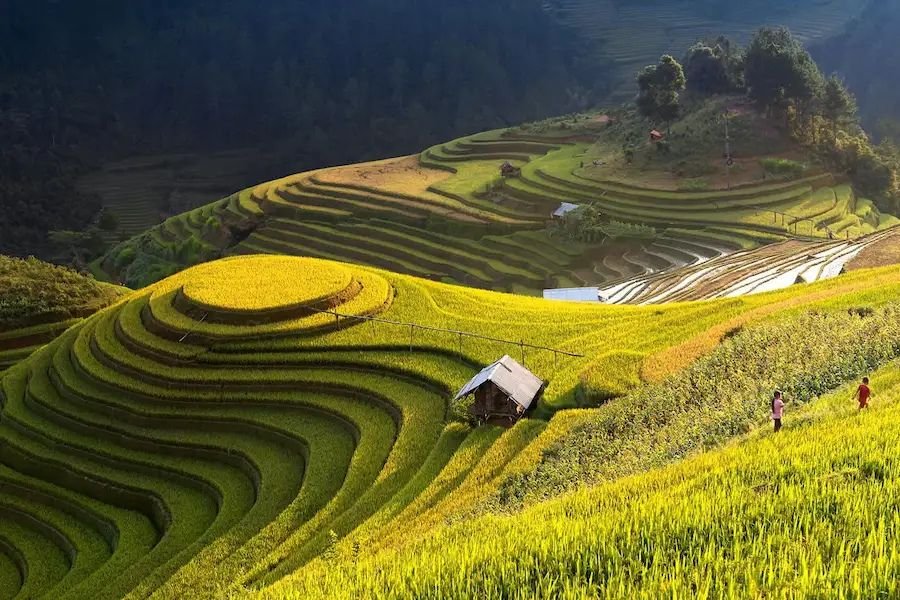
The sight of golden rice fields cascading down mountainsides is one of the most unforgettable images of rural Vietnam.
Across the northern highlands, generations of farmers have shaped steep slopes into extraordinary terraces, creating landscapes that change dramatically throughout the year. During the growing season, the mountains glow green. As harvest approaches, entire valleys gradually turn yellow and gold.
For travelers, Vietnam Rice Terraces are much more than beautiful photography spots. They are working agricultural landscapes, closely connected to local communities, traditional farming practices and the rhythm of life in Vietnam’s mountains.
From the iconic terraces of Mù Cang Chải and Sapa to the remote valleys of Hoàng Su Phì and the peaceful countryside of Pù Luông, each destination offers a different experience.
So where should you go, and when is the best time to see the fields at their most beautiful?
Here are 7 stunning places to see rice terraces in Vietnam during harvest season, along with practical tips to help you plan your journey.
If you’re planning a wider journey beyond the rice terraces, explore our guide to the best places to visit in Vietnam for more ideas across the country.
When Is the Best Time to See Vietnam Rice Terraces?
Timing is one of the most important parts of planning a trip to see Vietnam Rice Terraces.
There is no single harvest date across the country. Rice-growing schedules vary depending on altitude, weather, location and local farming practices.
In many mountainous areas of Northern Vietnam, September and October are associated with the spectacular golden harvest season. During this period, mature rice gradually changes from green to yellow before farmers begin harvesting the crop.
However, conditions can vary even between nearby valleys.
If seeing golden terraces is the main purpose of your trip, don’t rely entirely on photographs from the same dates in previous years. Contact your accommodation, guide or local travel expert shortly before your visit to check current conditions.
Green Season vs Golden Season
You don’t necessarily need to visit during harvest to appreciate Vietnam’s rice landscapes.
Green season brings vibrant terraces covering entire valleys in shades of green. The scenery can be especially dramatic after rain, when mist and clouds hang over the mountains.
Golden season arrives as the rice matures. This is the classic harvest landscape many travelers hope to photograph, with yellow fields layered across hillsides.
There is also the water-pouring season, when farmers flood terraces before planting. The paddies reflect the sky and mountains like natural mirrors.
Each season offers something different.
But if your dream is to see the famous golden mountains of Northern Vietnam, September and October are among the key months to consider.
7 Best Places to See Vietnam Rice Terraces
1. Mù Cang Chải – Vietnam’s Iconic Golden Terraces
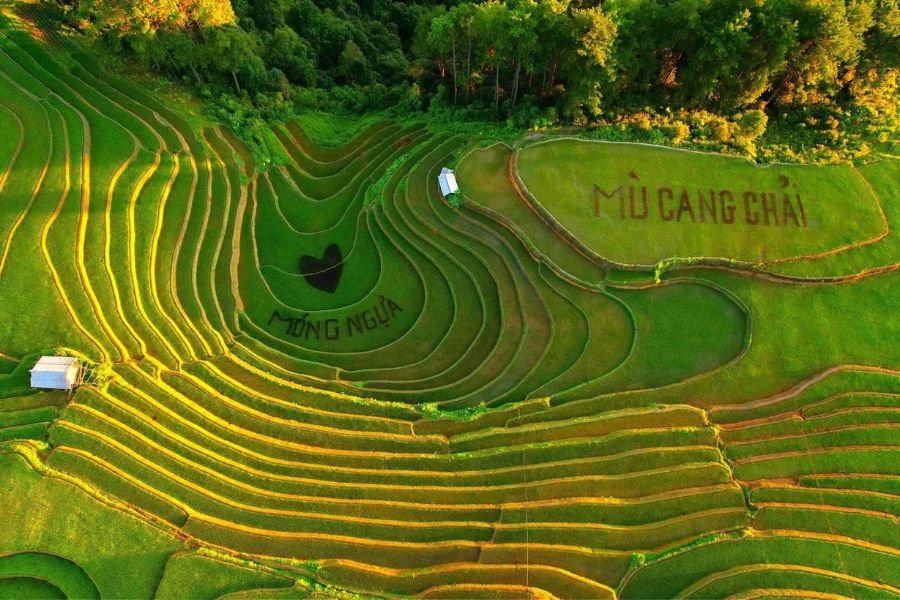
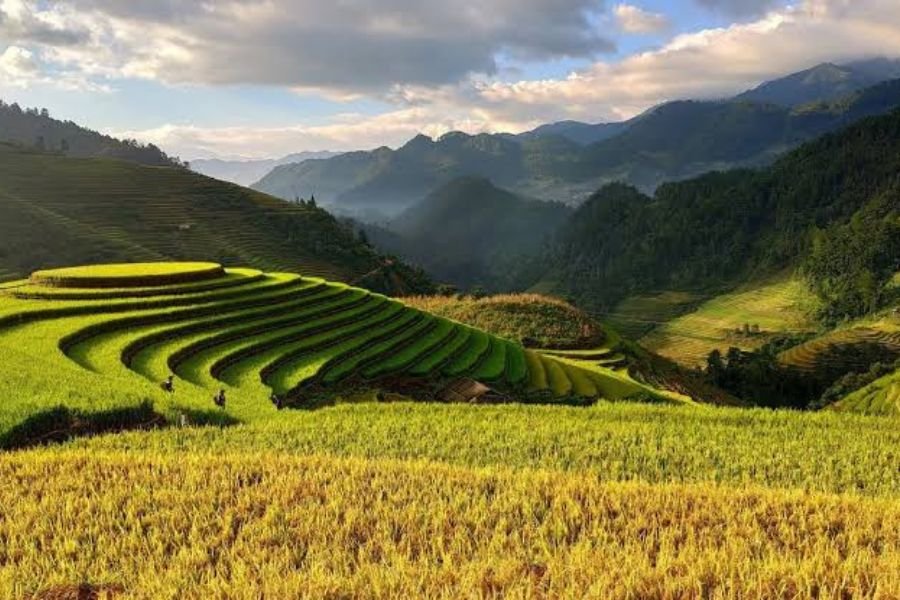
If your main goal is to see spectacular Vietnam Rice Terraces, Mù Cang Chải should be near the top of your list.
Located in Yên Bái Province in Northern Vietnam, the region is famous for enormous terraced landscapes carved into steep mountain slopes.
During harvest season, these terraces gradually turn yellow and gold, creating one of the country’s most recognizable rural landscapes.
Among the most famous areas are La Pán Tẩn, Chế Cu Nha and Dế Xu Phình, while Mâm Xôi Hill has become an iconic photography location.
The journey itself is also part of the experience.
Travelers heading from Hanoi toward Mù Cang Chải pass winding mountain roads, valleys and the spectacular Khau Phạ Pass.
For more landscapes worth bringing your camera for, discover our favorite Vietnam photography spots across the country.
Best time to visit
September into early October is generally one of the most attractive periods for golden rice scenery, although exact harvest timing changes from year to year.
Best for
Photography, mountain landscapes, road trips and adventurous travelers.
How long to stay
Allow at least 2–3 days.
Maverick tip: Don’t spend your entire visit chasing famous viewpoints. Stay overnight and explore quieter villages and valleys early in the morning or late in the afternoon.
2. Sapa – The Classic Rice Terrace Destination
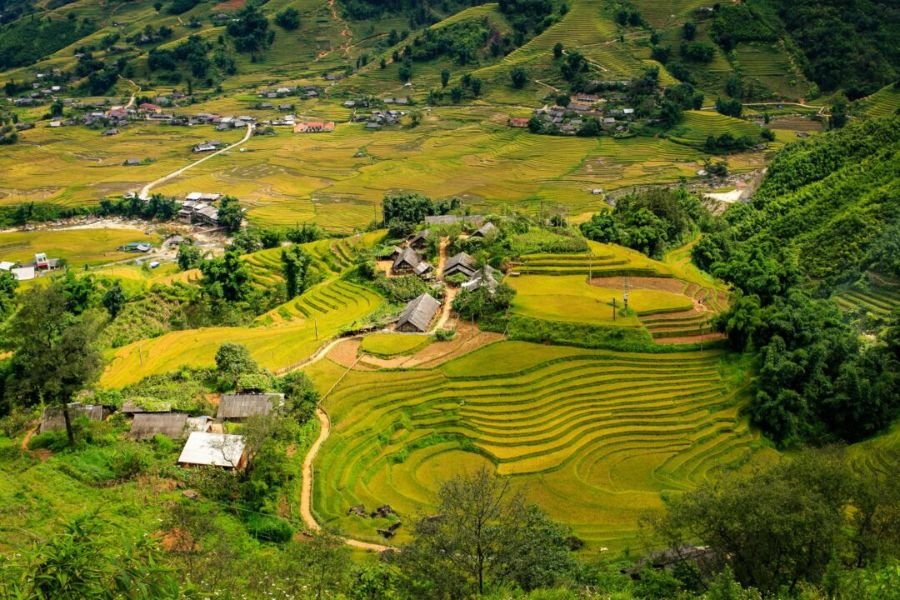
Sapa is probably the most recognizable mountain destination for international visitors to Vietnam.
Surrounded by dramatic peaks and valleys, the area is famous for terraced rice fields and communities including the H’Mong, Dao, Tay and Giay.
One of the best places to experience the landscape is Muong Hoa Valley.
Trekking routes around Lao Chai and Ta Van take visitors through villages and terraced fields, offering a much more immersive experience than simply viewing the landscape from Sapa town.
September can be particularly beautiful as the rice approaches harvest.
Instead of staying only in the center of Sapa, consider spending a night in a homestay or mountain lodge overlooking the valley.
Best for
First-time visitors, trekking, photography and cultural experiences.
How long to stay
2–3 nights gives you enough time to explore without rushing.
Maverick tip: Mountain weather can change quickly. Staying an extra night gives you another opportunity for clear views if clouds or rain affect your first day.
3. Hoàng Su Phì – Remote and Spectacular
For travelers looking beyond Vietnam’s most famous mountain destinations, Hoàng Su Phì is an excellent choice.
Located in Hà Giang Province, the area features enormous terraced valleys surrounded by forests, mountains and traditional villages.
Compared with Sapa, tourism infrastructure is more limited and journeys take longer.
That’s also part of the appeal.
Hoàng Su Phì rewards travelers who value trekking, quiet landscapes and slower journeys over convenience.
During harvest season, terraces spread across the hillsides in shades of yellow and gold, while mountain villages provide insight into the communities that have shaped these landscapes over generations.
Best for
Trekking, photography, slow travel and travelers looking for less-crowded destinations.
How long to stay
Plan for at least 2–3 nights, especially given the travel time required.
Maverick tip: Consider exploring with a knowledgeable local guide. The experience becomes far richer when you understand the people, farming practices and traditions behind the landscapes you’re photographing.
4. Pù Luông – Peaceful Rice Terraces Near Hanoi

If you want beautiful terraces without traveling as far as Sapa or Hà Giang, consider Pù Luông.
Located in Thanh Hóa Province, Pù Luông combines terraced fields, limestone mountains, forests, streams and traditional villages.
The atmosphere is noticeably slower.
You can trek between villages, cycle through the countryside, watch traditional waterwheels or simply spend an afternoon overlooking the valley from a lodge.
Harvest season is particularly attractive as the fields change color.
For couples and travelers interested in nature and relaxation, Pù Luông offers a very different experience from Vietnam’s busier destinations.
Best for
Slow travel, nature, couples, trekking and short escapes from Hanoi.
How long to stay
2–3 days is ideal.
Maverick tip: Accommodation matters here. Choose a lodge or homestay overlooking the terraces so that the landscape becomes part of your stay rather than simply another attraction.
5. Y Tý – Rice Terraces Above the Clouds
Y Tý remains far less familiar to many international visitors.
Located in Lào Cai Province near Vietnam’s northern border, this mountainous destination combines rice terraces with dramatic highland scenery.
Y Tý is particularly famous among Vietnamese travelers for cloud hunting.
Under the right conditions, thick clouds settle beneath the mountains while villages and terraced fields appear above them.
The area is also associated with the Hà Nhì community and distinctive traditional earthen houses.
Getting here takes more effort than visiting Sapa, and road conditions should always be considered, particularly during periods of heavy rain.
But for adventurous travelers, that’s exactly what makes Y Tý interesting.
Best for
Photography, adventure, clouds and less-touristy mountain scenery.
How long to stay
Allow 2 days or more, particularly if combining Y Tý with other destinations in Lào Cai.
Maverick tip: Don’t build your entire trip around seeing a sea of clouds. Weather is unpredictable. Treat the clouds as a bonus rather than a guarantee.
6. Hà Giang – Rice Fields Along an Epic Mountain Journey
Hà Giang is better known for towering limestone peaks and the legendary Hà Giang Loop than for rice terraces alone.
But during the right season, rice fields add another dimension to the landscape.
As you travel through the province, you’ll pass cultivated valleys, mountain villages and agricultural landscapes surrounded by dramatic peaks.
Travelers especially interested in terraces can combine the classic Hà Giang experience with Hoàng Su Phì.
This is less about visiting one famous rice-field viewpoint and more about seeing how agriculture, villages and mountain geography come together across an entire journey.
Best for
Adventure, road trips, photography and mountain culture.
How long to stay
Allow 3–5 days, depending on your route.
Maverick tip: The Hà Giang Loop should not be treated as a race. If you’re not an experienced motorbike rider, consider traveling with an experienced local driver.
7. Ninh Binh – Rice Fields Between Limestone Mountains
Ninh Binh offers something different from the mountainous Vietnam Rice Terraces farther north.
The fields here are generally flatter, but the surrounding scenery is extraordinary.
Rice paddies stretch between towering limestone karsts, rivers and rural villages, creating one of Vietnam’s most distinctive landscapes.
Tam Coc is particularly famous for the combination of river and rice fields.
A boat trip gives travelers a unique perspective from water level, while nearby Hang Mua offers panoramic views from above.
Ninh Binh is also much easier to reach from Hanoi than most northern mountain destinations.
That makes it a good option for travelers who don’t have enough time for Sapa, Mù Cang Chải or Hà Giang.
Best for
First-time visitors, couples, photography and short trips from Hanoi.
How long to stay
Stay 1–2 nights if possible.
Maverick tip: Avoid treating Ninh Binh only as a rushed Hanoi day trip. Early mornings and late afternoons reveal a much quieter side of the countryside.
Which Vietnam Rice Terrace Destination Is Right for You?
Choosing the right destination depends on your travel style.
If this is your first trip to Vietnam, Sapa offers the easiest combination of spectacular scenery, accommodation and trekking opportunities.
If photography is your priority, Mù Cang Chải offers some of the country’s most dramatic golden landscapes.
Choose Hoàng Su Phì if you’re willing to travel farther for a quieter and more remote experience.
For slow travel and relaxation within easier reach of Hanoi, Pù Luông is difficult to beat.
Y Tý appeals to travelers looking for remote mountain scenery and the possibility of cloud hunting.
Hà Giang is ideal if you want rice landscapes to be part of a much larger mountain adventure.
And for travelers with limited time, Ninh Binh provides an accessible alternative.
There isn’t one destination that’s best for everyone.
The best choice is the one that matches your time, interests and preferred pace of travel.
How to Photograph Vietnam Rice Terraces Responsibly
The terraces may be beautiful, but they are not photography sets.
They are working farms and an important source of livelihood for local communities.
This becomes especially important during harvest season, when farmers are actively working in the fields.
Stay on established paths whenever possible and don’t enter rice fields simply to get a better photograph.
Never damage or move crops.
If you want to photograph local people closely, ask for permission first.
A telephoto lens is particularly useful for capturing patterns across distant mountainsides without entering agricultural areas.
Most importantly, remember that the people living here are not part of the scenery.
Respectful travel means appreciating both the landscape and the communities responsible for creating and maintaining it.
How Many Days Do You Need?
If rice terraces are only one part of a wider Vietnam trip, the amount of time you need depends heavily on the destination.
For Ninh Binh, one or two nights can work well.
For Pù Luông or Sapa, allow two to three nights.
Mù Cang Chải deserves at least two or three days because of the journey from Hanoi.
For Hà Giang or Hoàng Su Phì, three or more days makes much more sense.
Mountain travel is slow.
A destination that looks relatively close on a map can require several hours of driving along winding roads.
Adding an extra night also gives photographers a second opportunity if rain or cloud affects the first sunrise or sunset.
If the rice terraces are part of a longer journey, our Vietnam 2 week itinerary can help you combine Northern Vietnam with other highlights around the country.
Essential Tips for Visiting Vietnam Rice Terraces
Check the Current Harvest Before Traveling
Harvest timing varies every year.
If golden rice is the main reason for your visit, contact a local accommodation provider, guide or travel specialist shortly before your trip.
Prepare for Changing Weather
Mountain conditions can change quickly.
Bring comfortable walking shoes, light layers and rain protection even when the forecast looks good.
Allow More Travel Time Than You Expect
Mountain roads are slower than highways.
Don’t build an itinerary based purely on distance.
Stay Overnight
Many landscapes are at their most beautiful early in the morning and late in the afternoon.
An overnight stay also allows you to experience rural destinations after day visitors leave.
Travel Slowly
Rice-terrace destinations are not about checking off attractions.
Walking through a village, watching farmers work or spending a quiet morning overlooking the valley can be more memorable than visiting five viewpoints in one day.
Vietnam Rice Terraces and Local Communities
One reason these landscapes are so extraordinary is that they were not created for tourism.
Terraces developed as a practical response to farming on mountainous terrain.
Over generations, communities transformed steep slopes into agricultural landscapes capable of supporting rice cultivation.
That’s why responsible tourism matters.
Choose locally operated accommodation where possible. Hire knowledgeable local guides. Buy food and products from community businesses.
And approach cultural encounters with curiosity rather than treating villages as attractions.
The more travelers understand the human story behind the terraces, the more meaningful the experience becomes.
FAQs About Vietnam Rice Terraces
Where are the most beautiful Vietnam Rice Terraces?
Mù Cang Chải, Sapa and Hoàng Su Phì are among the most spectacular mountain rice-terrace destinations. Pù Luông and Y Tý are also excellent choices for travelers interested in quieter landscapes.
What is the best time to see golden rice terraces in Vietnam?
For many Northern Vietnam destinations, September and October are important harvest months. However, the exact timing varies according to location, elevation and weather, so always check current conditions before traveling specifically for golden fields.
Is Sapa good for rice terraces?
Yes. Sapa is one of Vietnam’s best-known rice-terrace destinations and is particularly convenient for international travelers. Muong Hoa Valley and the villages around Lao Chai and Ta Van are popular areas for trekking through the landscape.
Is Mù Cang Chải better than Sapa?
It depends on your priorities. Sapa offers easier access and more developed tourism infrastructure. Mù Cang Chải requires more travel but offers some of Vietnam’s most dramatic terraced landscapes and is particularly famous during golden season.
Can I see rice terraces near Hanoi?
Yes. Pù Luông is one of the best options within relatively easy reach of Hanoi. Ninh Binh also offers beautiful rice landscapes, although they differ from the steep mountain terraces of the northern highlands.
Are rice terraces worth visiting outside harvest season?
Absolutely. Green season offers lush landscapes, while the water-pouring season creates reflective terraces before planting. The scenery changes throughout the agricultural cycle.
Final Thoughts: More Than a Golden Landscape
Seeing Vietnam Rice Terraces during harvest season can easily become one of the highlights of a journey through Northern Vietnam.
Mù Cang Chải delivers enormous golden mountainsides. Sapa combines iconic scenery with accessible trekking. Hoàng Su Phì and Y Tý reward those willing to venture farther, while Pù Luông provides a peaceful alternative closer to Hanoi.
But the most memorable experience goes beyond finding the perfect viewpoint.
These terraces are living landscapes shaped by generations of farmers.
Walk slowly. Respect the fields. Spend time in the villages. Learn about the communities around you.
The photographs will be beautiful.
The experience behind them is what you’ll remember.
Maverick Journeys — Your Vietnam Travel Expert
𝐔𝐧𝐛𝐨𝐮𝐧𝐝 • 𝐔𝐧𝐭𝐨𝐮𝐜𝐡𝐞𝐝 • 𝐔𝐧𝐟𝐨𝐫𝐠𝐞𝐭𝐭𝐚𝐛𝐥𝐞