










Traveling through Vietnam by overnight train is more than just a way to get from one destination to another. It’s an opportunity to slow down, watch the countryside pass by, and experience a different side of the country.
Imagine falling asleep as the train travels through quiet towns and waking up to green rice fields, mountains, or coastal scenery. For many international travelers, a Vietnam sleeper train becomes one of the most memorable parts of their journey.
But if you’ve never taken an overnight train in Vietnam, you probably have a few questions.
Are sleeper trains comfortable? Should you book a four-berth or six-berth cabin? How do you buy tickets, and what should you bring for the journey?
This guide explains everything you need to know about Vietnam sleeper trains, from choosing the right cabin and understanding onboard facilities to booking tickets and traveling comfortably.
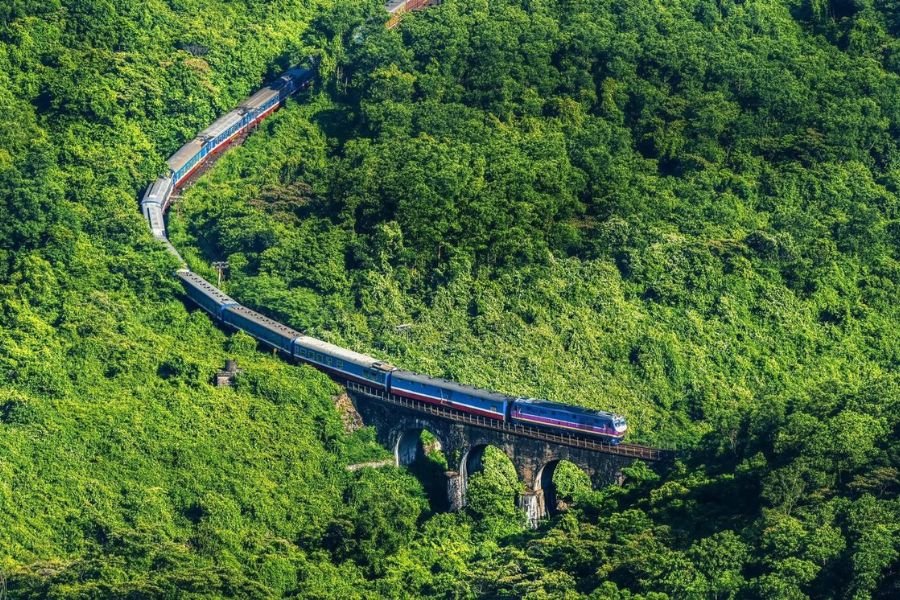
What Is a Vietnam Sleeper Train?
A Vietnam sleeper train is a passenger train offering sleeping berths for longer journeys, allowing travelers to rest while traveling between cities.
Vietnam’s railway network connects major destinations along the country’s north–south corridor, including Hanoi, Ninh Binh, Hue, Da Nang, Nha Trang, and Ho Chi Minh City.
Many long-distance services operate overnight, making sleeper trains a practical alternative to daytime buses or flights.
Unlike a regular seated carriage, a sleeper cabin has beds arranged in shared compartments. Depending on the service, passengers may choose between different berth configurations and comfort levels.
One of the biggest advantages is that you can combine transportation with accommodation for the night.
However, it’s worth remembering that sleeping on a moving train is different from sleeping in a hotel. Train noise, movement, shared spaces, and occasional stops are all part of the experience.
For travelers who enjoy slower journeys and want to see more of Vietnam beyond its airports and highways, an overnight train can be a rewarding choice.
Types of Vietnam Sleeper Train Cabins
Choosing the right cabin is one of the most important decisions when booking a Vietnam sleeper train.
Most travelers will encounter two main sleeper configurations: four-berth soft sleepers and six-berth hard sleepers.
Some routes also offer upgraded tourist carriages with enhanced bedding or additional amenities.
1. Four-Berth Soft Sleeper Cabins
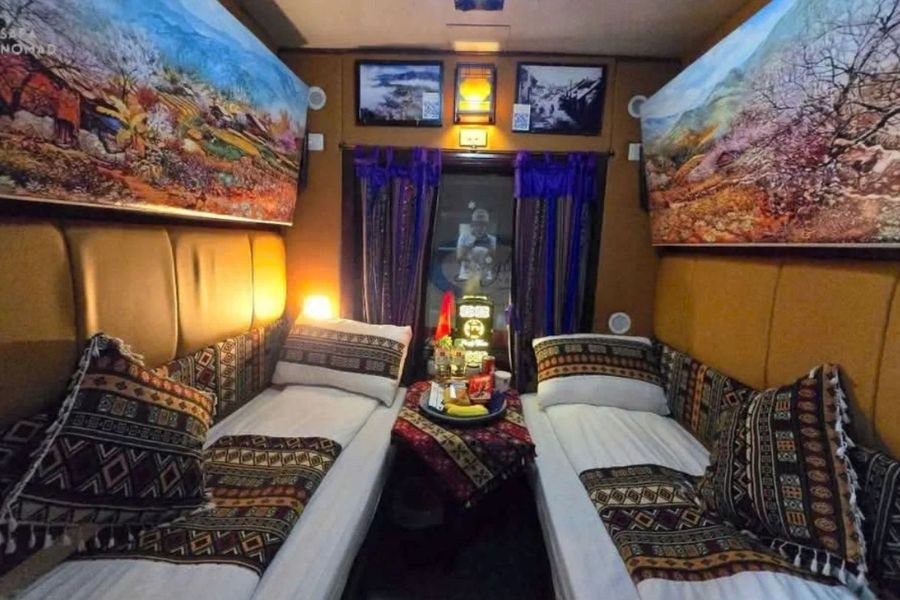
Four-berth soft sleeper cabins are generally the most comfortable standard option for overnight rail travel in Vietnam.
A typical cabin contains four beds arranged in two levels, with two lower berths and two upper berths.
The compartment usually has air conditioning, bedding, reading lights, and a door that can be closed.
Best for: Couples, families, first-time visitors, and travelers who value additional comfort.
Advantages include:
- Softer mattresses compared with hard sleepers.
- Fewer passengers sharing the compartment.
- More space between berth levels.
- A generally more comfortable environment for overnight travel.
However, a four-berth cabin is not automatically private. Unless you book all available berths, you may share the compartment with other passengers.
For couples, reserving two lower berths can be convenient, particularly if you prefer not to climb to an upper bed.
2. Six-Berth Hard Sleeper Cabins
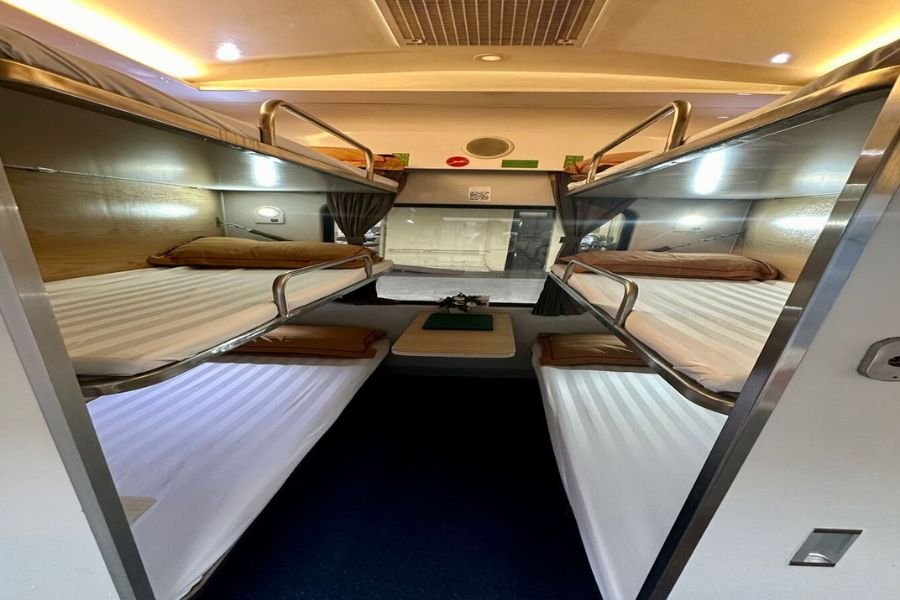
Six-berth hard sleeper cabins typically contain three levels of beds on each side.
These compartments accommodate more passengers and generally cost less than soft sleeper cabins.
The mattresses are firmer, and upper berths offer less headroom.
Best for: Budget-conscious travelers, backpackers, and passengers who prioritize affordability.
Hard sleepers can be a reasonable choice if you’re comfortable with shared spaces and don’t mind a more basic sleeping arrangement.
However, taller travelers may find the upper berths uncomfortable, particularly on longer journeys.
3. Tourist Sleeper Carriages
Some routes offer tourist-oriented sleeper carriages operated through railway service partners.
These may feature upgraded bedding, improved cabin decoration, complimentary refreshments, or additional customer service.
The exact facilities vary by operator and carriage.
A premium carriage does not necessarily mean a larger bed or a completely private compartment.
Before booking, check the cabin layout, included services, and whether the carriage is attached to a regular scheduled train.
Soft Sleeper vs Hard Sleeper: Which Should You Choose?
Both options can get you to your destination, but the experience may be quite different.
| Feature | Soft Sleeper | Hard Sleeper |
|---|---|---|
| Typical cabin layout | 4 berths | 6 berths |
| Bed comfort | Softer mattress | Firmer mattress |
| Privacy | Shared with fewer passengers | Shared with more passengers |
| Headroom | Generally more comfortable | Limited on upper levels |
| Price | Higher | Lower |
| Best for | Couples, families, first-time travelers | Backpackers, budget travelers |
For most international visitors taking their first overnight train, a four-berth soft sleeper is a sensible choice.
The additional comfort can make a noticeable difference, especially on journeys lasting eight hours or longer.
If you’re traveling with friends or family, booking all four berths in the same cabin may provide a more private experience, subject to availability and booking conditions.
Best Vietnam Sleeper Train Routes for Travelers
Vietnam has several overnight rail journeys that work well within a longer travel itinerary.
The best route depends on where you’re traveling, how much time you have, and whether you want to prioritize convenience or scenery.
Hanoi to Lao Cai: Gateway to Sapa
The overnight train from Hanoi to Lao Cai is a popular option for travelers heading to Sapa and the surrounding mountain region.
Trains arrive in Lao Cai, not Sapa itself.
From Lao Cai Railway Station, travelers need to continue by road to reach Sapa.
This journey is particularly appealing to visitors who want to avoid a long daytime bus ride and prefer sleeping during part of the transfer.
Tourist sleeper carriages may be available on selected services.
Travel tip: Arrange your onward transfer from Lao Cai before arrival, especially if your train reaches the station early in the morning.
Hanoi to Hue: A Journey Through Central Vietnam
Traveling from Hanoi to Hue by sleeper train allows visitors to connect northern Vietnam with the former imperial capital.
The journey generally takes much of a day or an overnight period, depending on the selected service.
A sleeper cabin is worth considering for this longer route.
Once in Hue, travelers can explore the Imperial City, royal tombs, local markets, and traditional Vietnamese cuisine.
If Hue is part of your itinerary, discover more in our Hue Travel Guide.
Hue to Da Nang: A Scenic Coastal Railway Journey

The railway between Hue and Da Nang is famous for its coastal views, particularly around the Hai Van Pass.
Passengers may see mountains, forested slopes, and stretches of coastline as the train winds through central Vietnam.
However, this journey is relatively short and is better known as a scenic daytime experience than a sleeper train route.
If you’re already traveling on a longer north–south sleeper service, consider choosing a departure that passes this section during daylight.
The view is one of the highlights of rail travel in Vietnam.
Nha Trang to Ho Chi Minh City: An Overnight Option
For travelers exploring southern Vietnam, selected trains between Nha Trang and Ho Chi Minh City can offer overnight travel.
A sleeper berth may be more comfortable than remaining in a seat throughout the journey.
Depending on the departure, travelers may arrive in Ho Chi Minh City in the morning, ready to begin exploring the country’s largest metropolis.
Always check the specific train schedule because not every service offers the same carriage types or convenient overnight timing.
How to Book Vietnam Sleeper Train Tickets
Booking a Vietnam sleeper train is relatively straightforward, but it’s important to choose the correct train, date, and berth.
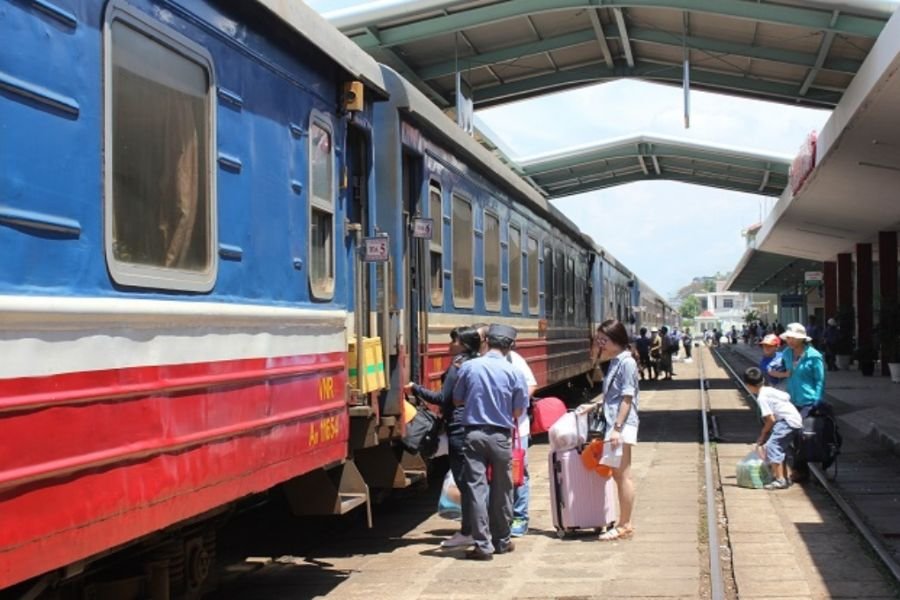
Step 1: Choose Your Route and Travel Date
Start by deciding where you want to depart and arrive.
Check whether the train travels overnight and whether sleeper berths are available on your selected service.
Remember that some tourist destinations, such as Sapa, require an additional road transfer from the nearest railway station.
Step 2: Select Your Cabin Type
Review the available ticket classes.
For longer journeys, look for a four-berth soft sleeper if comfort is your priority.
If you’re traveling on a tighter budget, compare the cost of a six-berth hard sleeper.
Check whether the berth is upper, middle, or lower.
Lower berths are often easier to access, while upper berths may provide a little more separation from movement around the cabin.
Step 3: Book Through a Reliable Channel
Tickets may be available through Vietnam Railways’ official booking channels, authorized agents, or reputable travel companies.
When using a third-party service, confirm whether you’re purchasing a standard railway berth or a place in a separately marketed tourist carriage.
Compare the final price, including any service fees.
Step 4: Check Your Booking Details
Before paying, verify:
- Departure and arrival stations.
- Travel date and departure time.
- Train number.
- Carriage and berth number.
- Passenger name and identification details.
- Cancellation and refund conditions.
Small booking errors can create unnecessary complications, particularly when traveling overnight.
Step 5: Save Your Ticket
Keep your electronic ticket or booking confirmation accessible.
You may need to present identification that matches your booking details.
It’s also useful to save a screenshot or offline copy in case your mobile connection is unreliable at the station.
How Much Does a Vietnam Sleeper Train Cost?
Vietnam sleeper train prices vary depending on the route, travel date, train service, berth type, and availability.
Four-berth soft sleepers usually cost more than six-berth hard sleepers.
Premium tourist carriages may be priced higher than standard railway accommodation.
Prices can also increase during popular travel periods, particularly around major public holidays.
Rather than relying on a fixed fare quoted months in advance, check the current ticket price for your exact route and departure date.
When comparing transportation options, remember to consider the overall cost of your journey.
An overnight train may help you avoid paying for a hotel room that night, although the quality of sleep can vary.
For some travelers, a flight may be faster or similarly priced. For others, the train offers a more enjoyable travel experience.
What Facilities Are Available on Vietnam Sleeper Trains?
Facilities vary between trains and carriage classes, but there are several things passengers can generally expect.
Beds and Bedding
Sleeper berths typically come with basic bedding.
Soft sleeper cabins usually provide a mattress, pillow, and blanket, although comfort and cleanliness can vary.
Some travelers prefer bringing a lightweight sleeping liner or personal pillowcase.
Air Conditioning
Air conditioning is common in modern sleeper carriages.
However, cabin temperatures can feel cool during the night.
A light jacket or extra layer is useful, even when traveling during Vietnam’s warmer months.
Toilets and Washing Facilities
Toilets are generally located at the ends of carriages and are shared with other passengers.
Facilities are basic compared with those in hotels.
Bring tissues, hand sanitizer, and any personal hygiene items you may need.
Food and Drinks
Food and drink availability depends on the train and service.
Some trains offer onboard meals, snacks, or drinks for purchase.
However, selection and service times can vary.
Bringing bottled water and a few snacks is a good idea, particularly for long journeys.
Charging Devices and Internet Access
Some sleeper carriages provide electrical outlets, but availability and reliability vary.
Carry a charged power bank and avoid assuming that every berth has a working socket.
Mobile internet coverage may also become unreliable when traveling through rural areas or mountainous regions.
Download important travel information before departure.
Is a Vietnam Sleeper Train Comfortable?
Comfort is one of the most common concerns among first-time passengers.
A Vietnam sleeper train can be comfortable enough for an overnight journey, particularly in a four-berth soft sleeper cabin.
However, it is important to set realistic expectations.
You may hear the train moving along the tracks, feel occasional vibrations, or wake up when the train stops at stations.
Shared cabins also mean that your experience can depend on other passengers.
If you’re a light sleeper, earplugs and an eye mask may help.
Travelers who need uninterrupted sleep or have mobility limitations should carefully consider whether overnight rail travel is suitable for them.
For those who enjoy the journey as much as the destination, the experience can be part of the adventure.
Is It Safe to Travel on a Vietnam Sleeper Train?
Safety is an important consideration for any overnight journey.
Vietnam sleeper trains can be a practical transportation option, but travelers should still take normal precautions.
Keep passports, money, and other valuables close to you, especially when sharing a cabin with unfamiliar passengers.
Avoid leaving important belongings unattended in corridors or communal areas.
Be careful when moving between carriages, particularly while the train is in motion.
Use handrails and wear suitable footwear when walking to the toilet at night.
If you’re traveling alone, consider choosing a cabin arrangement that makes you feel comfortable.
For families with young children, lower berths may be easier to manage than upper beds.
If you experience a problem during the journey, contact the train staff rather than trying to resolve a difficult situation alone.
9 Essential Tips for a Comfortable Vietnam Sleeper Train Journey
A little preparation can make your overnight journey much more enjoyable.
1. Book Early During Busy Travel Periods
Popular trains and lower berths may sell out, especially during weekends and public holidays.
Booking ahead gives you more cabin choices.
2. Choose a Soft Sleeper for Longer Journeys
If your budget allows, a four-berth soft sleeper is generally a better choice for an overnight trip.
The extra comfort can be worthwhile.
3. Arrive at the Station Early
Aim to arrive with enough time to find your platform, identify your carriage, and board without rushing.
Station layouts and boarding arrangements can vary.
4. Pack a Small Overnight Bag
Keep your toothbrush, medication, phone charger, and other essentials in a small bag.
This makes it easier to access what you need without opening your main suitcase.
5. Bring Earplugs and an Eye Mask
Train noise and cabin lighting may affect your sleep.
These small items can make a noticeable difference.
6. Carry Water and Snacks
Although food may be available onboard, bringing your own supplies gives you more flexibility.
7. Wear Comfortable Clothing
Choose lightweight, comfortable clothes and bring an extra layer for air-conditioned cabins.
8. Keep Your Valuables Secure
Store important documents and electronics where you can monitor them.
Do not leave valuables unattended.
9. Check Your Arrival Time and Station
Some trains arrive very early in the morning.
Plan your onward transfer and accommodation arrangements before departure.
Following these tips can help you enjoy your Vietnam sleeper train experience with fewer surprises.
Vietnam Sleeper Train vs Overnight Bus: Which Is Better?
Both sleeper trains and overnight buses are commonly used for long-distance travel in Vietnam.
The better option depends on your route, budget, and comfort preferences.
| Feature | Sleeper Train | Overnight Bus |
|---|---|---|
| Sleeping arrangement | Berths in train compartments | Reclining or sleeper-style seats/beds |
| Movement | Rail vibrations and occasional stops | Road movement, turns, and traffic |
| Space | Varies by cabin class | Varies significantly by bus type |
| Toilet access | Usually available onboard | Depends on the vehicle |
| Route coverage | Limited to railway destinations | Reaches more towns and tourist areas |
| Scenery | Excellent on selected routes | Depends on the road |
| Travel experience | Slower, traditional railway journey | Often more direct for certain destinations |
For travelers who prefer being able to stand up and move around during a long journey, trains may be more appealing.
However, overnight buses can be more convenient for destinations without direct railway access.
If you’re planning a multi-destination trip, our Vietnam 2 Week Itinerary can help you decide how to connect the country’s highlights.
Who Should Consider Taking a Vietnam Sleeper Train?
Overnight trains are particularly suitable for travelers who enjoy slow travel and want to experience Vietnam beyond its major tourist attractions.
Couples: A sleeper train can add a memorable experience to a romantic journey, especially when traveling through scenic regions.
Solo travelers: Shared sleeper cabins can be a practical way to travel long distances while meeting other passengers.
Families: Four-berth cabins may work well for families, depending on children’s ages and the available arrangements.
Budget travelers: Hard sleeper cabins can offer a relatively affordable way to combine transportation and an overnight stay.
Slow-travel enthusiasts: Train journeys provide an opportunity to appreciate the landscapes and everyday life of Vietnam at a different pace.
However, travelers who require step-free access, spacious bathrooms, or highly predictable sleeping conditions should check facilities carefully before booking.
Frequently Asked Questions About Vietnam Sleeper Trains
Are Vietnam sleeper trains worth it?
Yes, for many travelers. They offer a different way to explore Vietnam, combine transportation with an overnight stay, and can be particularly enjoyable on longer journeys.
What is the best sleeper train cabin in Vietnam?
For most first-time international visitors, a four-berth soft sleeper is a good balance of comfort and practicality.
Can couples book a private sleeper train cabin?
Couples may be able to reserve all berths in a four-berth compartment, depending on availability and booking conditions. Booking two berths alone does not normally guarantee exclusive use of the cabin.
Are Vietnam sleeper trains clean?
Cleanliness varies between services and carriages. Standard sleeper cabins generally provide basic bedding, but travelers should expect simpler facilities than those of a hotel.
Can you sleep comfortably on a Vietnam sleeper train?
Many travelers can sleep reasonably well in a soft sleeper cabin. However, train movement, noise, and shared compartments may affect sleep quality.
Do Vietnam sleeper trains have Wi-Fi?
Wi-Fi should not be assumed to be available or reliable. Mobile coverage may also vary along the route, so downloading important information in advance is recommended.
Is it better to book an upper or lower berth?
Lower berths are usually easier to access, especially for older travelers or anyone who finds climbing difficult. Upper berths may appeal to passengers who prefer being farther from movement around the cabin.
How far in advance should I book a Vietnam sleeper train?
Book as early as practical once your travel dates are confirmed, especially for popular routes, holidays, and preferred berth types. Ticket release windows can vary.
Final Thoughts: Is a Vietnam Sleeper Train Right for You?
Taking a Vietnam sleeper train is not just about reaching your next destination. It’s about experiencing the country at a slower pace.
From quiet countryside stations to the changing landscapes outside your window, an overnight railway journey can offer moments you might otherwise miss.
While sleeper trains may not provide the comfort of a luxury hotel, they offer something different: a memorable travel experience that connects you with Vietnam’s landscapes and everyday rhythms.
For most first-time travelers, choosing a four-berth soft sleeper, booking ahead, and packing a few essentials can make the journey more comfortable.
Whether you’re heading toward the mountains of northern Vietnam or exploring the historic cities of central Vietnam, a sleeper train can become an enjoyable part of your adventure.
Ready to discover more of the country? Explore our Vietnam Travel Guide and start planning a journey that goes beyond the usual tourist routes.
Maverick Journeys — Your Vietnam Travel Expert
Unbound • Untouched • Unforgettable