










Vietnam’s temples and pagodas are more than beautiful landmarks. They are places where architecture, spirituality, local traditions, and centuries of history come together.
From ancient pagodas overlooking Hanoi’s lakes to imperial-era monuments in Hue and mountaintop sanctuaries in southern Vietnam, Vietnam temples offer travelers a deeper look at the country beyond its beaches, food, and famous landscapes.
Some are active Buddhist places of worship. Others are temples dedicated to historical figures, local deities, or important religious traditions. This distinction matters: these are living cultural and spiritual spaces, not simply tourist attractions.
If you want to experience a more meaningful side of Vietnam, here are 10 of the most beautiful temples and pagodas in Vietnam worth adding to your journey.
Quick Guide to Vietnam Temples and Pagodas
| Place | Destination | Best For |
|---|---|---|
| Tran Quoc Pagoda | Hanoi | History & lakeside scenery |
| Temple of Literature | Hanoi | Vietnamese history & Confucian heritage |
| Bai Dinh Pagoda | Ninh Binh | Grand Buddhist architecture |
| Bich Dong Pagoda | Ninh Binh | Nature & photography |
| Thien Mu Pagoda | Hue | History & riverside views |
| Linh Ung Pagoda | Da Nang | Coastal scenery |
| Japanese Covered Bridge & nearby spiritual sites | Hoi An | Heritage & culture |
| Truc Lam Zen Monastery | Da Lat | Peaceful mountain atmosphere |
| Ba Den Mountain spiritual complex | Tay Ninh | Mountain pilgrimage |
| Vinh Nghiem Pagoda | Ho Chi Minh City | Urban Buddhist culture |
Travel tip: If possible, visit early in the morning. Many religious sites are quieter, temperatures are cooler, and you may get a better sense of how local people actually use these spaces.
1. Tran Quoc Pagoda – Hanoi
📍 Location: West Lake, Hanoi
⭐ Best for: History, architecture and photography
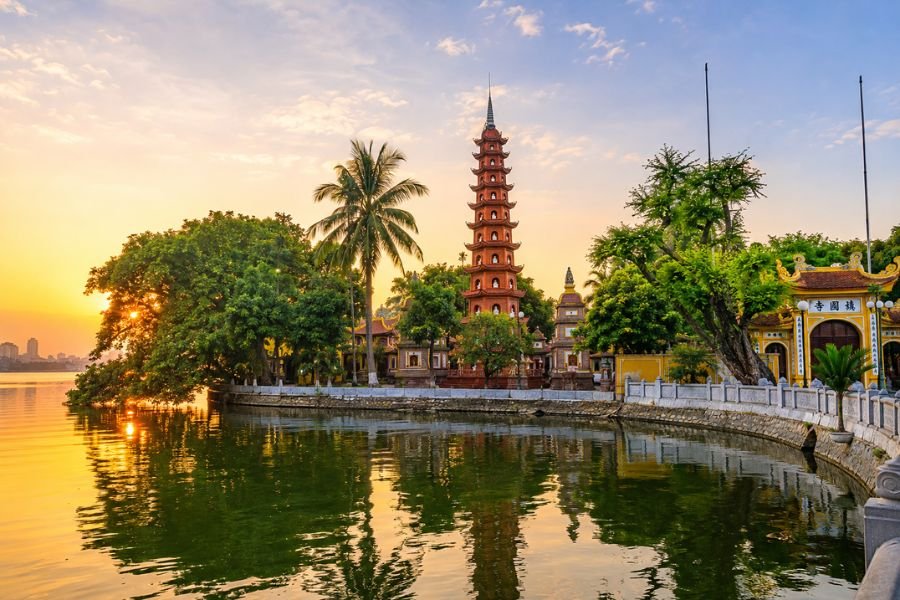
Standing on a small peninsula on Hanoi’s West Lake, Tran Quoc Pagoda is one of the capital’s most recognizable religious landmarks.
Its history stretches back more than 1,500 years, making it one of Vietnam’s oldest Buddhist pagodas. The complex has undergone changes and restorations over the centuries, but it remains an important place of Buddhist worship.
One of its most distinctive features is the tall red stupa rising above the surrounding trees. Against the calm waters of West Lake, it creates one of Hanoi’s most photogenic religious scenes.
Yet Tran Quoc is worth visiting for more than photography.
Come in the early morning and you may see residents praying, making offerings, or quietly walking through the grounds. It offers a very different atmosphere from the busy streets of Hanoi just minutes away.
Travel Tip
Combine your visit with a walk around West Lake. Early morning and late afternoon generally offer softer light and more comfortable temperatures.
2. Temple of Literature – Hanoi
📍 Location: Dong Da, Hanoi
⭐ Best for: History, architecture and Vietnamese education
Although commonly included alongside Hanoi’s religious landmarks, the Temple of Literature is different from a Buddhist pagoda.
Founded in 1070 and dedicated to Confucius, it later became associated with Vietnam’s first national university. For centuries, the complex represented scholarship, education, and the Confucian intellectual tradition.
Walk through its courtyards and you will find traditional gates, gardens, ceremonial halls, and stone stelae commemorating successful scholars.
For international visitors, this is one of the best places in Hanoi to understand how highly education and scholarship have historically been valued in Vietnamese society.
It is also a useful reminder that the term “temple” in Vietnam can encompass several religious and cultural traditions—not only Buddhism.
Don’t Miss
Look for the stone doctoral stelae mounted on turtle-shaped bases, one of the complex’s most historically significant features.
3. Bai Dinh Pagoda – Ninh Binh
📍 Location: Gia Vien, Ninh Binh
⭐ Best for: Buddhist culture and monumental architecture
Ninh Binh is famous for limestone mountains, rice fields, and waterways, but it is also home to one of Vietnam’s largest Buddhist complexes.
Bai Dinh combines an older pagoda area with an enormous modern Buddhist complex spread across the surrounding landscape.
Long corridors lined with Arhat statues, imposing temple halls, large Buddha images, and elevated viewpoints make the complex feel dramatically different from Vietnam’s smaller historic pagodas.
Allow plenty of time here. Bai Dinh is not the type of place you should try to see in 20 min utes.
The scale of the complex means you may spend several hours walking and exploring.
Make It Part of a Ninh Binh Itinerary
Bai Dinh can be combined with other major Ninh Binh attractions such as Trang An, Hoa Lu, or Hang Mua.
For travelers staying in Ninh Binh for more than a day, this combination provides a good balance of nature, history, and Vietnamese spiritual culture.
4. Bich Dong Pagoda – Ninh Binh
📍 Location: Tam Coc, Ninh Binh
⭐ Best for: Scenic landscapes, quiet atmosphere and photography
If Bai Dinh impresses through scale, Bich Dong Pagoda wins travelers over with its setting.
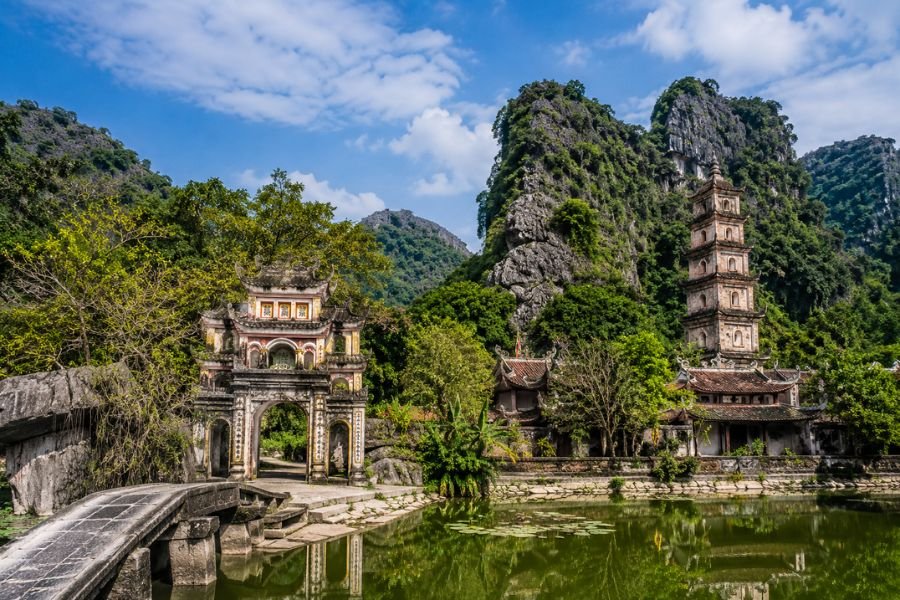
Built into a limestone mountainside near Tam Coc, the pagoda is surrounded by greenery, water, and dramatic karst scenery.
Visitors cross a small stone bridge before reaching the entrance and then climb upward through several levels of the complex.
The combination of ancient architecture, caves, stone steps, and dense vegetation makes Bich Dong one of the most atmospheric Vietnam temples and pagodas for travelers interested in photography.
It is particularly beautiful when the surrounding vegetation is lush.
Best Time to Visit
Try to arrive early in the morning before larger tour groups reach the area.
Wear comfortable footwear—the upper sections require climbing steps, and surfaces can become slippery after rain.
5. Thien Mu Pagoda – Hue
📍 Location: Perfume River, Hue
⭐ Best for: History, architecture and Hue’s cultural heritage
Few religious landmarks are as closely associated with a Vietnamese city as Thien Mu Pagoda is with Hue.
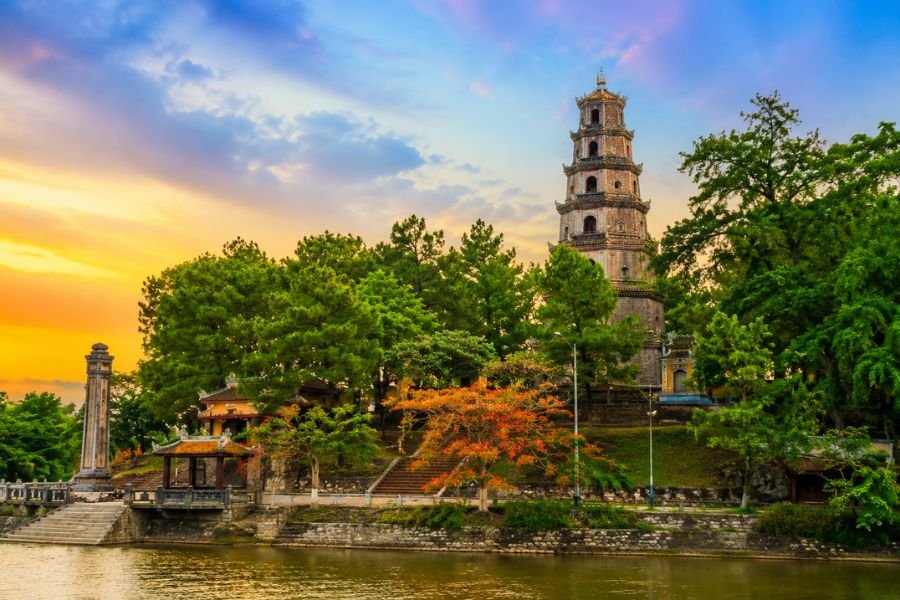
Perched above the Perfume River, the pagoda is instantly recognizable by its seven-story Phuoc Duyen Tower.
Founded in the early 17th century, Thien Mu became closely connected with Hue’s religious and political history. Today, it remains an active Buddhist site as well as one of the former imperial capital’s most visited landmarks.
The setting is part of its appeal.
The Perfume River flows below, while gardens and temple buildings create a peaceful contrast to central Hue.
Rather than rushing through the complex, allow yourself time to walk quietly through the grounds.
Maverick Journeys Tip
A particularly enjoyable way to experience Thien Mu is to combine it with other Hue heritage sites and travel along the Perfume River. It creates a more coherent understanding of Hue than visiting each landmark as an isolated photo stop.
More Than Beautiful Architecture: Understanding Sacred Places in Vietnam
One of the biggest mistakes travelers can make is treating every temple or pagoda as simply another sightseeing attraction.
Vietnam’s religious landscape is diverse.
You will encounter Buddhist pagodas, Confucian temples, ancestral worship sites, shrines dedicated to historical figures, and religious complexes influenced by different traditions.
Even famous attractions may remain active places of worship.
You may see people:
- lighting incense;
- making offerings;
- praying before altars;
- participating in ceremonies;
- visiting during important lunar-calendar occasions.
You do not need to understand every ritual to visit respectfully.
Observing quietly and following the behavior of local visitors is often the best approach.
Vietnam Temple Etiquette: What Travelers Should Know
Visiting Vietnam temples is generally straightforward, and international travelers are welcome at many religious sites. A few basic practices will make your visit more respectful.
Dress appropriately
Covering your shoulders and knees is advisable, particularly when entering worship halls. Avoid very revealing clothing.
Keep your voice low
Remember that the person beside you may be praying rather than sightseeing.
Check before taking photographs
Photography may be acceptable around the grounds but restricted near certain altars, statues, ceremonies, or interior spaces.
Don’t touch religious objects
Avoid touching statues, offerings, altars, and ceremonial objects unless it is clearly permitted.
Follow footwear instructions
At some locations, visitors are expected to remove their shoes before entering particular buildings.
Never interrupt worship for a photo
A beautiful photograph is never more important than respecting someone’s religious practice.
These small considerations make visiting Vietnam’s sacred sites a much more meaningful experience.
6. Linh Ung Pagoda – Da Nang
📍 Location: Son Tra Peninsula, Da Nang
⭐ Best for: Coastal views, Buddhist culture and photography
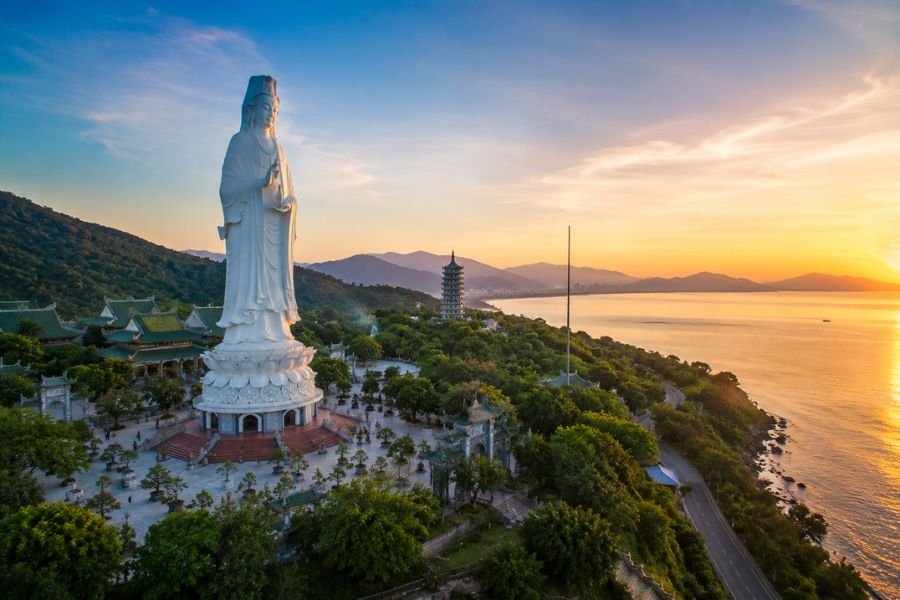
High above the coastline on Son Tra Peninsula, Linh Ung Pagoda combines Buddhist architecture with some of the most impressive views in Da Nang.
The complex is best known for its towering Lady Buddha statue, which faces the sea and can be seen from many parts of the city.
Beyond the statue, visitors can explore spacious courtyards, traditional temple buildings, bonsai gardens, and viewpoints overlooking Da Nang Bay and the surrounding coastline.
Despite being one of the city’s popular attractions, Linh Ung remains an active place of worship. Visit early in the morning and the atmosphere can feel remarkably peaceful.
Travel Tip
Combine Linh Ung Pagoda with a trip around Son Tra Peninsula. If weather conditions are clear, the coastal road offers beautiful views over Da Nang.
Remember that monkeys live around Son Tra. Avoid feeding or approaching them, and keep food and loose belongings secure.
7. Hoi An’s Sacred Heritage – Beyond the Lantern Streets
📍 Location: Hoi An Ancient Town, Quang Nam
⭐ Best for: Heritage, architecture and local culture
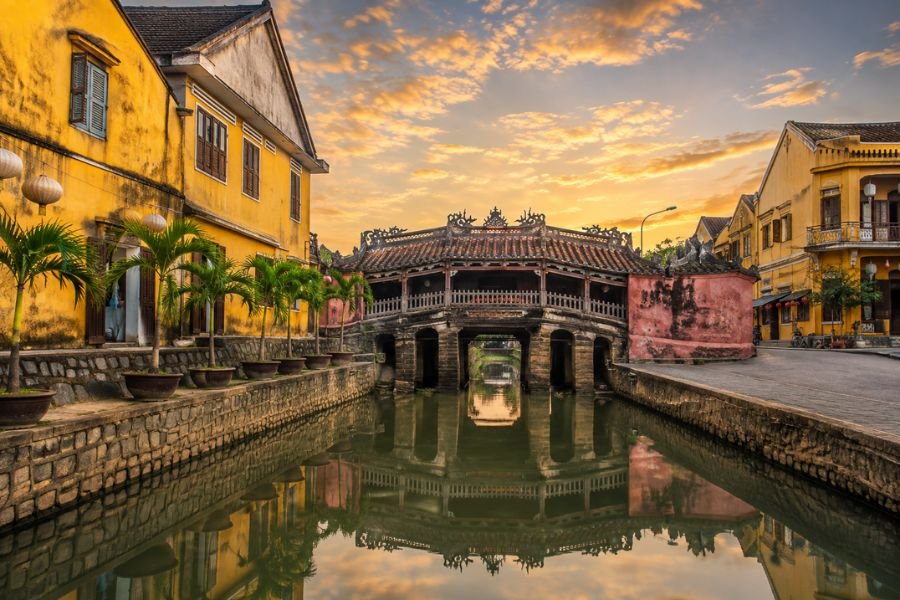
Hoi An may be famous for yellow houses, lanterns, and riverside evenings, but spirituality is also deeply woven into the town’s heritage.
Throughout the Ancient Town, travelers will encounter assembly halls, family chapels, shrines, temples, and other places associated with the communities that shaped Hoi An during its centuries as an international trading port.
One of its best-known landmarks is the Japanese Covered Bridge, which has long been part of Hoi An’s historic urban landscape.
Nearby, Chinese assembly halls such as the Fujian Assembly Hall reveal another layer of the town’s multicultural history through elaborate architecture, courtyards, altars, and decorative details.
Rather than treating these buildings as separate photo stops, consider them pieces of a much larger story about migration, commerce, religion, and community life.
Best Way to Experience It
Explore Hoi An in the morning, before the busiest part of the day.
Walk slowly through the old streets and pay attention to the smaller temples, family shrines, and historic buildings between the major attractions. Some of Hoi An’s most memorable details are easy to miss when you rush from landmark to landmark.
8. Truc Lam Zen Monastery – Da Lat
📍 Location: Near Tuyen Lam Lake, Da Lat
⭐ Best for: Nature, tranquility and meditation atmosphere
Surrounded by pine-covered hills near Tuyen Lam Lake, Truc Lam Zen Monastery offers a very different experience from the monumental Buddhist complexes found elsewhere in Vietnam.
The appeal here is tranquility.
Gardens, mountain air, temple architecture, and views over the surrounding landscape create an environment that encourages visitors to slow down.
For travelers spending several days in Da Lat, the monastery provides a peaceful contrast to the city’s cafés, markets, waterfalls, and increasingly busy tourist attractions.
Travel Tip
Consider combining the monastery with Tuyen Lam Lake for a relaxed half-day itinerary.
As this is an active religious site, dress respectfully and keep conversations quiet while exploring the grounds.
9. Ba Den Mountain – Tay Ninh
📍 Location: Tay Ninh Province
⭐ Best for: Pilgrimage, mountain scenery and spiritual culture
Rising dramatically above the surrounding plains of Tay Ninh, Ba Den Mountain is one of southern Vietnam’s most prominent spiritual destinations.
For generations, pilgrims have traveled here to visit temples and religious sites associated with the mountain.
Today, modern infrastructure makes the mountain considerably more accessible, while the broader complex has developed into a major spiritual and sightseeing destination.
The combination of mountain landscapes, religious architecture, pilgrimage traditions, and panoramic views makes Ba Den different from most other Vietnam temples on this list.
When to Go
Weekends, public holidays, and important religious periods can be extremely busy.
If your priority is scenery and a quieter visit, consider going on a weekday and arriving early.
10. Vinh Nghiem Pagoda – Ho Chi Minh City
📍 Location: District 3, Ho Chi Minh City
⭐ Best for: Buddhist culture in modern Saigon
Ho Chi Minh City is often associated with motorbikes, street food, rooftop bars, colonial architecture, and nonstop urban energy.
Vinh Nghiem Pagoda reveals another side of the city.
Built in the 20th century while drawing inspiration from traditional Vietnamese Buddhist architecture, the pagoda features large worship halls, towers, courtyards, and intricate religious details.
Its urban location makes the experience particularly interesting.
Outside, Saigon moves at full speed. Inside the temple grounds, the pace becomes noticeably calmer.
For travelers interested in understanding everyday religious life in contemporary Vietnam, Vinh Nghiem is a worthwhile addition to a Ho Chi Minh City itinerary.
Which Vietnam Temples Should You Visit?
With so many sacred sites across the country, you do not need to visit every temple on your trip.
Instead, choose places that complement your itinerary and interests.
For history:
Choose Tran Quoc Pagoda, the Temple of Literature, or Thien Mu Pagoda.
For dramatic scenery:
Consider Bich Dong Pagoda, Linh Ung Pagoda, or Ba Den Mountain.
For Buddhist architecture:
Bai Dinh Pagoda offers one of the country’s most extensive complexes.
For peaceful surroundings:
Truc Lam Zen Monastery is particularly appealing.
For cultural context:
Hoi An’s temples, shrines, and assembly halls help reveal the multicultural history behind the Ancient Town.
This approach prevents your Vietnam itinerary from becoming a checklist of similar-looking attractions.
Best Time to Visit Temples and Pagodas in Vietnam
There is no single perfect season for visiting Vietnam temples, because the country stretches across several climate zones.
However, the time of day can make a significant difference.
Early Morning
For many locations, this is the best option.
Temperatures are usually cooler, visitor numbers may be lower, and active religious sites often have a more authentic atmosphere before tour groups arrive.
Late Afternoon
Late afternoon can provide beautiful light, especially at temples near lakes, rivers, mountains, or the coast.
However, check closing times before planning a late visit.
Lunar New Year and Religious Festivals
Temples and pagodas can become particularly lively around Tet and significant dates in the lunar calendar.
This can be a fascinating cultural experience, but expect larger crowds.
If you visit during an important religious occasion, be particularly mindful that local worshippers are there for spiritual reasons rather than tourism.
How to Include Vietnam Temples in Your Itinerary
You do not need to dedicate an entire trip to religious landmarks to appreciate Vietnam’s spiritual heritage.
The easiest approach is to combine them naturally with nearby destinations.
Hanoi
Combine Tran Quoc Pagoda + Temple of Literature + Old Quarter for a day mixing history, culture, and local life.
Ninh Binh
Combine Bai Dinh + Trang An or Bich Dong + Tam Coc.
This is one of the best regions for experiencing Vietnam’s spiritual architecture alongside limestone landscapes.
Hue
Visit Thien Mu Pagoda as part of a broader exploration of Hue’s imperial heritage, tombs, and Perfume River.
Da Nang & Hoi An
Combine Linh Ung Pagoda + Son Tra Peninsula before continuing south to Hoi An for its historic streets, assembly halls, and temples.
Southern Vietnam
If you have extra time from Ho Chi Minh City, consider Tay Ninh and Ba Den Mountain. Within the city itself, Vinh Nghiem Pagoda provides a much easier introduction to Buddhist culture.
Frequently Asked Questions About Vietnam Temples
What is the difference between a temple and a pagoda in Vietnam?
The terms are sometimes used loosely in English-language travel content, but they are not necessarily interchangeable.
A pagoda in Vietnam is generally associated with Buddhism, while a temple may honor historical figures, deities, Confucian traditions, or other spiritual and cultural figures.
Understanding the distinction can help travelers appreciate what they are visiting rather than viewing every sacred building as the same type of attraction.
Are tourists allowed inside temples in Vietnam?
Many temples and pagodas welcome visitors, including international travelers.
However, access to certain rooms or ceremonial areas may be restricted.
Always follow signs and instructions from staff or religious practitioners.
Is there a dress code for Vietnam temples?
There is not always a formal dress code, but modest clothing is recommended.
Covering shoulders and knees is a sensible choice, especially when entering worship halls or important religious areas.
Carrying a lightweight scarf or cover-up can be useful during a longer Vietnam trip.
Can I take photos inside Vietnamese temples?
Photography rules vary.
Outdoor photography is commonly permitted at major tourist sites, while photography may be restricted around altars, ceremonies, or particular interior spaces.
When uncertain, look for signs or ask before taking photographs.
Are temples in Vietnam free to visit?
Many religious sites are free, while some heritage complexes, attractions, or associated tourist areas may charge admission or other service fees.
Entrance policies can change, so check current information before visiting.
Experience a Deeper Side of Vietnam
Vietnam’s famous landscapes may bring travelers here, but places like these often reveal something deeper about the country.
Behind the ornate roofs, incense smoke, stone courtyards, Buddha statues, and ancient gates are stories about faith, education, dynasties, migration, community, and family traditions.
That is what makes visiting Vietnam temples and pagodas worthwhile.
You do not need to be religious to appreciate them.
Simply arrive with curiosity, dress respectfully, slow down, and remember that many of these places remain part of everyday spiritual life.
Whether you are watching the morning light over West Lake at Tran Quoc Pagoda, climbing through the limestone landscape surrounding Bich Dong, standing above the Perfume River at Thien Mu, or looking across Da Nang’s coastline from Linh Ung, each destination offers a different window into Vietnam.
And sometimes, understanding these quieter places is what turns a sightseeing trip into a meaningful journey.
Plan Your Cultural Journey Through Vietnam
Want to experience more than Vietnam’s famous tourist attractions?
Maverick Journeys can help you build an itinerary combining iconic destinations with cultural experiences, local communities, food, history, and lesser-known places along the way.
Start planning your Vietnam journey and discover the stories behind the places you visit.