










When the sun goes down, Vietnam doesn’t slow down — in many places, the streets simply come alive in a different way.
Colorful stalls light up, the smell of grilled seafood fills the air, vendors prepare steaming bowls of noodles, and locals gather over snacks and drinks. From Hanoi’s historic Old Quarter to the lantern-lit streets of Hoi An and the seaside energy of Phu Quoc, Vietnam Night Markets offer travelers an easy way to experience food, shopping and everyday local life after dark.
But not every night market offers the same experience.
Some are famous for street food. Others are better for souvenirs, nightlife or simply soaking up the atmosphere. And while a few markets have become major tourist attractions, others still feel closely connected to the communities around them.
Here are 10 of the best night markets in Vietnam, plus practical tips on what to eat, what to buy and how to enjoy them like a thoughtful traveler.
Why Visit Vietnam Night Markets?
Night markets are about much more than shopping.
For international visitors, they offer a concentrated introduction to Vietnam’s street culture. Within a few blocks, you might find sizzling skewers, fresh fruit, local desserts, clothes, handicrafts and groups of friends eating together on tiny stools.
They’re also relatively easy to experience.
You don’t need a complicated itinerary or an entire day. A market can become part of an evening after sightseeing, making it an excellent way to explore a destination after many daytime attractions have closed.
The best Vietnam Night Markets combine three things: local flavors, lively atmosphere and a strong sense of place.
However, expectations matter. Some famous markets cater heavily to visitors, and souvenir quality and prices can vary. Go for the entire experience rather than expecting every market to be an untouched local secret.
10 Best Vietnam Night Markets to Explore
1. Hanoi Weekend Night Market – Old Quarter Energy
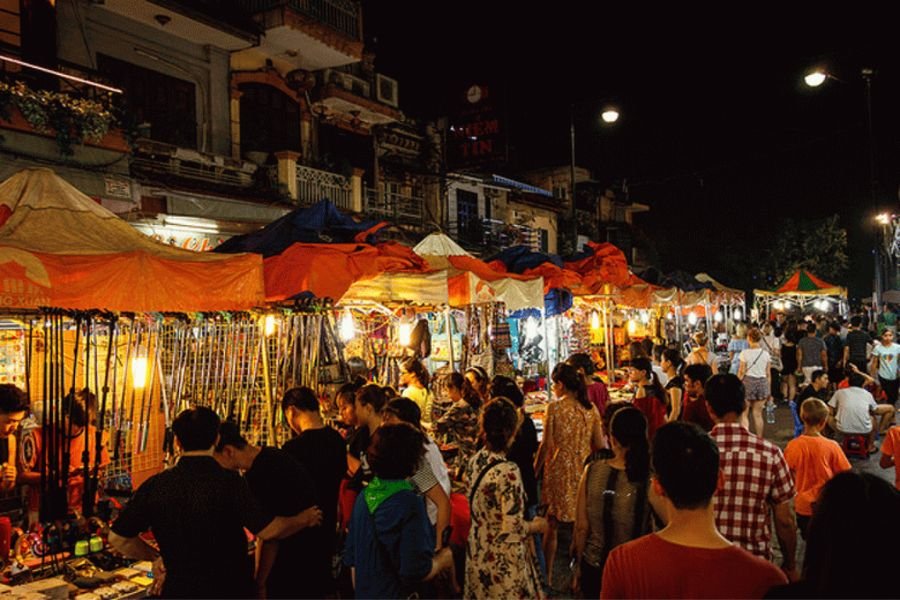
Few places introduce you to Hanoi after dark better than the Old Quarter.
The weekend night market runs through the historic center, with stalls stretching through streets around the pedestrian area. Clothes, accessories, snacks and souvenirs fill the route while the surrounding Old Quarter adds much of the atmosphere.
The experience isn’t only about what you buy.
Walk toward Hoan Kiem Lake and you’ll often find families, couples and groups of friends enjoying the pedestrian streets. Street performances and the energy of the surrounding neighborhoods make this one of the easiest evening experiences for first-time visitors.
What to try
Use the market as a starting point for a wider Hanoi food evening. Look for local snacks and then venture into surrounding streets for dishes such as bún chả, phở, bánh cuốn or a glass of bia hơi.
Best for: First-time visitors, atmosphere and combining shopping with street food.
Maverick tip: Don’t restrict yourself to the actual market stalls. Some of the most interesting food experiences are hidden in the streets surrounding the market.
Planning more time in the capital? Our Hanoi Travel Guide will help you explore beyond the Old Quarter.
2. Hoi An Night Market – Lanterns Along the River
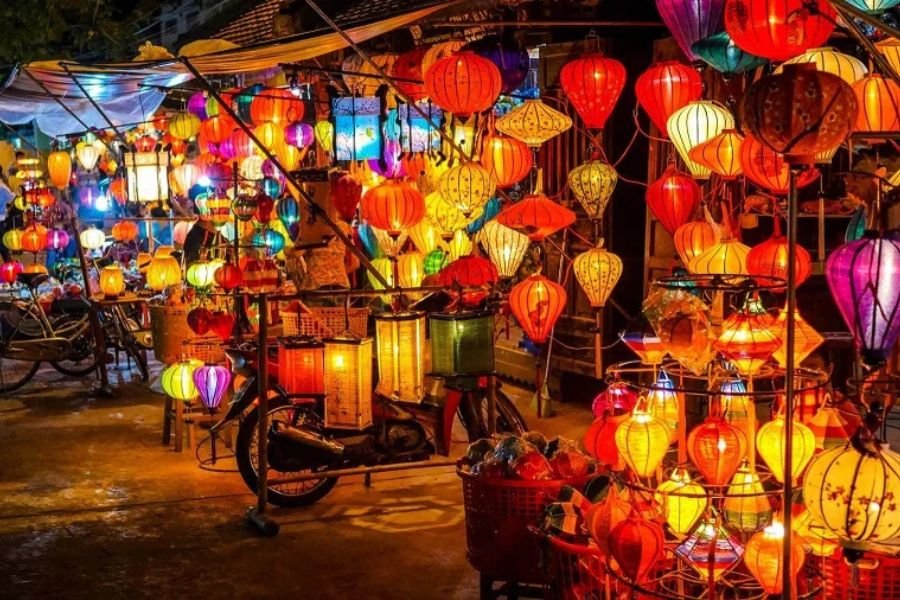
If there’s one night market travelers immediately associate with beautiful photographs, it’s Hoi An.
As evening arrives, the ancient town transforms. Lanterns glow above narrow streets, reflections shimmer across the Thu Bon River and the area around the night market fills with food stalls and souvenir vendors.
The market on Nguyen Hoang Street, across the river from the historic center, is one of the most popular evening areas.
You’ll find lanterns, handicrafts, clothing, accessories and plenty of food.
But the real attraction is the atmosphere.
Hoi An is best experienced slowly. Cross the river, explore the stalls, stop for a snack and then wander back into the Ancient Town rather than treating the market as a shopping mission.
What to eat
Look beyond generic tourist snacks and try some of Hoi An’s regional specialties during your stay, including cao lầu, cơm gà Hội An and white rose dumplings.
Best for: Couples, photography, culture and first-time visitors.
Maverick tip: Arrive around sunset so you can experience the transition from daylight to lantern-lit Hoi An.
For more ideas, see our Hoi An Travel Guide.
3. Ben Thanh Night Area – Ho Chi Minh City After Dark
Ben Thanh Market is one of Ho Chi Minh City’s most recognizable landmarks.
While the traditional indoor market is primarily a daytime attraction, the surrounding central area remains lively into the evening and provides easy access to food, shopping and nightlife around District 1.
For visitors staying centrally, this makes it convenient to combine Ben Thanh with an evening walk through downtown Saigon.
You’ll encounter restaurants, food spots, shops and busy streets filled with both travelers and locals.
What to eat
Ho Chi Minh City is one of Vietnam’s great food destinations, so don’t make souvenir shopping the focus of your evening.
Try cơm tấm, bánh xèo, southern-style noodles or a cold drink before continuing into the surrounding neighborhoods.
Best for: First-time visitors and travelers staying in District 1.
Maverick tip: Treat Ben Thanh as the beginning of your evening rather than the entire experience. Ho Chi Minh City’s food scene extends far beyond the central tourist district.
See our guide to the best things to do in Ho Chi Minh City for more ideas.
4. Son Tra Night Market – A Da Nang Evening Favorite
Da Nang’s Son Tra Night Market is conveniently positioned near some of the city’s most recognizable riverside landmarks.
That makes it easy to combine a market visit with an evening around the Han River and Dragon Bridge.
Food is one of the main reasons to come.
You’ll find grilled seafood, skewers, snacks, drinks and a variety of dishes aimed at both local visitors and tourists. Souvenir and clothing stalls round out the experience.
Da Nang’s coastal location makes seafood especially tempting, but check prices before ordering larger portions or seafood sold by weight.
Best for: Street food, seafood and combining with the Han River.
Maverick tip: If you’re visiting on a weekend, plan your evening around the riverfront as well as the market rather than rushing from one attraction to another.
5. Helio Night Market – Food and Entertainment in Da Nang
If Son Tra is convenient for sightseeing, Helio offers a more entertainment-oriented evening.
The market is known for food, drinks, music and a social atmosphere rather than simply rows of souvenir stalls.
This can make it particularly enjoyable for travelers who want somewhere casual to eat and relax after a day of exploring Da Nang.
Groups can sample several dishes rather than committing to one restaurant, making it a fun introduction to different Vietnamese flavors.
Best for: Food, groups, couples and casual evenings.
Maverick tip: Go hungry. Sharing several smaller dishes is a much better way to experience a food-focused market than ordering one large meal immediately.
6. Nha Trang Night Market – Seaside Shopping After Sunset
Nha Trang’s central night-market experience fits naturally into an evening in this coastal city.
After spending the day around the beach, travelers can head into the central area for food, souvenirs and an evening walk.
Expect clothing, accessories, handicrafts and plenty of products aimed at tourists.
While this isn’t necessarily where you’ll discover Nha Trang’s most authentic neighborhood life, it’s easy to visit and adds variety to a beach-focused itinerary.
What to look for
Instead of buying the first souvenir you see, walk through the market once before deciding.
For food, Nha Trang is well known for seafood and regional dishes such as bún cá and nem nướng.
Best for: Beach travelers, casual shopping and evening walks.
Maverick tip: Use the market as one stop in your evening rather than expecting it to represent the entire local food culture of Nha Trang.
7. Da Lat Night Market – Street Food in the Cool Mountain Air

Da Lat feels very different from Vietnam’s coastal and lowland cities after dark.
Cooler mountain temperatures give its night market a distinctive atmosphere, and the area around the central market becomes particularly lively in the evening.
This is one of the most enjoyable Vietnam Night Markets for travelers who prioritize food.
A famous snack is bánh tráng nướng, sometimes described to international visitors as “Vietnamese pizza.” A thin rice paper base is grilled over charcoal with ingredients such as egg, scallions and other toppings.
Warm soy milk is another simple Da Lat favorite on cooler evenings.
You’ll also find grilled sweet potatoes, corn, strawberries and other snacks.
Best for: Street food, cool weather and local atmosphere.
Maverick tip: Bring a light jacket. Da Lat evenings can feel surprisingly cool compared with much of Vietnam.
8. Phu Quoc Night Market – Seafood on the Island
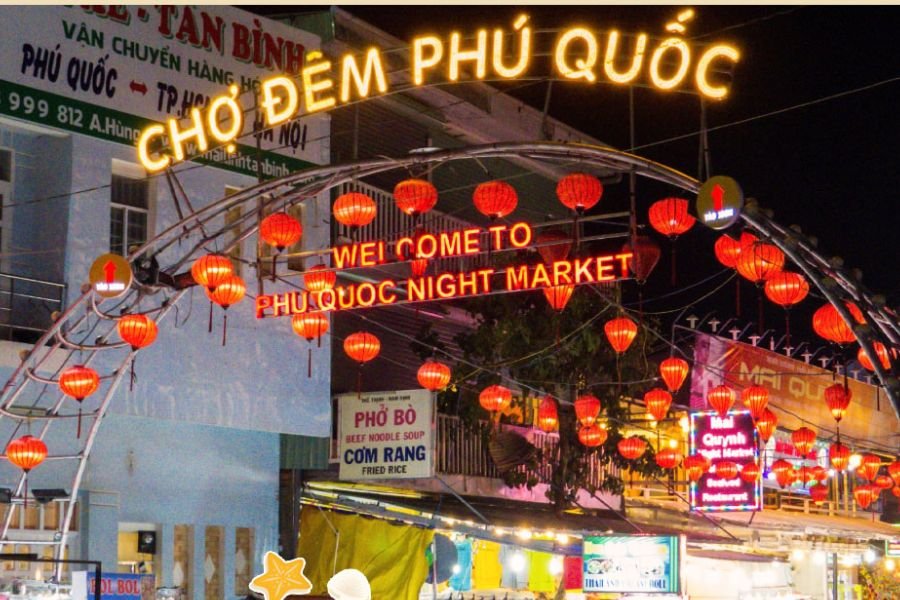
Phu Quoc Night Market is one of the island’s best-known evening attractions.
Located around Duong Dong, it combines seafood, snacks, sweets and souvenirs in a lively tourist-friendly setting.
Fresh seafood is the obvious attraction.
You’ll see fish, shellfish and other seafood displayed at stalls and restaurants, often cooked to order.
But don’t assume everything is automatically inexpensive simply because you’re at a market.
Check prices before ordering, particularly for seafood priced by weight.
Best for: Seafood, island evenings and casual dining.
Maverick tip: Ask clearly about the total price before ordering seafood by weight. This simple habit prevents misunderstandings anywhere you travel.
9. Hue Night Market Experience – Food, Crafts and Heritage
Hue’s evenings offer a different atmosphere from the high-energy markets of Ho Chi Minh City or Da Nang.
As Vietnam’s former imperial capital, Hue is best experienced through a combination of heritage, food and slower exploration.
Evening areas around the Perfume River and pedestrian streets can feature food, handicrafts and local activity, depending on the day and current organization of the spaces.
More importantly, Hue deserves a food-focused evening.
Try bún bò Huế, bánh bèo, bánh nậm, bánh lọc and other dishes associated with Central Vietnam.
Best for: Food, culture and slower travel.
Maverick tip: Don’t judge Hue’s nightlife by the size of a single market. The city’s appeal comes from combining riverside walks, local food and its distinctive cultural atmosphere.
If Hue is part of your route, explore our Hue Travel Guide before you go.
10. Can Tho Night Market – An Evening in the Mekong Delta
Can Tho is widely known as a gateway to the Mekong Delta and as a base for visiting Cai Rang Floating Market.
But the city is also enjoyable after sunset.
Night-market areas near the riverfront give travelers a chance to sample snacks, explore local streets and enjoy the evening atmosphere along the Hau River.
It’s a useful contrast to the famous early-morning floating-market experience.
One shows you the Mekong waking up before sunrise; the other shows how its largest city relaxes after dark.
Best for: Mekong Delta itineraries, food and riverfront evenings.
Maverick tip: Stay overnight in Can Tho. You’ll be able to enjoy the city after dark and still wake early enough for the region’s morning river life.
If you’re heading south, our guide to Vietnam Floating Markets explores more experiences beyond Cai Rang.
What to Eat at Vietnam Night Markets
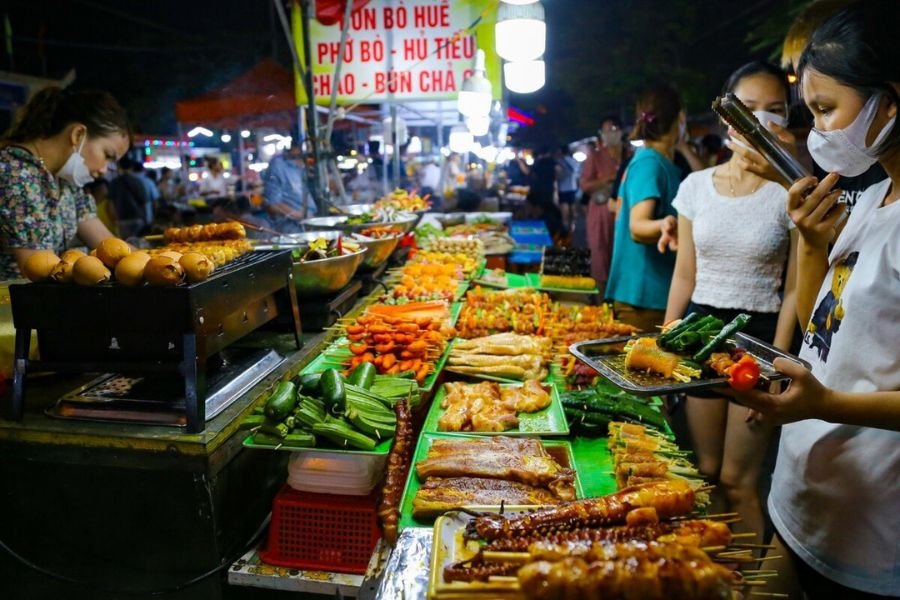
Food is often the highlight of exploring Vietnam Night Markets, but there’s no single dish that defines every market.
Vietnamese cuisine is highly regional.
In Hanoi, you may find northern dishes with subtler flavors. Hoi An offers specialties unique to Quang Nam. Hue is famous for refined central Vietnamese dishes and small savory cakes. Da Lat’s cooler climate changes the street-food experience entirely, while coastal cities put seafood front and center.
Some foods worth looking for during your travels include:
Bánh tráng nướng – grilled rice paper with toppings.
Grilled skewers – meat, seafood and vegetables cooked over charcoal.
Fresh seafood – particularly in Da Nang, Nha Trang and Phu Quoc.
Vietnamese desserts – chè – a huge category of sweet soups, puddings and chilled desserts.
Fresh fruit – depending on region and season.
Regional noodles – don’t assume phở is the only noodle dish worth trying.
The best strategy is simple: eat regionally.
Ask what the destination is known for and try that instead of looking for the same famous Vietnamese dishes everywhere.
Shopping at Vietnam Night Markets: What Should You Buy?
Markets can be useful places for small souvenirs, but shop thoughtfully.
Common items include lanterns, textiles, clothing, accessories, postcards, coffee products, local snacks and handicrafts.
Quality varies enormously.
If you’re buying something marketed as handmade or locally produced, ask questions rather than assuming every product was made nearby.
Bargaining may be normal at some stalls, particularly for clothing and souvenirs, but it should remain friendly.
If a price feels too high, walking away politely is better than turning negotiation into a confrontation.
And remember: you don’t have to buy anything.
Sometimes the best night-market experience is simply walking, eating and watching the evening unfold.
How to Enjoy Vietnam Night Markets Like a Local Traveler
A few simple habits can make the experience better.
Carry Small Notes
Smaller denominations of Vietnamese đồng make food stalls and small purchases easier.
Look at Prices Before Ordering
If prices aren’t displayed, ask first.
This is especially useful when ordering seafood by weight.
Follow Busy Local Stalls
A stall with steady local turnover can be a useful sign when choosing where to eat.
Keep Your Belongings Secure
Busy markets can become crowded.
Keep your phone, wallet and bag secure, particularly when walking through dense pedestrian areas.
Don’t Be Afraid to Explore Beyond the Market
Some of the best food may be one or two streets away.
Treat a night market as a gateway to the neighborhood rather than a boundary.
Are Vietnam Night Markets Tourist Traps?
Some are highly tourist-oriented.
That doesn’t automatically make them bad.
Hoi An Night Market, Ben Thanh and Phu Quoc Night Market attract large numbers of visitors, and many products are specifically aimed at tourists.
But travel doesn’t need to be a competition to find places nobody else knows about.
A famous market can still be enjoyable if you understand what you’re visiting.
The trick is to combine well-known attractions with experiences beyond them.
Visit the night market, then eat in a neighborhood restaurant. Walk through the tourist streets, then spend the next morning at a local market.
That balance creates a much richer understanding of Vietnam.
Vietnam Night Markets: Which One Should You Choose?
For a first trip to Vietnam, Hanoi and Hoi An are easy choices.
For street food, Da Lat deserves particular attention.
For seafood, consider Phu Quoc or Da Nang.
For a cultural evening, Hue offers a slower experience.
For Mekong Delta travel, Can Tho fits naturally into an overnight stay.
And if you enjoy big-city energy, Ho Chi Minh City gives you far more to explore beyond any single market.
Ultimately, the best market is often simply the one that fits naturally into your route.
FAQs About Vietnam Night Markets
What are the best Vietnam Night Markets?
Some of the most popular night-market experiences can be found in Hanoi, Hoi An, Da Nang, Da Lat, Nha Trang, Phu Quoc and Can Tho. The best choice depends on whether you’re most interested in food, shopping, nightlife or local atmosphere.
What time do night markets open in Vietnam?
Opening times vary by market, day and destination. Many become active from late afternoon or early evening and continue into the night. Always check current local opening times before making a special journey.
What should I eat at a Vietnamese night market?
Look for regional specialties rather than one universal dish. Grilled skewers, seafood, bánh tráng nướng, Vietnamese desserts, fruit and regional noodle dishes are common options depending on your destination.
Is it safe to eat street food at Vietnam Night Markets?
Street food is a major part of traveling in Vietnam, but use normal food-safety judgment. Choose busy stalls with good turnover, look for food cooked fresh and served hot, and use extra caution with ingredients that appear to have been sitting unrefrigerated.
Can you bargain at night markets in Vietnam?
Bargaining is common at some souvenir and clothing stalls, but not everywhere. Fixed-price food stalls and stores generally shouldn’t be treated the same way. If bargaining is appropriate, keep it friendly and respectful.
Are Vietnam night markets worth visiting?
Yes, especially if you enjoy food, street life and casual evening exploration. Even tourist-oriented markets can be fun when combined with local restaurants and neighborhoods beyond the main market streets.
Final Thoughts: Discovering Vietnam After Dark
Vietnam Night Markets reveal a side of the country that you won’t experience from sightseeing alone.
They’re noisy, colorful, sometimes chaotic and often delicious.
You might find yourself eating grilled rice paper in the cool Da Lat air, walking beneath lanterns in Hoi An, choosing seafood on Phu Quoc or ending a day in the Mekong beside the river in Can Tho.
But don’t rush through them with a checklist.
Walk slowly. Try something unfamiliar. Watch how the city changes after sunset. And don’t be afraid to leave the busiest stalls behind and explore the surrounding streets.
Because sometimes the most memorable part of a night market isn’t what you buy.
It’s the glimpse it gives you into Vietnam after dark.
Maverick Journeys — Your Vietnam Travel Expert
𝐔𝐧𝐛𝐨𝐮𝐧𝐝 • 𝐔𝐧𝐭𝐨𝐮𝐜𝐡𝐞𝐝 • 𝐔𝐧𝐟𝐨𝐫𝐠𝐞𝐭𝐭𝐚𝐛𝐥𝐞