







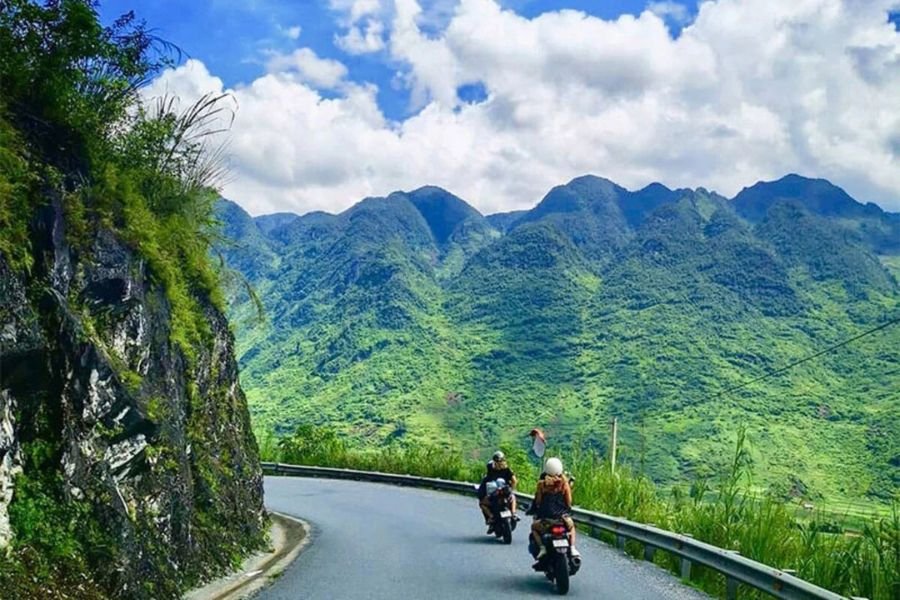
There is something unforgettable about seeing Vietnam from the seat of a motorbike.
Mountain passes twist between limestone peaks. Rice terraces appear around the next bend. Fishing villages, coffee farms and roadside food stalls become part of the journey rather than scenery seen through a bus window.
For experienced riders, a Motorbike Vietnam adventure can offer freedom and access to places that are difficult to experience on a conventional tour.
But riding in Vietnam is not as simple as renting a scooter and following Google Maps.
Foreign travelers need to consider licensing, insurance, road conditions, traffic culture, weather and their own riding experience before getting behind the handlebars.
This guide covers what international travelers should know before exploring Vietnam by motorbike — including one important question that should come before choosing your route:
Should you actually ride yourself?
1. Check Whether You Can Legally Ride in Vietnam
This should be the first step in planning any Motorbike Vietnam trip.
Do not assume that a driving license from your home country automatically allows you to ride a motorcycle in Vietnam.
Vietnam recognizes certain international driving permits when they are issued under the 1968 Vienna Convention on Road Traffic, but the IDP must be accompanied by the corresponding valid national driving license and must cover the appropriate vehicle category.
Not every international driving permit issued around the world automatically meets these requirements.
This distinction is particularly important because travelers sometimes confuse different types of international permits.
Before traveling, confirm that:
- Your driving documents are valid for use in Vietnam.
- Your license covers the motorcycle category you intend to ride.
- Your International Driving Permit, where applicable, is recognized in Vietnam.
- You carry the required original documents while riding.
Do not rely solely on the fact that a rental company is willing to give you a motorbike.
Being able to rent a motorbike does not necessarily mean you are legally permitted to ride it.
Licensing requirements can also affect travel insurance coverage, making this much more than a paperwork issue.
2. Check Your Travel Insurance Before Riding
Travel insurance deserves the same attention as your driving documents.
Motorcycling may be excluded from some policies or covered only when specific conditions are met.
For example, coverage may depend on engine size, helmet use, licensing or whether you are legally permitted to operate the motorcycle in the country.
Before your trip, read the policy rather than assuming that “adventure activities” automatically include motorcycling.
Look specifically at:
Motorcycle or scooter coverage
Engine-size restrictions
License requirements
Medical coverage
Emergency evacuation
Passenger coverage
Personal accident exclusions
If anything is unclear, contact your insurer before riding.
A beautiful mountain route is not worth discovering after an accident that your insurance does not apply.
3. Be Realistic About Your Riding Experience
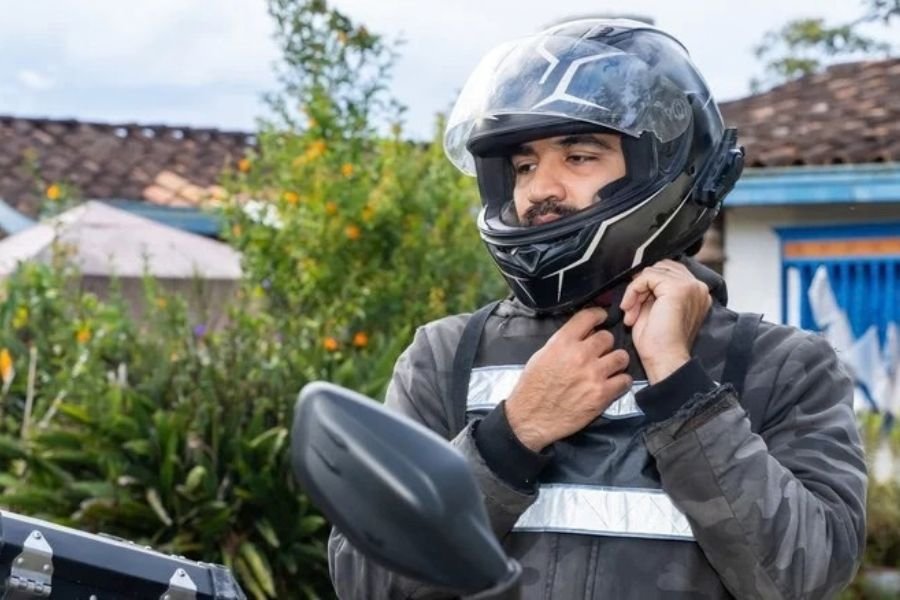
Vietnam should not be the place where an inexperienced traveler decides to learn how to ride a motorcycle.
Traffic can be dense and unpredictable in cities.
Mountain roads can include sharp bends, steep gradients, fog, rain, trucks, buses and changing road surfaces.
Rural roads may be quieter, but quieter does not always mean easier.
Before riding independently, ask yourself:
Can I confidently control a motorcycle on steep roads?
Am I comfortable braking and cornering in wet conditions?
Can I react calmly around buses, trucks and dense traffic?
Do I already have meaningful riding experience?
If the answer is no, you still have ways to experience Vietnam’s famous road journeys.
Joining an organized trip with an experienced driver — often called an Easy Rider-style experience — allows you to enjoy the scenery without being responsible for operating the motorcycle yourself.
This is particularly worth considering for demanding mountain routes.
4. Understand Vietnamese Traffic Before You Ride
Traffic in Vietnam may feel unfamiliar to first-time visitors.
In major cities, large numbers of motorbikes move alongside cars, buses, bicycles and pedestrians.
Intersections can initially appear chaotic.
But trying to copy local riders without understanding the traffic environment is not a good strategy.
Instead, ride defensively.
Avoid sudden movements.
Use your indicators.
Watch vehicles approaching from side streets.
Leave enough space to react.
Do not assume another road user has seen you simply because you have right of way.
And never let a more confident rider pressure you into traveling faster than you are comfortable with.
Your objective is not to ride like a local after two days in Vietnam.
It is to travel safely and predictably.
5. Always Wear a Proper Helmet
A helmet should be non-negotiable.
Both riders and passengers on motorcycles need appropriate helmets, and Vietnamese traffic rules require helmet use. Current regulations also penalize motorcycle riders or passengers who fail to wear a motorcycle helmet correctly.
For travelers, however, legal compliance is only the minimum.
Helmet quality matters.
A very basic helmet supplied with a rental bike may not provide the level of protection you would choose for a long mountain journey.
Before leaving the rental shop, check that the helmet:
- Fits properly.
- Fastens securely.
- Is not visibly damaged.
- Does not move excessively when you turn your head.
For longer trips, experienced riders may prefer to bring their own suitable helmet or arrange better-quality equipment locally.
6. Never Mix Alcohol and Riding
Vietnam applies strict rules regarding alcohol and driving.
For a traveler, the practical rule should be extremely simple:
If you are riding, do not drink alcohol.
Do not try to calculate whether one beer is acceptable.
Do not assume that a short journey back to your hotel makes it safe.
And do not copy what someone else appears to be doing.
Vietnam’s current traffic enforcement framework includes penalties for alcohol-related driving offenses.
If you want to enjoy bia hoi, cocktails or rice wine in the evening, leave the motorbike at your accommodation and arrange another way back.
7. Choose the Right Motorbike
Not every trip requires a large motorcycle.
For city travel or short local journeys, a smaller automatic or semi-automatic scooter may be sufficient for an appropriately licensed and experienced rider.
Long mountain journeys require more thought.
Consider:
Your riding experience
Road conditions
Luggage
Passenger weight
Seat comfort
Fuel range
Braking
Tire condition
Availability of repairs
Do not choose a motorcycle simply because it looks impressive.
A bike you can comfortably control is more useful than a powerful machine that exceeds your experience.
Check the Bike Before Leaving
Before accepting a rental motorcycle, inspect it carefully.
Test the front and rear brakes.
Check the tires.
Test headlights, brake lights, indicators and horn.
Look for obvious damage.
Ask how much fuel is in the tank and where the nearest filling station is.
Photograph the motorcycle from several angles before leaving the rental shop so there is a record of its existing condition.
Also ask what you should do if the motorcycle breaks down.
For multi-day trips, that question matters.
8. Plan Distances Conservatively
A common mistake among first-time riders in Vietnam is planning routes based only on distance.
150 kilometers on a mountain road is not the same as 150 kilometers on a highway.
A relatively short route can take hours when it includes steep passes, roadworks, villages, photo stops, fog or heavy traffic.
This is especially relevant in Northern Vietnam.
If you are exploring destinations such as Ha Giang, Cao Bang or the mountainous northwest, build extra time into your itinerary.
Avoid planning to arrive at your destination just before dark.
Finishing earlier gives you room for unexpected delays and lets you enjoy stops without constantly checking the clock.
If you are still organizing the wider trip, our Vietnam Itinerary can help you structure your route.
9. Avoid Riding at Night When Possible
Night riding introduces additional risks.
Road visibility is reduced.
Potholes and debris become harder to see.
Mountain roads may have limited lighting.
Animals, pedestrians and slow-moving vehicles can appear unexpectedly.
Rain makes these conditions even more difficult.
For long-distance journeys, plan your day so that you arrive at your accommodation well before dark.
Starting earlier in the morning is usually a better strategy than trying to squeeze another hour or two of riding into the evening.
10. Prepare for Vietnam’s Weather
Weather can transform a motorcycle journey quickly.
A mountain pass that is beautiful under blue skies can become cold, wet and difficult when fog moves in.
Vietnam’s climate also varies significantly by region.
Northern mountain conditions are different from the Central Highlands, and Central Vietnam has different seasonal patterns again.
For longer rides, carry:
Lightweight waterproof clothing
A waterproof cover for luggage
Layers for colder mountain areas
Sun protection
Water
A dry bag or protected pouch for important documents
Check the forecast before leaving each morning.
If conditions deteriorate significantly, waiting is often the smarter decision.
Your itinerary can change.
Your safety matters more.
11. Know When Not to Ride
One of the most important motorbike skills has nothing to do with controlling the bike.
It is knowing when to stop.
Do not ride because you feel pressured to keep up with a group.
Do not continue because you already paid for accommodation at the next destination.
And do not ride into dangerous weather because you want a photograph from a mountain pass.
Stop if you are tired.
Wait if visibility is poor.
Change the route if road conditions are beyond your ability.
Take a car or travel with an experienced driver if a section makes you uncomfortable.
Choosing not to ride is not failing at a motorcycle adventure.
Sometimes it is the most experienced decision you can make.
Best Motorbike Routes in Vietnam
Vietnam has no shortage of spectacular roads, but different routes require very different levels of experience.
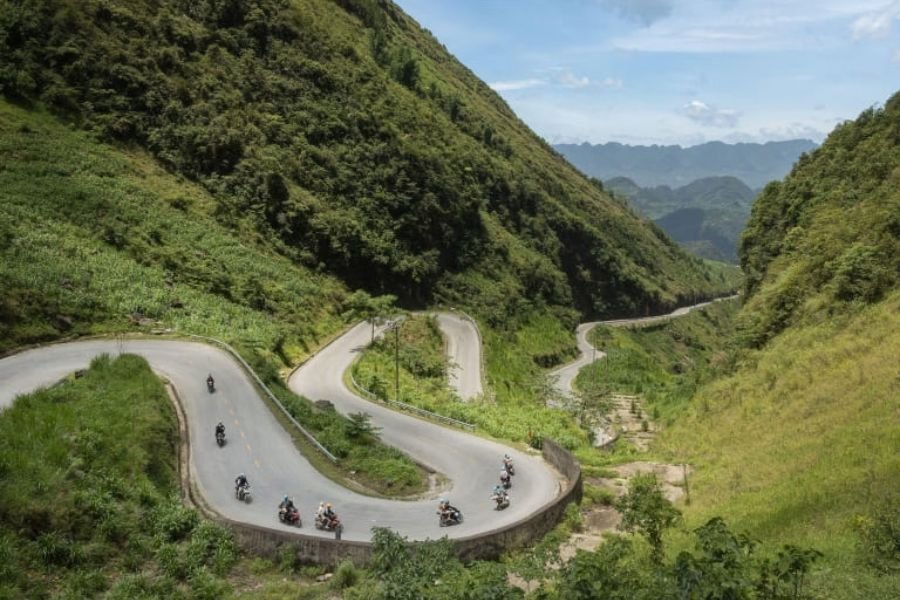
Ha Giang Loop
The Ha Giang Loop is probably Vietnam’s best-known motorcycle journey among international travelers.
The route passes through dramatic limestone mountains, deep valleys, ethnic minority communities and some of Northern Vietnam’s most spectacular roads.
Ma Pi Leng Pass and the landscapes around Dong Van and Meo Vac are among the highlights.
But spectacular scenery does not mean easy riding.
Mountain roads, sharp bends, weather changes and traffic mean travelers should take the route seriously.
If you do not have the correct documents or sufficient motorcycle experience, joining an organized trip with an experienced driver is a much more appropriate way to experience the landscape.
Cao Bang
Cao Bang offers beautiful roads through limestone valleys, rural villages and agricultural landscapes.
One of the region’s major highlights is Ban Gioc Waterfall.
Compared with Vietnam’s major cities, the roads can feel wonderfully quiet.
However, distances, mountain conditions and limited services in some areas mean careful planning is still necessary.
Central Vietnam
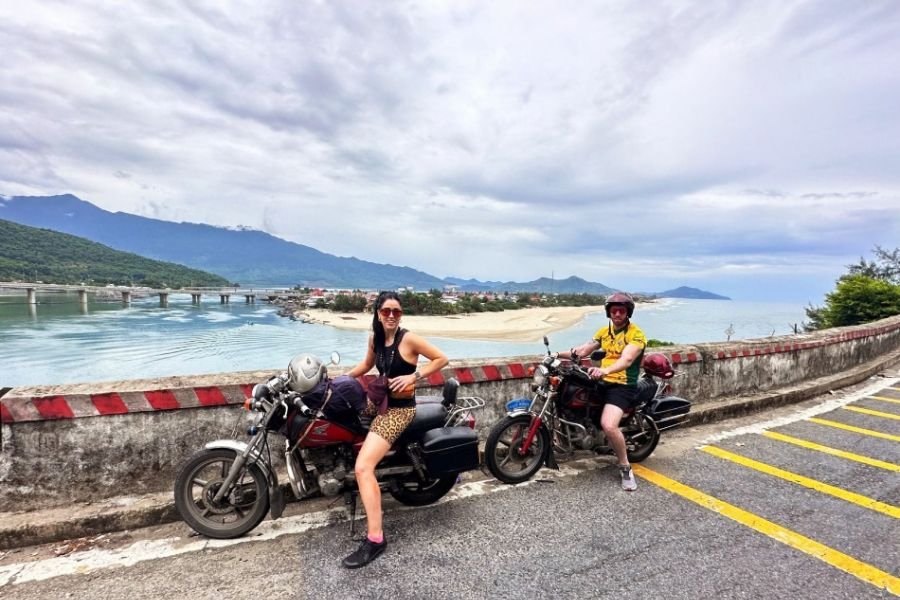
Central Vietnam can be particularly rewarding for motorcycle travelers.
One famous journey connects Hue and Da Nang, with the road crossing the scenic Hai Van Pass.
This region works well for travelers who want to combine coastal scenery, historic destinations and mountain roads.
You can explore the cultural side of the journey in our Hue Travel Guide and Hoi An Travel Guide.
Central Highlands
The Central Highlands provide a very different motorcycle experience.
Coffee plantations, forests, waterfalls and smaller towns replace the coastal landscapes found farther east.
For travelers interested in slower overland journeys, the region can be an excellent way to experience parts of Vietnam that receive fewer international visitors.
Routes and road conditions vary, so allow plenty of time rather than trying to cover huge distances each day.
Self-Riding vs Easy Rider: Which Is Better?
For experienced, appropriately licensed riders, self-riding provides enormous freedom.
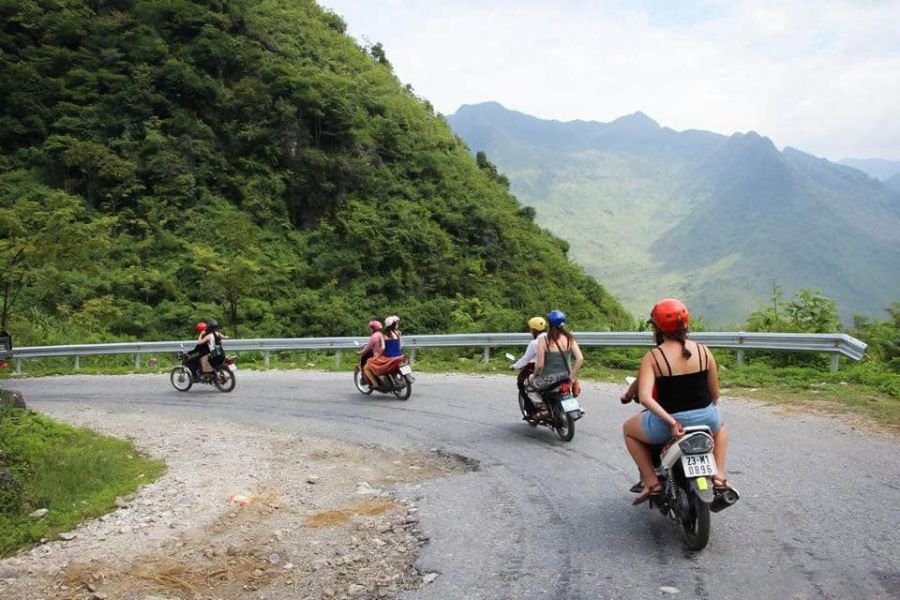
You control the pace.
You choose where to stop.
And the road itself becomes part of the travel experience.
But self-riding is not automatically the best option for every traveler.
An experienced-driver tour allows you to enjoy the landscapes without managing traffic, navigation and the motorcycle yourself.
| Self-Riding | Experienced Driver |
|---|---|
| More independence | More relaxed experience |
| Flexible stops | Local road knowledge |
| Requires appropriate license | No need to operate the motorcycle |
| Requires riding experience | Suitable for non-riders |
| Responsible for navigation | More time to enjoy scenery |
| Greater personal responsibility | Useful on demanding mountain routes |
If you have little or no motorcycle experience, the second option can provide much of the adventure without adding unnecessary risk.
What to Pack for a Motorbike Trip in Vietnam
Pack lighter than you think you need.
Large suitcases are inconvenient on motorcycles and can affect balance if attached poorly.
For a multi-day journey, consider bringing lightweight clothing, a rain layer, closed footwear, sun protection, a small first-aid kit, water, a power bank and waterproof protection for electronics and documents.
Keep important items accessible but secure.
Your passport, driving documents, money and phone should not be buried underneath everything else.
For mountainous areas, bring an extra warm layer even when the weather at lower elevations feels hot.
Motorbike Rental in Vietnam: What to Ask
Do not choose a rental shop based solely on the cheapest daily price.
For a longer trip, reliability and support matter much more.
Ask:
What happens if the bike breaks down?
Is roadside support available?
What documents are provided with the motorcycle?
What is included in the rental agreement?
What happens in case of damage?
Can the motorcycle be taken outside the city or province?
Is one-way rental available?
Read the rental terms before handing over your passport or deposit.
If anything is unclear, ask before leaving.
Motorbike Vietnam: Common Mistakes First-Time Travelers Make
Several mistakes appear repeatedly in motorcycle travel.
The first is assuming that renting a motorcycle means you are legally allowed to ride it.
The second is underestimating distances.
The third is riding beyond your experience because other travelers are doing the same route.
Another common problem is packing too much.
And perhaps the easiest mistake to avoid is rushing.
A motorcycle trip is not supposed to be a race between destinations.
The freedom to stop is one of the main reasons to travel this way.
Use it.
Is Vietnam Safe for Motorbike Travel?
There is no simple yes-or-no answer.
Vietnam offers extraordinary motorcycle journeys, but motorcycling inherently carries risk, and road environments can be unfamiliar to international visitors.
An experienced rider with appropriate documents, suitable insurance, protective equipment and a conservative itinerary is in a very different situation from a first-time rider renting a scooter after arriving.
The question should therefore not be:
“Is motorcycling in Vietnam safe?”
A more useful question is:
“Do I have the experience, documents, equipment and judgment to ride this particular route safely?”
If not, choose another way to experience it.
Vietnam’s mountain roads are just as beautiful from the back seat.
Motorbike Vietnam FAQ
Do Foreigners Need a License to Ride a Motorbike in Vietnam?
Foreign travelers must have driving credentials that are valid in Vietnam and appropriate for the vehicle they operate.
For qualifying international permits, the relevant IDP and corresponding national driving license need to meet Vietnam’s requirements.
Do not assume that any IDP purchased or issued abroad is automatically valid.
Can I Rent a Motorbike Without a License in Vietnam?
A rental business giving you a motorcycle does not establish that you are legally entitled to operate it.
Travelers should verify their legal eligibility independently before riding.
Is an International Driving Permit Valid in Vietnam?
Certain IDPs issued under the 1968 Vienna Convention can be recognized when accompanied by the appropriate national driving license.
Because eligibility depends on the issuing country and license category, check your documents before traveling.
Can Beginners Ride the Ha Giang Loop?
The Ha Giang Loop includes mountain roads, bends, steep sections and changing weather conditions.
Travelers without meaningful motorcycle experience should strongly consider traveling with an experienced driver instead of learning to ride on the loop.
Do I Need Travel Insurance for Motorbike Riding?
Travel insurance is strongly recommended, but having a policy does not automatically mean motorcycle riding is covered.
Check the policy’s licensing, engine-size and activity conditions before riding.
Should I Ride a Motorbike in Hanoi or Ho Chi Minh City?
Dense urban traffic can be challenging for visitors unfamiliar with Vietnamese road conditions.
Inexperienced riders should not use busy city streets as a place to learn.
What Is the Best Motorbike Route in Vietnam?
There is no single route that suits everyone.
Ha Giang offers dramatic mountain landscapes, Central Vietnam combines coast and mountain roads, while the Central Highlands provide coffee country, waterfalls and less-visited inland scenery.
Choose according to your riding experience, available time and the season.
Final Thoughts: Is a Motorbike Vietnam Adventure Right for You?
Traveling through Vietnam by motorbike can completely change the way you experience the country.
You notice the smell of coffee drying beside the road.
You stop when a mountain valley suddenly appears between the clouds.
You find small restaurants you would never have planned to visit.
And instead of simply moving between destinations, the road becomes part of the journey.
But freedom comes with responsibility.
Check your license.
Understand your insurance.
Wear appropriate protective equipment.
Respect the weather.
Plan realistic distances.
And most importantly, be realistic about your experience.
You do not need to ride the motorcycle yourself to experience Vietnam’s legendary roads.
Whether you are behind the handlebars or traveling with an experienced local driver, slow down enough to enjoy the landscapes, communities and unexpected moments along the way.
That is what makes a Motorbike Vietnam journey worth remembering.
Maverick Journeys — Your Vietnam Travel Expert
𝐔𝐧𝐛𝐨𝐮𝐧𝐝 • 𝐔𝐧𝐭𝐨𝐮𝐜𝐡𝐞𝐝 • 𝐔𝐧𝐟𝐨𝐫𝐠𝐞𝐭𝐭𝐚𝐛𝐥𝐞