









There are places in Vietnam that are beautiful year-round, and then there are places that seem made for a particular season. Ha Giang in October belongs firmly in the second category.
As autumn settles over Vietnam’s far north, the intense summer heat begins to fade. Mountain roads wind through dramatic limestone landscapes, patches of golden rice may still remain in some valleys, and buckwheat flowers begin adding soft shades of white and pink to the rocky highlands.
For travelers looking for mountain scenery, road-trip adventures and authentic encounters with local cultures, October can be one of the most rewarding times to explore Ha Giang.
But what is the weather really like? Can you see the famous buckwheat flowers? And what should you pack?
Here’s everything you need to know before visiting Ha Giang in October.
If Ha Giang is only one stop on a longer journey, explore our guide to the best places to visit in Vietnam for more inspiration.
Why Visit Ha Giang in October?
October marks an exciting seasonal transition in Ha Giang.
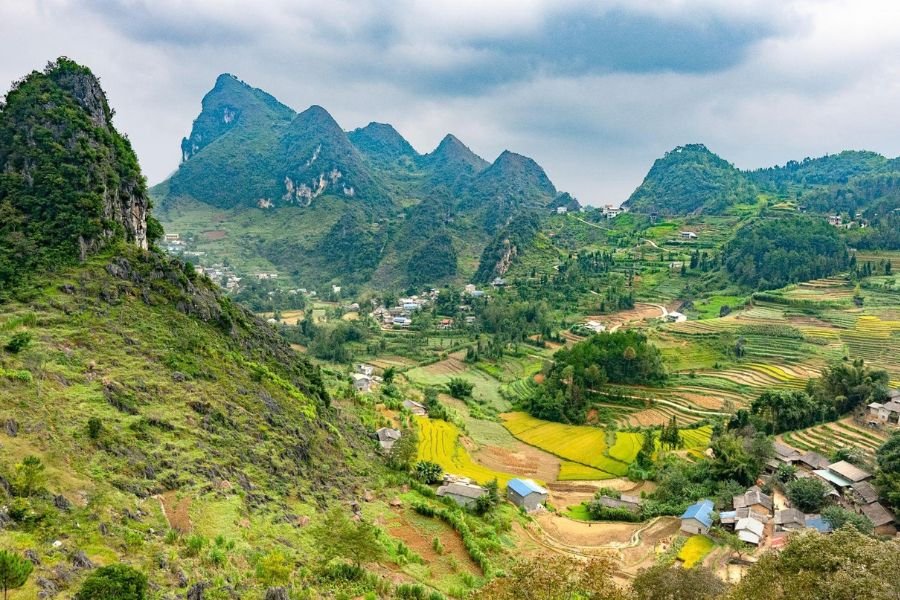
The wetter summer months are coming to an end, temperatures become more comfortable for outdoor exploration, and the landscape begins changing from the golden tones of the rice harvest to the pink and white colors associated with buckwheat flower season.
For travelers, October can offer several experiences in a single journey: spectacular mountain scenery, scenic road trips, seasonal flowers, photography opportunities and visits to villages and local markets.
Most importantly, October is a wonderful time simply to be outdoors in Northern Vietnam.
Ha Giang Weather in October
Weather is one of the main reasons travelers consider Ha Giang in October.
Autumn generally brings cooler conditions to Vietnam’s northern mountains after the hotter and wetter summer months. This can make long days of sightseeing, trekking and road travel considerably more comfortable.
However, Ha Giang is mountainous, so conditions can change quickly.
You might experience sunshine in a valley, mist at a mountain pass and noticeably cooler temperatures after sunset — all on the same day.
What Does October Feel Like?
Days can be pleasant for sightseeing and outdoor activities, while early mornings and evenings may feel chilly, particularly around higher-altitude areas such as Dong Van and Meo Vac.
Mist is also part of the Ha Giang experience. Although clouds can occasionally obscure mountain views, they can create an atmospheric landscape of peaks disappearing into the fog.
Rain is still possible, so don’t assume that October guarantees completely dry weather.
Travel tip: Check the local weather forecast before beginning each day’s journey, especially if you plan to travel by motorbike.
Are There Buckwheat Flowers in Ha Giang in October?
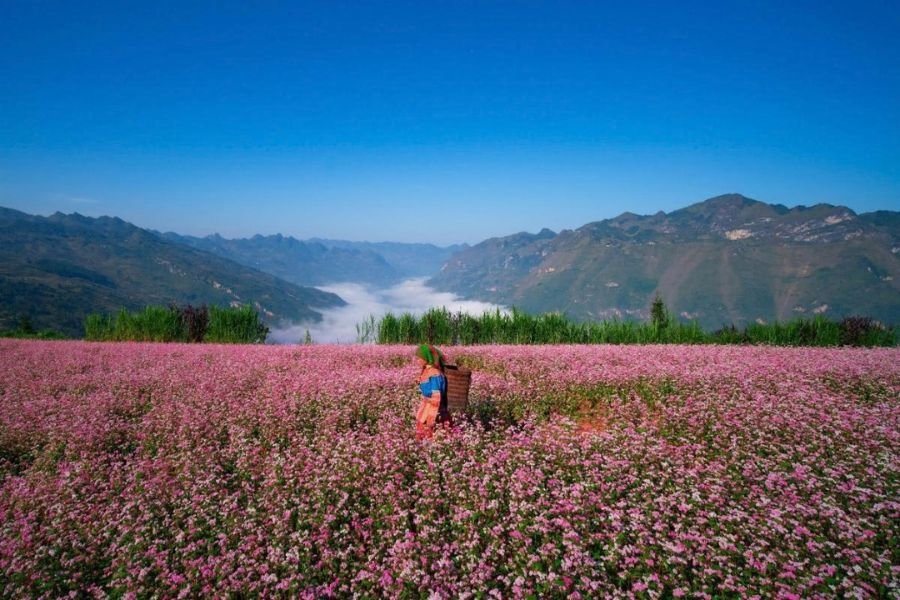
Yes — and they are one of the biggest reasons to visit Ha Giang at this time of year.
Buckwheat flowers are among the most recognizable symbols of autumn in Ha Giang. The first pale blooms typically begin appearing around the transition from September into October, gradually creating beautiful white and pink patches across the rocky highlands.
As the season progresses, their colors can become more pronounced.
However, flowering conditions depend on weather, altitude, location and planting schedules, so not every field will bloom at exactly the same time.
Some popular areas for seeing buckwheat flowers include Sung La Valley, Dong Van, Lung Cu and the landscapes around Ma Pi Leng.
Sung La is particularly photogenic, where flower fields can appear against a backdrop of limestone mountains and traditional villages.
For more places worth bringing your camera, explore our guide to the best Vietnam photography spots.
What About Ha Giang’s Golden Rice Fields?
If you visit in early October, you may still encounter pockets of golden rice in parts of Ha Giang.
Harvest timing varies between valleys, elevations and individual farming areas, so there is no guarantee that the fields will still be golden when you arrive.
This seasonal crossover can make early October especially interesting. In one part of the province, you might encounter the final colors of the rice harvest, while elsewhere the first buckwheat flowers are beginning to appear.
However, don’t plan your entire trip around seeing golden rice.
If rice terraces are your main priority, timing your journey specifically around the harvest season is more important than simply choosing October.
Best Places to Visit in Ha Giang in October
The beauty of Ha Giang is not limited to individual attractions. Much of the experience comes from the journey itself — winding mountain roads, changing landscapes and small villages appearing between towering limestone peaks.
Still, several places deserve a spot on a first-time itinerary.
1. Quan Ba Heaven Gate
For many travelers, Quan Ba is where the scale of Ha Giang’s mountain landscape first becomes apparent.
The viewpoint opens across valleys, limestone peaks and the distinctive Quan Ba Twin Mountains.
On a clear October morning, the scenery can be spectacular. On mistier days, clouds drifting through the mountains create a completely different atmosphere.
2. Dong Van Karst Plateau
The Dong Van Karst Plateau is one of the defining landscapes of Ha Giang.
Instead of the tropical scenery many travelers associate with Vietnam, you’ll encounter dramatic limestone formations, rocky valleys, steep mountains and villages tucked into surprisingly rugged terrain.
October adds another layer of seasonal beauty as buckwheat flowers begin appearing across parts of the plateau.
3. Sung La Valley
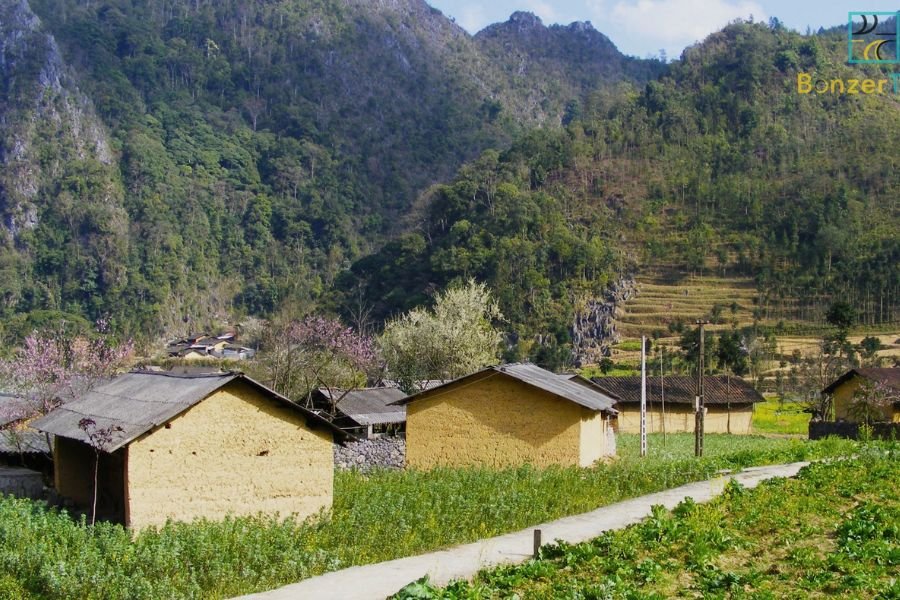
Sung La is particularly worth visiting during an October trip.
Surrounded by mountains, the valley combines traditional villages, agricultural landscapes and seasonal flower fields.
Rather than treating it as a quick photo stop, take some time to appreciate the landscape and everyday life around the valley.
4. Lung Cu
Located in Vietnam’s far north, Lung Cu is one of the most recognizable stops on a Ha Giang journey.
The surrounding region offers expansive mountain views, small villages and beautiful rural landscapes.
Travelers commonly combine Lung Cu with Dong Van and Sung La as part of a multi-day journey through the northern highlands.
5. Ma Pi Leng Pass
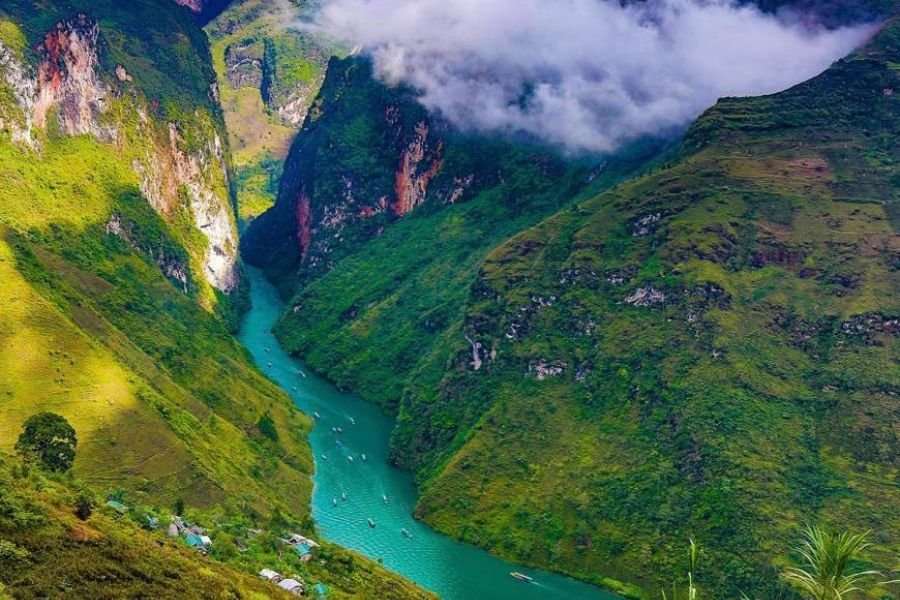
For many international travelers, Ma Pi Leng Pass is the defining image of Ha Giang.
The road winds dramatically through the mountains between Dong Van and Meo Vac, with towering limestone cliffs and views toward the Nho Que River far below.
Take your time on this section.
The scenery changes constantly, and some of the best moments come from simply stopping at safe viewpoints and watching the mountains stretch into the distance.
6. Nho Que River
Seen from above, the Nho Que River cuts dramatically through the mountains below Ma Pi Leng.
A boat trip offers a completely different perspective, taking you closer to the steep canyon walls and turquoise water.
If weather and local operating conditions are suitable, it can be a memorable addition to your Ha Giang itinerary.
7. Dong Van Old Quarter
After a long day exploring the mountains, Dong Van is a convenient place to slow down.
Its compact old quarter offers traditional architecture, cafés, restaurants and accommodation, making the town a popular overnight stop.
If your visit coincides with a local market, you may also get a glimpse into everyday life and trading traditions in the northern highlands.
How Many Days Do You Need in Ha Giang?
For most first-time visitors, three to four days is a practical amount of time for exploring the main Ha Giang Loop.
If your schedule allows, four days is the better choice.
The extra time means you won’t need to rush between destinations and can stop for viewpoints, villages, meals and unexpected discoveries along the way.
A simple four-day route could look like this:
Day 1: Ha Giang City → Quan Ba → Yen Minh
Day 2: Yen Minh → Sung La → Lung Cu → Dong Van
Day 3: Dong Van → Ma Pi Leng → Nho Que River → Meo Vac
Day 4: Meo Vac → Ha Giang City
Distances can look relatively short on a map, but mountain roads are winding and travel often takes longer than expected.
If you’re incorporating Ha Giang into a longer Vietnam adventure, our Vietnam 2 week itinerary can help you plan the rest of your journey.
Should You Ride the Ha Giang Loop Yourself?
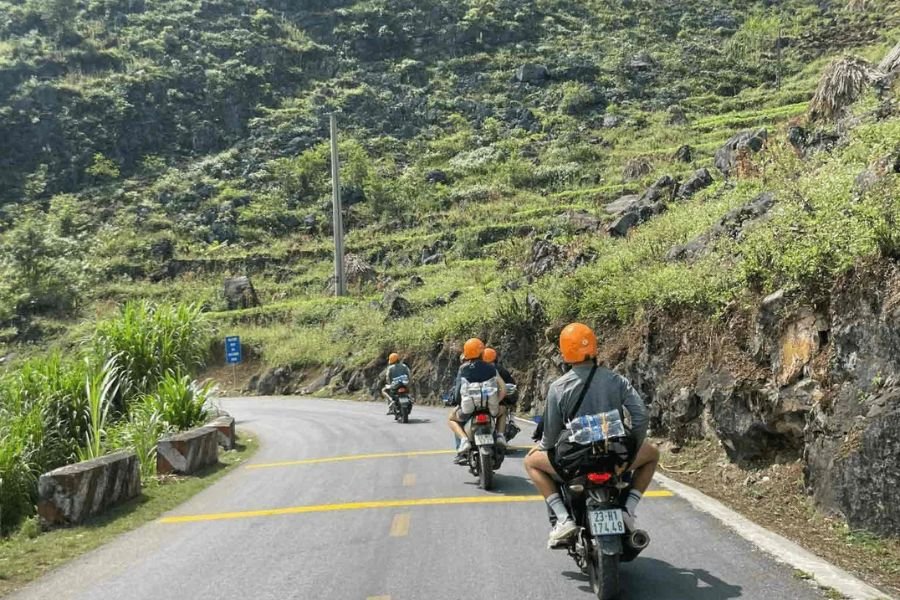
The Ha Giang Loop is famous for motorbike travel, but that doesn’t mean every traveler needs to ride independently.
The route includes steep mountain roads, sharp bends and changing weather conditions. Some sections can be challenging for inexperienced riders.
If you have suitable riding experience and meet current Vietnamese licensing requirements, traveling independently can provide plenty of flexibility.
Otherwise, consider traveling with an experienced local driver. This allows you to enjoy the open-air motorbike experience without having to navigate unfamiliar mountain roads yourself.
A private car is another option for travelers who prioritize comfort or don’t want to spend several days on a motorbike.
Choose the option that matches your actual riding ability rather than what looks best on social media.
What to Pack for Ha Giang in October
Layers are the key to packing for Ha Giang in October.
A sunny afternoon in a valley can feel very different from an early morning on a high mountain pass.
Pack lightweight clothing for daytime but bring something warmer for mornings and evenings.
A light waterproof jacket is useful because mountain weather can change unexpectedly. Comfortable shoes are also important if you plan to explore villages, viewpoints or walking trails.
Useful items include a light sweater or fleece, long trousers, rain protection, comfortable walking shoes, sunscreen, sunglasses, a reusable water bottle, portable charger and small daypack.
If you’re traveling by motorbike, keep your phone, documents and electronics protected from unexpected rain.
Getting to Ha Giang from Hanoi
Ha Giang City is around 300 kilometers north of Hanoi and serves as the main gateway for travelers exploring the province.
There is no airport or railway station in Ha Giang, so most visitors arrive by road.
Bus and sleeper services connect Hanoi with Ha Giang City, and many travelers choose an evening or overnight journey before beginning the Loop.
Another option is arranging private transportation, particularly if you are traveling with family or a small group.
Whatever you choose, avoid starting a demanding day of motorbike riding immediately after an exhausting overnight journey if you haven’t slept properly.
Responsible Travel in Ha Giang
Ha Giang isn’t simply a spectacular backdrop for photographs.
The region is home to diverse ethnic communities with their own languages, traditions, architecture and ways of life. Traveling responsibly helps ensure tourism has a positive impact on the people who live here.
Ask permission before taking close-up photographs of local people, particularly children.
Dress respectfully when entering homes or culturally significant places.
Avoid entering rice fields or flower fields simply to get a better photograph unless visitors are clearly permitted.
Whenever possible, support local homestays, guides, restaurants and community businesses.
And when visiting buckwheat fields, use designated paths rather than stepping between the flowers.
The best travel experiences respect both the landscape and the people who call it home.
Is Ha Giang in October Worth It?
Absolutely — particularly if Northern Vietnam’s mountain landscapes are high on your travel wish list.
Ha Giang in October combines cooler autumn conditions, spectacular road-trip scenery and the beginning of one of the region’s most beautiful seasonal sights: buckwheat flower season.
Visit earlier in the month and you may still encounter pockets of golden rice. Travel later and buckwheat flowers become an increasingly important part of the landscape.
But the real appeal of Ha Giang goes beyond any single flower field or viewpoint.
It’s the winding roads, limestone mountains, tiny villages and changing light across the valleys.
It’s also the feeling that the journey itself is just as memorable as the destination.
For travelers looking for one of Vietnam’s most remarkable mountain adventures, October is an excellent time to experience it.
FAQ: Ha Giang in October
Is October a good time to visit Ha Giang?
Yes. October generally brings cooler autumn conditions, making it a popular time for road trips, sightseeing and outdoor exploration in Northern Vietnam.
Can I see buckwheat flowers in Ha Giang in October?
Yes. October marks the beginning of the main buckwheat flower period in many areas of Ha Giang. Exact flowering times vary depending on weather, altitude and planting schedules.
Can I see golden rice fields in October?
Possibly, particularly if you visit in early October. However, harvest schedules vary between locations and from year to year, so golden rice should be treated as a bonus rather than a guarantee.
How many days should I spend in Ha Giang?
Three days can cover many of the main highlights, but four days provides a more relaxed experience with additional time for villages, viewpoints and weather changes.
Do I need to ride a motorbike?
No. You can travel with an experienced local motorbike driver or explore Ha Giang by private car. If you want to ride independently, make sure you have appropriate experience and meet current Vietnamese licensing requirements.
Final Thoughts
Visiting Ha Giang in October is about much more than chasing the perfect buckwheat flower photo.
It’s an opportunity to experience Northern Vietnam as the seasons change — when mountain air becomes cooler, harvest colors linger in some valleys and autumn flowers begin spreading across the rocky highlands.
Take your time, travel responsibly and leave room for the unexpected.
Because in Ha Giang, some of the best moments aren’t marked on the map.