




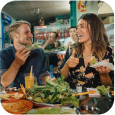





Some of the best meals in Vietnam aren’t found in restaurants.
They’re served from tiny stalls inside busy markets, prepared in steaming pots beside baskets of fresh herbs, tropical fruit, seafood and ingredients you may never have seen before.
For travelers, Vietnam Food Markets offer much more than somewhere to eat. They’re places to experience the rhythms of everyday Vietnamese life — vendors arranging produce early in the morning, locals stopping for breakfast, families shopping for dinner and cooks preparing dishes that have been served for generations.
From Hanoi and Hue to Ho Chi Minh City and the Mekong Delta, every region has its own flavors and market culture.
If you’re hungry for a more local side of Vietnam, these are 10 food markets worth adding to your trip.
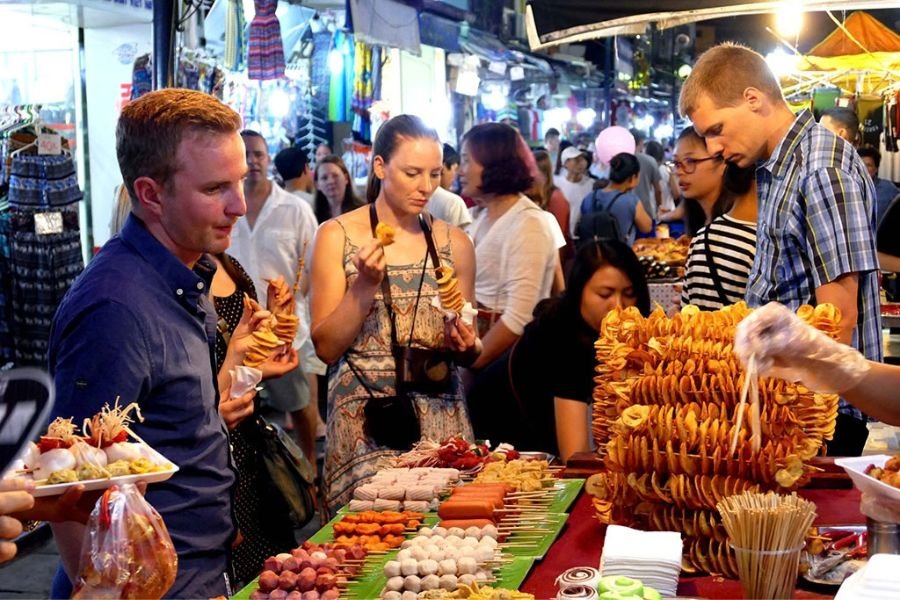
Why Visit Food Markets in Vietnam?
Vietnamese markets can feel overwhelming the first time you walk into one.
There are sounds coming from every direction. Vendors call out to customers. Motorbikes sometimes squeeze through narrow entrances. Fresh herbs sit beside tropical fruit, seafood, noodles, spices and ingredients you might not immediately recognize.
And somewhere between all of this activity, someone is probably cooking something delicious.
That’s exactly why they’re worth experiencing.
A food market gives you a glimpse into what people actually buy and eat in different parts of Vietnam.
The experience also changes from city to city. Northern markets reflect Hanoi’s culinary traditions, Central Vietnam introduces stronger and spicier flavors, while southern markets overflow with tropical produce and dishes influenced by the Mekong Delta.
You don’t need to understand everything you see.
Walk slowly, follow the aromas and watch where locals are eating.
That’s often where the adventure begins.
1. Dong Xuan Market — Hanoi
📍 Hanoi
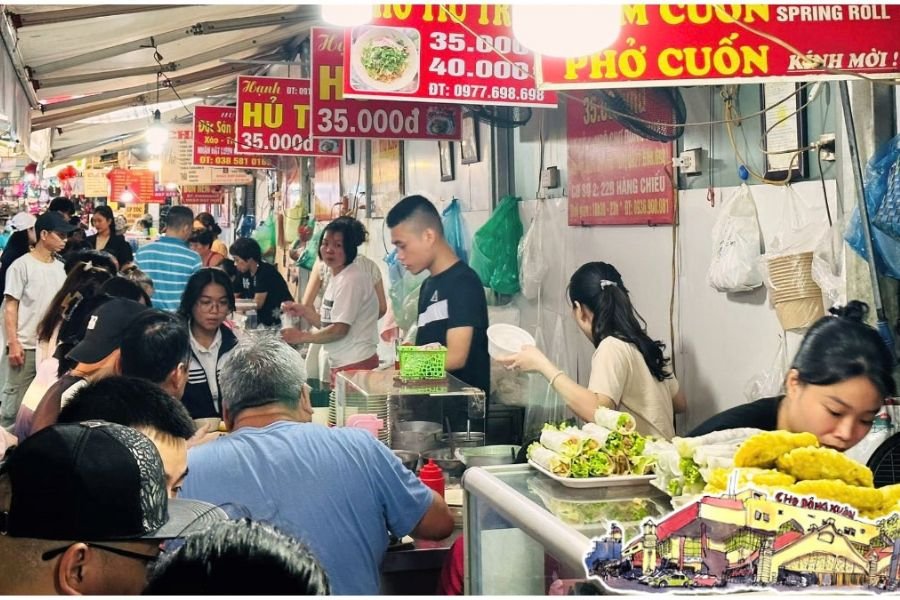
Located in Hanoi’s Old Quarter, Dong Xuan Market is one of the capital’s best-known traditional markets.
The main building is packed with clothing, household products and wholesale goods, but food is an important part of the wider market experience.
Explore the surrounding streets and alleys and you’ll find small eateries and vendors serving familiar Hanoi favorites.
Depending on where you wander, you may come across bowls of noodles, rice dishes, snacks, sweet treats and strong Vietnamese coffee.
The best part isn’t necessarily finding one famous dish. It’s experiencing the atmosphere of one of Hanoi’s busiest commercial districts while discovering food along the way.
What to try: Local noodles, bánh cuốn, chè and Vietnamese coffee.
If Hanoi is part of your journey, our Hanoi travel guide has more ideas for exploring the capital.
2. Hoi An Central Market — Hoi An
📍 Hoi An
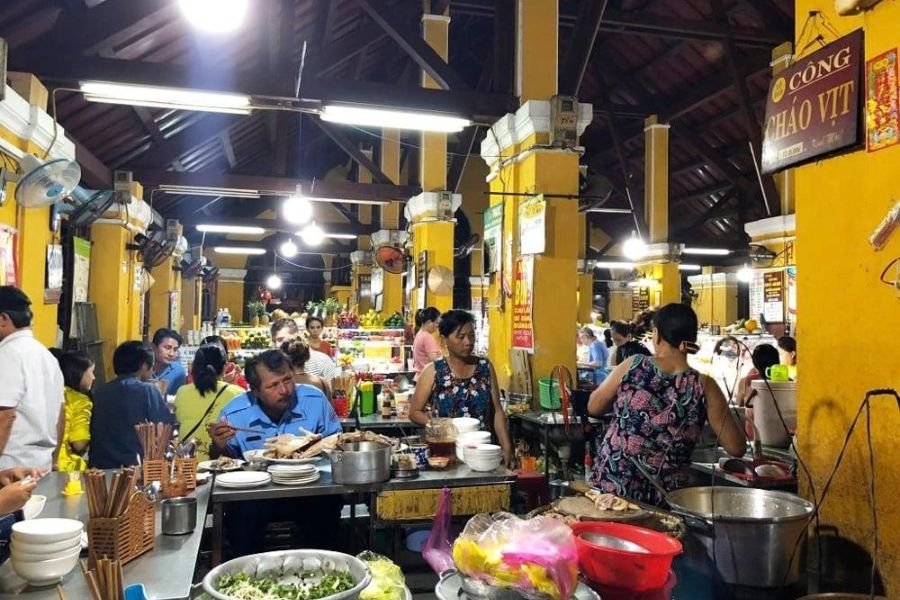
Hoi An Central Market is an easy place for travelers to combine sightseeing with local food.
Located close to the Ancient Town and Thu Bon River, the market comes alive early as vendors sell vegetables, herbs, seafood, spices and everyday ingredients.
Inside and around the food area, you’ll find several of the dishes associated with Hoi An and Central Vietnam.
Look for cao lầu, with its thick noodles, pork, herbs and crunchy toppings. You may also find mì Quảng, bánh mì and simple rice dishes.
Visit in the morning if you want to experience the market when local activity is at its strongest.
Then continue into the Ancient Town once you’ve finished breakfast.
What to try: Cao lầu, mì Quảng and bánh mì.
Planning more time here? See our Hoi An Travel Guide.
3. Dong Ba Market — Hue
📍 Hue

Food lovers shouldn’t rush through Hue.
The former imperial capital has one of Vietnam’s most distinctive regional cuisines, and Dong Ba Market is a fascinating place to explore it.
The market is large, busy and very local.
Alongside household goods, clothing and fresh produce, you’ll find plenty of opportunities to sample Hue specialties.
This is a good place to encounter the small, carefully prepared dishes for which the city is known.
Depending on the stalls available during your visit, look for bún bò Huế, bánh bèo, bánh nậm, bánh lọc and other regional snacks.
If you enjoy discovering a destination through food, Dong Ba can easily become one of the highlights of Hue.
What to try: Bún bò Huế, bánh bèo, bánh lọc and bánh nậm.
Explore more of the former imperial capital with our Hue Travel Guide.
4. Han Market — Da Nang
📍 Da Nang
Han Market sits conveniently in central Da Nang, making it one of the easiest markets for first-time visitors to explore.
The market sells everything from dried seafood and spices to fruit, snacks and local specialties.
It can be particularly interesting if you want to see ingredients commonly used in Central Vietnamese cooking or pick up edible souvenirs.
You’ll also encounter plenty of packaged specialties that travelers can take home.
For a more local experience, spend some time exploring the food stalls rather than heading directly for the souvenir sections.
What to try: Mì Quảng, local snacks, dried seafood and Central Vietnamese specialties.
5. Con Market — Da Nang
📍 Da Nang
If food is your priority in Da Nang, Con Market deserves a separate stop.
While Han Market is convenient for shopping and sightseeing, Con Market has a strong reputation for its food sections and casual local eating.
The experience is informal.
Small stools, compact stalls and quick meals are part of the appeal. You can move between vendors and sample several dishes rather than committing to one large restaurant meal.
Look for noodles, rice dishes, savory snacks, sweet desserts and drinks.
Come hungry.
What to try: Bánh xèo, mì Quảng, bánh bèo and chè.
6. Ben Thanh Market — Ho Chi Minh City
📍 Ho Chi Minh City
Ben Thanh Market is hardly a hidden gem.
It’s one of Ho Chi Minh City’s most recognizable landmarks and attracts large numbers of visitors.
So why include it?
Because for first-time travelers, it remains an accessible introduction to the enormous variety of ingredients, snacks and dishes found in southern Vietnam.
The market combines food, souvenirs, clothing, coffee, dried goods and other products under one roof.
Prices in tourist-oriented areas may be higher than in neighborhood markets, so don’t assume everything here represents typical local pricing.
Still, Ben Thanh is convenient, central and easy to include in a day of sightseeing.
What to try: Vietnamese coffee, fresh fruit, noodle dishes and southern-style snacks.
For more ideas around the city, explore our guide to the best things to do in Ho Chi Minh City.
7. Binh Tay Market — Ho Chi Minh City
📍 Cholon, Ho Chi Minh City
For a different market experience in Ho Chi Minh City, head toward Cholon, the city’s historic Chinatown district.
Binh Tay Market has long been associated with wholesale trading and the commercial life of the area.
The surroundings reveal another side of the city, where Vietnamese and Chinese cultural influences have interacted for generations.
Rather than visiting only for a checklist of specific foods, explore the wider neighborhood.
Markets, temples, traditional shops and small eateries make Cholon particularly rewarding for travelers interested in food and urban culture.
What to try: Chinese-Vietnamese noodles, dumplings and local snacks around Cholon.
8. Da Lat Market — Da Lat
📍 Da Lat
Da Lat’s cooler climate makes its market noticeably different from many others in Vietnam.
The surrounding highlands produce vegetables, strawberries, avocados, flowers and other agricultural products, and much of this abundance makes its way into Da Lat Market.
During the day, explore the produce sections and see why Da Lat is often associated with fresh vegetables and flowers.
As evening arrives, the area around the market becomes livelier with snacks and casual street food.
Cooler temperatures make hot dishes particularly appealing.
What to try: Fresh strawberries, soy milk, bánh tráng nướng and local produce.
9. Can Tho Markets — Mekong Delta
📍 Can Tho
Food in the Mekong Delta is inseparable from the rivers, farms and orchards surrounding it.
Can Tho provides a convenient base for exploring this food culture.
Local markets showcase tropical fruit, vegetables, freshwater ingredients, noodles and products brought in from surrounding areas.
For travelers, the experience isn’t just about eating.
Seeing what is being bought and sold helps explain why Mekong cuisine tastes different from food in Hanoi, Hue or Central Vietnam.
For an even more distinctive experience, combine a traditional market visit with the region’s famous river-based trading culture.
Read our guide to Vietnam Floating Markets for more ideas.
What to try: Tropical fruit, rice noodles and Mekong-style local dishes.
10. Duong Dong Market — Phu Quoc
📍 Phu Quoc
Island food markets naturally put seafood in the spotlight.
Duong Dong Market offers travelers a look at the everyday commercial side of Phu Quoc, with vendors selling seafood, produce and local products.
Morning visits can be particularly interesting if you want to see the market functioning as a local market rather than simply as a tourist attraction.
Phu Quoc is also known for products such as fish sauce and pepper, both closely connected with the island’s food identity.
After exploring the market, save room for seafood elsewhere on the island.
What to try: Fresh seafood, tropical fruit and Phu Quoc specialties.
Morning Market or Evening Market: Which Is Better?
If your goal is to understand everyday Vietnamese food culture, go in the morning.
Traditional markets often become active surprisingly early.
Morning is when you’ll see fresh produce arriving, shoppers buying ingredients and vendors preparing food for the day.
It’s also one of the best times to experience Vietnamese breakfast culture.
Evening markets offer something different.
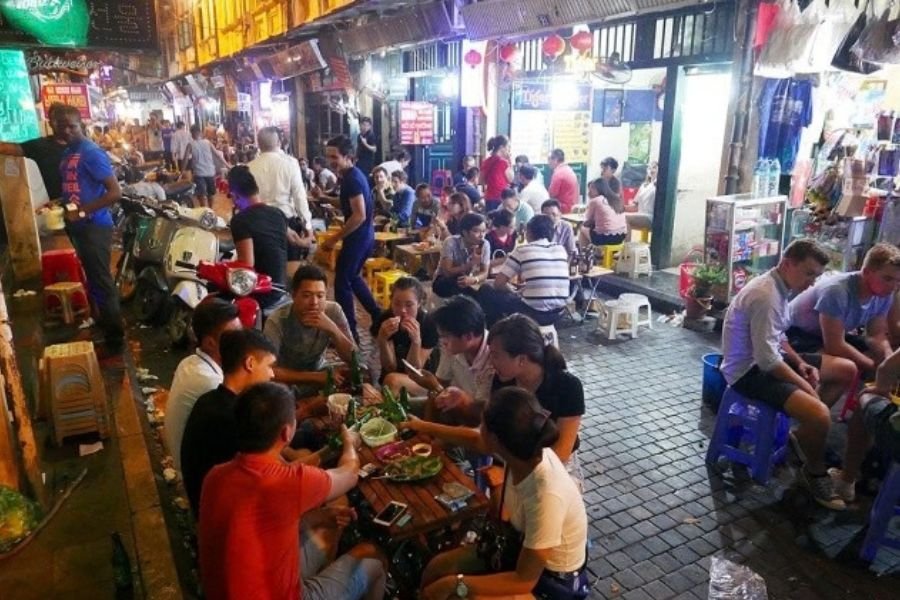
They’re usually more relaxed for travelers and often focus more heavily on ready-to-eat dishes, snacks and social dining.
Neither is necessarily better.
Think of them as two different experiences:
Morning: everyday local life, ingredients and breakfast.
Evening: cooked food, snacks and a livelier social atmosphere.
If possible, try both during your Vietnam trip.
What Should You Eat at a Vietnamese Market?
There is no single answer because Vietnamese cuisine changes dramatically from north to south.
That’s part of the fun.
In Hanoi, you may encounter delicate noodle soups and traditional northern snacks.
Central Vietnam brings dishes such as mì Quảng, cao lầu and the small savory cakes associated with Hue.
Travel farther south and you’ll encounter sweeter flavors, abundant tropical fruit, seafood and ingredients from the Mekong Delta.
Instead of arriving with a rigid checklist, watch what local customers are ordering.
A busy stall with fast turnover is often worth investigating.
And don’t overlook breakfast.
Some of the most memorable market meals happen before many travelers have even left their hotels.
Tips for Eating at Vietnam Food Markets
Market dining is generally straightforward, but a few habits can make the experience easier.
Choose busy stalls where food appears to be prepared frequently. Fresh turnover is usually preferable to dishes that have been sitting for long periods.
Carry some Vietnamese đồng in smaller denominations. Cash remains useful at traditional markets, particularly for small purchases.
If prices aren’t displayed, ask before ordering.
A translation app can be helpful, although pointing at what someone else is eating works surprisingly well too.
Drink bottled or properly treated water and use your judgment with raw foods if you have a sensitive stomach.
Most importantly, don’t worry about doing everything perfectly.
Part of the experience is trying something unfamiliar.
Market Etiquette Travelers Should Know
Vietnamese markets are working spaces first and tourist attractions second.
Be mindful of people shopping and vendors trying to run their businesses.
Avoid blocking narrow aisles while taking photographs.
Ask before taking close-up portraits of vendors.
Don’t touch fresh produce or prepared food unnecessarily.
If bargaining is appropriate, keep it friendly rather than turning a small difference in price into a confrontation.
And remember that not every market operates like a souvenir market. For inexpensive food and everyday groceries, aggressive bargaining is often unnecessary.
A little patience and a smile go a long way.
Food Markets vs Night Markets in Vietnam
The two experiences overlap, but they’re not quite the same.
Traditional Vietnam Food Markets are closely connected with everyday shopping. They sell fresh meat, seafood, vegetables, herbs, fruit, spices and ingredients alongside prepared food.
Night markets are generally more entertainment-oriented.
Many cater to people looking for snacks, shopping and an evening atmosphere rather than buying ingredients for home cooking.
If you’re interested in how Vietnamese people shop and eat in everyday life, prioritize a traditional morning or daytime market.
If you’re looking for a relaxed evening of food and browsing, a night market may suit you better.
Experiencing both will give you a much broader picture of food culture in Vietnam.
Are Vietnam Food Markets Worth Visiting?
Definitely — especially if you want to experience Vietnam beyond its famous landmarks.
Markets bring together many of the things that make traveling in Vietnam memorable: food, conversation, color, movement and everyday local life.
They’re also one of the easiest ways to notice how dramatically the country changes from region to region.
The ingredients in Hanoi aren’t exactly the same as those in the Mekong Delta.
Hue’s dishes feel different from Da Nang’s.
And an island market in Phu Quoc has a completely different rhythm from a crowded market in Ho Chi Minh City.
You don’t have to be a serious foodie to enjoy them.
You just need to arrive curious — and preferably hungry.
FAQ About Vietnam Food Markets
What are the best food markets in Vietnam for first-time visitors?
Hoi An Central Market, Dong Ba Market in Hue, Con Market in Da Nang, Ben Thanh Market in Ho Chi Minh City and Da Lat Market are relatively easy to incorporate into popular travel itineraries. The best choice depends on where you’re traveling.
What time should I visit a Vietnamese market?
For a more traditional local experience, visit in the morning. Many markets are busiest early in the day when people shop for fresh ingredients and eat breakfast.
Is street food at Vietnamese markets safe?
Many travelers eat at market stalls without problems, but basic precautions are sensible. Choose busy vendors with good turnover, look for food cooked fresh and use extra caution with raw ingredients and drinking water.
Do I need cash at markets in Vietnam?
It’s a good idea. Digital payments are increasingly common in Vietnam, but cash remains convenient at traditional markets and small food stalls. Carry smaller Vietnamese đồng notes for inexpensive purchases.
Can tourists bargain at Vietnamese markets?
It depends on what you’re buying. Bargaining may be common for souvenirs, clothing and some non-food goods, but it’s less relevant for inexpensive prepared food with established prices. If you do negotiate, keep the interaction friendly.
Final Thoughts
Vietnam’s famous dishes are only one part of its food story.
To understand where those flavors come from, spend some time wandering through the country’s markets.
Follow the smell of a steaming pot.
Try a fruit you’ve never seen before.
Watch breakfast being prepared in Hanoi, discover the flavors of Hue, sample Central Vietnamese specialties in Da Nang or explore the tropical abundance of the Mekong Delta.
The best Vietnam Food Markets aren’t simply places to eat.
They’re places where food, culture and everyday life meet — and that’s exactly what makes them worth experiencing.