







Vietnam is famous for its bustling cities, beautiful beaches, and breathtaking landscapes. But beyond the busy streets and popular attractions, there’s another side of the country waiting to be discovered.
Picture yourself cycling along quiet village paths, waking up to mist-covered rice fields, learning traditional crafts from local artisans, or sharing a home-cooked meal with a Vietnamese family.
These simple moments often become the most meaningful memories of a journey.
For travelers looking beyond conventional sightseeing, Vietnam countryside experiences offer a chance to slow down, connect with local communities, and discover the traditions that shape everyday life.
From the peaceful villages of Northern Vietnam to the waterways of the Mekong Delta, here are eight authentic ways to experience Vietnam’s countryside.
Why Explore the Vietnamese Countryside?
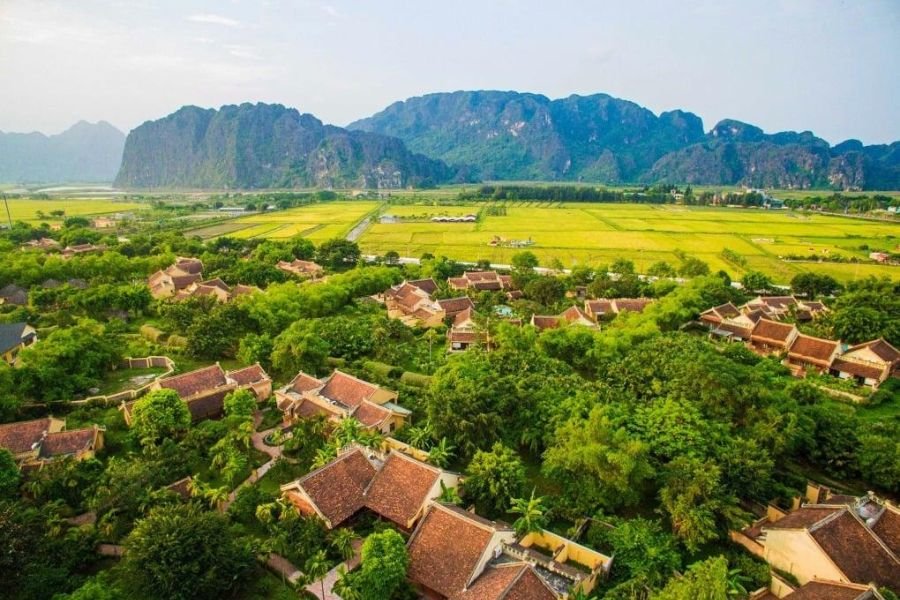
Vietnam’s countryside offers a different perspective on the country.
While cities such as Hanoi and Ho Chi Minh City are full of energy, rural destinations invite travelers to appreciate a slower rhythm of life.
Here, agricultural traditions, local markets, family businesses, and community relationships remain important parts of daily routines.
Exploring these places can help you understand Vietnam beyond its famous landmarks.
A countryside experience might involve learning how rice is cultivated, preparing traditional dishes, or discovering skills passed down through generations.
It can also be as simple as sitting beside a river, watching farmers tend their fields, or enjoying the quiet atmosphere of a small village.
For travelers interested in cultural discovery, photography, nature, and meaningful local connections, rural Vietnam has plenty to offer.
1. Cycle Through Peaceful Villages and Rice Fields
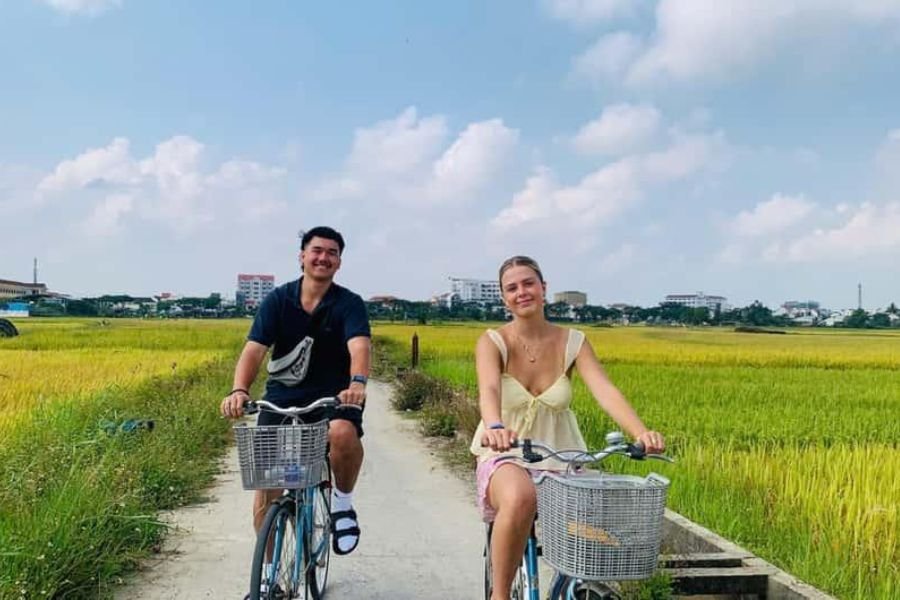
One of the most enjoyable ways to explore the Vietnamese countryside is by bicycle.
Cycling allows you to travel at a comfortable pace, stop whenever something catches your attention, and discover places that are easy to miss when traveling by car.
Imagine following a narrow path between rice paddies, passing small village houses, and watching everyday life unfold around you.
Best Places for Countryside Cycling
Hoi An: The countryside surrounding Hoi An is especially suitable for relaxed cycling. Quiet roads connect rice fields, vegetable gardens, and traditional villages.
Ninh Binh: Scenic routes around Tam Coc offer beautiful views of limestone mountains, farmland, and peaceful rural landscapes.
Mekong Delta: Flat terrain and village paths make certain areas ideal for leisurely cycling through orchards and riverside communities.
What Makes It Special?
Unlike a typical sightseeing tour, cycling gives you the freedom to appreciate small details.
You might see farmers working in the fields, children cycling home from school, or local residents gathering at a roadside café.
These everyday scenes reveal a more personal side of Vietnam.
Travel Tip: Start early in the morning or late in the afternoon to avoid the hottest part of the day. Choose a guided route if you’re unfamiliar with local roads and traffic.
2. Experience Traditional Farming in a Vietnamese Village
Agriculture has shaped Vietnamese life for generations.
Across the country, farming communities cultivate rice, vegetables, fruit, and other crops using methods adapted to their local environments.
For travelers, joining a hands-on farming activity can be an enjoyable introduction to these traditions.
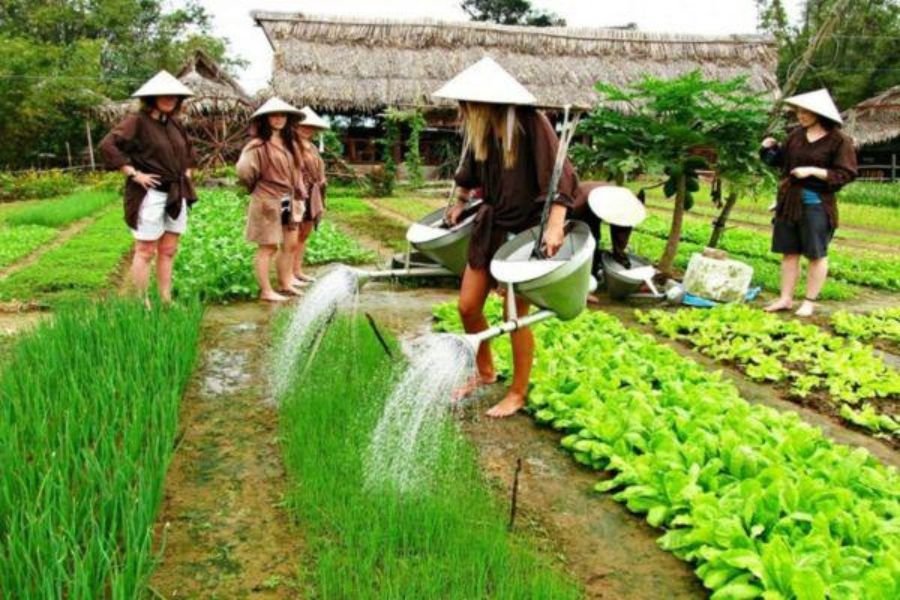
Rather than simply observing from a distance, you may have the opportunity to prepare garden beds, water vegetables, or learn about seasonal crops.
Discover Tra Que Vegetable Village in Hoi An
One of the best-known places for this experience is Tra Que Vegetable Village, near Hoi An.
The village is recognized for its long-established vegetable-growing traditions and agricultural heritage.
Visitors can join organized experiences that introduce traditional farming methods, including preparing soil and watering vegetable beds.
Some programs also combine farming activities with cooking classes.
Why Try a Farming Experience?
Participating in agricultural activities helps travelers appreciate the work behind the ingredients used in Vietnamese cooking.
It’s also a chance to learn directly from local people and understand how farming traditions continue to influence daily life.
Travel Tip: Choose experiences led by local residents, follow their instructions, and remember that working farms are places of livelihood rather than tourist playgrounds.
For more ideas about exploring the area, read our Hoi An Travel Guide.
3. Stay Overnight in a Traditional Countryside Homestay
A countryside homestay can be one of the most rewarding experiences of traveling through Vietnam.
Instead of returning to a large hotel after sightseeing, you stay in a village setting and experience a different daily rhythm.
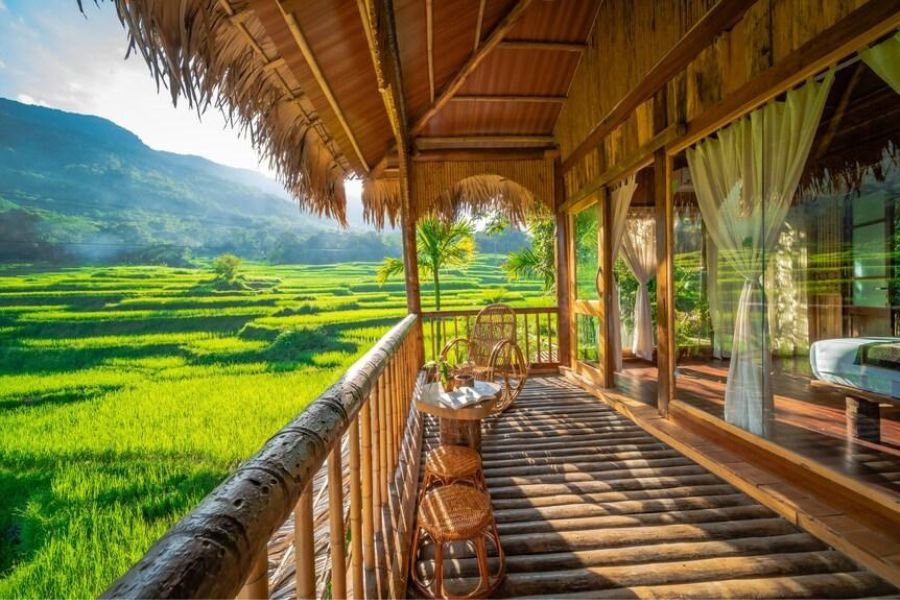
Depending on the accommodation, you might wake up to birdsong, enjoy breakfast overlooking rice terraces, or share a meal prepared with locally sourced ingredients.
Some homestays are family-operated and offer opportunities to interact with hosts, while others function more like small guesthouses.
Where to Experience Rural Homestays
Pu Luong: Known for beautiful rice terraces, mountain villages, and traditional stilt-house architecture.
Mai Chau: A peaceful valley with village accommodation, cycling routes, and opportunities to learn about local cultures.
Sapa: Homestays around Ta Van and nearby villages provide access to trekking routes and mountain scenery.
Mekong Delta: Riverside homestays offer a different experience, surrounded by tropical gardens, canals, and agricultural landscapes.
What to Expect
Accommodation standards vary considerably.
Some properties offer private bathrooms, air conditioning, and modern comforts, while others provide simpler facilities.
Before booking, check room details, transportation arrangements, and whether meals or activities are included.
For travelers seeking a genuine connection with their destination, a locally operated homestay can offer an experience that feels more personal than conventional accommodation.
Travel Tip: Respect household customs, ask before entering private spaces, and avoid assuming that every homestay includes direct interaction with the host family.
4. Explore Traditional Craft Villages and Meet Local Artisans
Vietnam has a long history of traditional craftsmanship.
Across the country, artisans continue to produce pottery, textiles, woven products, and other handmade goods.
Visiting a craft village offers an opportunity to discover the skills, materials, and cultural stories behind these products.
Bat Trang Pottery Village Near Hanoi
Bat Trang is one of Vietnam’s best-known pottery villages.
Located outside central Hanoi, it is a popular destination for travelers interested in ceramics and traditional craftsmanship.
Visitors can explore pottery shops, observe production processes where access is permitted, and join hands-on workshops.
Making a small ceramic item can be a memorable souvenir of your visit.
Traditional Weaving in Northern Vietnam
In regions such as Mai Chau and Pu Luong, textile traditions remain an important part of local cultural heritage.
Some community experiences introduce visitors to weaving techniques, traditional patterns, and the significance of handmade fabrics.
These activities offer insight into the time and skill required to create textiles.
Why Visit Craft Villages?
A handmade product becomes more meaningful when you understand the work behind it.
By choosing locally produced goods, travelers can also help support artisans and small businesses.
Travel Tip: Buy directly from artisans when possible, ask permission before taking photographs, and respect workshop rules.
If you’re spending time in the capital, our Hanoi Travel Guide can help you plan nearby cultural experiences.
5. Discover Rural Life Along the Mekong Delta Waterways
In Southern Vietnam, the Mekong Delta offers a countryside experience shaped by rivers and canals.
Life here has long been connected to waterways, agriculture, and river-based trade.
Boats are part of the region’s history, while fruit orchards, small villages, and local markets reflect its agricultural traditions.
Exploring the delta by boat allows travelers to experience landscapes that are very different from Northern Vietnam’s mountains and rice terraces.
Take a Small Boat Through Quiet Canals
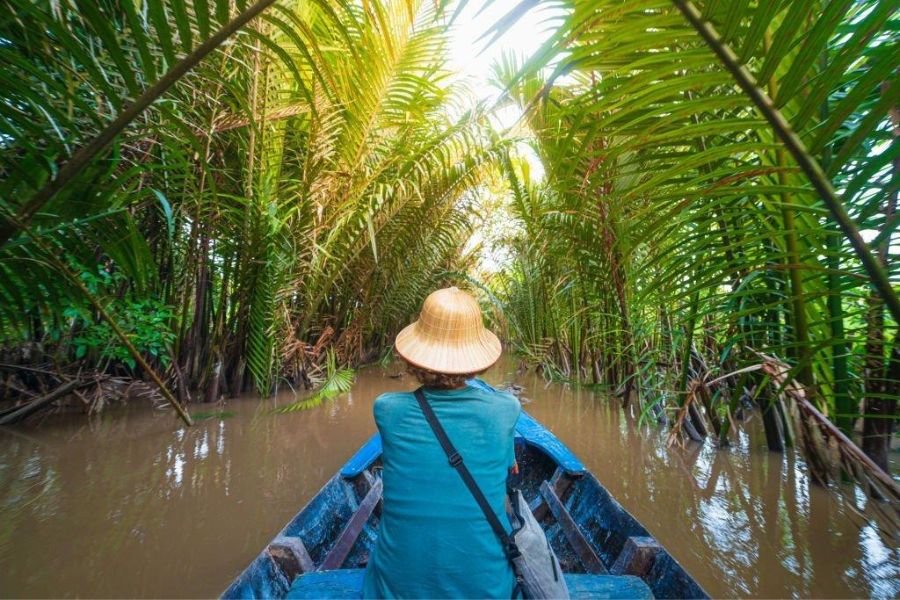
One of the most memorable activities is traveling along narrow waterways surrounded by tropical vegetation.
Depending on the destination and tour, visitors may pass riverside homes, coconut palms, and small agricultural communities.
Some routes include stops at local workshops or family-run businesses.
Visit Fruit Orchards and Rural Villages
The Mekong Delta is known for producing tropical fruit.
Certain orchards welcome visitors, offering opportunities to learn about local crops and taste seasonal produce.
You may also explore village paths by bicycle or visit small businesses producing regional specialties.
Experience a Floating Market
Floating markets are an important part of the Mekong Delta’s trading heritage.
Cai Rang, near Can Tho, is one of the best-known examples.
For travelers interested in visiting, early morning is generally the most suitable time, although trading activity varies and should not be expected to resemble historical photographs.
For more information, explore our Vietnam Floating Markets Guide.
Travel Tip: Consider staying overnight in the delta rather than trying to fit every activity into a rushed day trip from Ho Chi Minh City.
6. Join a Vietnamese Home Cooking Experience
Vietnamese cuisine is closely connected to family traditions and local ingredients.
While restaurants introduce travelers to famous dishes, a home-style cooking experience offers another perspective.
Instead of simply ordering a meal, you learn how ingredients are selected, prepared, and combined.
Depending on the program, you might visit a local market, gather vegetables, prepare dipping sauces, or cook traditional dishes with a host.
What Can You Learn?
Cooking experiences vary by region.
In Northern Vietnam, you might learn to prepare fresh spring rolls, traditional dipping sauces, or regional noodle dishes.
In Central Vietnam, cooking classes may introduce local specialties and the use of aromatic herbs.
In the Mekong Delta, activities may feature tropical ingredients, fresh produce, and Southern Vietnamese dishes.
The most rewarding classes often include explanations of why ingredients are used and how dishes fit into everyday family meals.
More Than Just Cooking
Food can create connections even when travelers and hosts don’t speak the same language fluently.
Preparing a meal together provides opportunities to share stories, ask questions, and discover different cultural traditions.
Travel Tip: If you have food allergies or dietary restrictions, inform your host before booking. Some common Vietnamese ingredients include fish sauce, shrimp paste, peanuts, and seafood.
7. Walk Through Rice Terraces and Mountain Villages
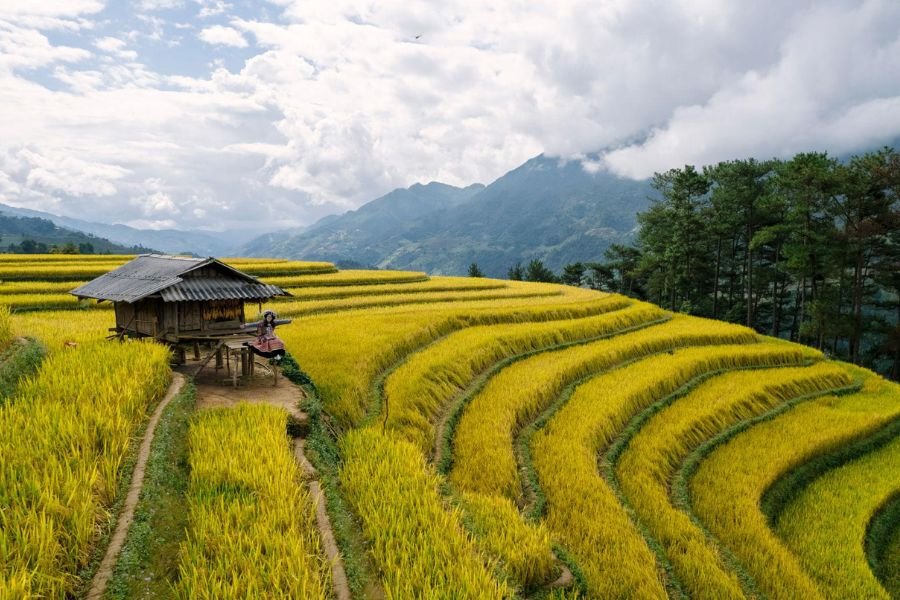
Vietnam’s northern highlands are famous for their beautiful terraced rice fields.
These landscapes are not only scenic attractions. They are agricultural environments shaped by generations of farming communities.
Walking through the countryside offers travelers an opportunity to appreciate both the natural beauty and the cultural importance of these places.
Sapa: Mountain Valleys and Village Trails
Sapa is one of the most popular destinations for countryside trekking.
Routes around Muong Hoa Valley connect rice terraces, small settlements, and mountain scenery.
Guided walks can introduce travelers to local communities and explain regional traditions.
Pu Luong: A Peaceful Rural Escape
Pu Luong Nature Reserve offers a quieter alternative for travelers who enjoy nature and village life.
The region features terraced fields, forested mountains, and communities with longstanding cultural traditions.
Visitors can enjoy scenic walks, stay in local homestays, and explore village landscapes at a relaxed pace.
Mu Cang Chai: Spectacular Rice Terraces
Mu Cang Chai is especially famous for its mountain rice terraces.
During the growing season, the fields create sweeping green patterns across the hillsides.
As harvest approaches, parts of the landscape turn golden.
However, rice-growing schedules depend on location, elevation, and weather conditions.
When Should You Visit?
The best time depends on the destination.
In many northern highland areas, late summer and early autumn are popular for green and golden rice terraces.
Pu Luong also has different growing cycles from some higher-altitude destinations, so it’s important to check local conditions rather than assuming every rice terrace is at its best in the same month.
Travel Tip: Hire a knowledgeable local guide, stay on established paths, and never enter cultivated fields without permission.
8. Visit Local Markets and Experience Everyday Village Life
One of the simplest ways to discover rural Vietnam is by visiting a local market.
Unlike attractions designed primarily for visitors, many markets remain important gathering places for nearby communities.
Farmers sell vegetables and seasonal produce, families shop for everyday essentials, and small vendors prepare regional dishes.
The atmosphere can be lively, colorful, and full of interesting details.
Discover Traditional Highland Markets
In Northern Vietnam, some communities organize markets on particular days of the week.
These markets may feature agricultural products, textiles, household goods, and traditional foods.
They can also serve as social gathering places for people living in surrounding villages.
For visitors, a market provides a chance to observe local commerce and discover regional products.
Explore Countryside Markets in the Mekong Delta
In Southern Vietnam, village markets often reflect the agricultural abundance of the region.
Fresh fruit, vegetables, fish, and local specialties are common sights.
The experience can be particularly interesting in the early morning when local shopping activity is at its busiest.
How to Visit Respectfully
Markets are working community spaces, so it’s important to behave considerately.
Ask permission before photographing vendors or customers, especially children.
Avoid blocking stalls or pathways, and remember that not every interaction needs to become a photograph.
Buying food or handmade goods from local sellers is a practical way to support small businesses.
Best Places for Vietnam Countryside Experiences
Different regions offer different types of rural travel.
The table below can help you choose a destination based on your interests.
| Destination | Best Experiences | Ideal For |
|---|---|---|
| Hoi An Countryside | Cycling, farming, cooking classes | First-time visitors, couples, families |
| Ninh Binh | Cycling, village exploration, scenic boat rides | Nature lovers, photographers |
| Pu Luong | Homestays, rice terraces, village walks | Slow travelers, nature enthusiasts |
| Mai Chau | Cycling, weaving, local homestays | Cultural travelers, families |
| Sapa | Trekking, mountain villages, rice terraces | Hikers, adventure seekers |
| Mu Cang Chai | Rice terraces, photography, village exploration | Landscape photographers |
| Mekong Delta | Boat trips, orchards, homestays, markets | Food lovers, cultural explorers |
| Bat Trang | Pottery workshops, artisan visits | Families, creative travelers |
How Many Days Do You Need to Explore Rural Vietnam?
You don’t need weeks in the countryside to enjoy a meaningful experience.
Even a half-day activity can introduce you to a different side of Vietnamese life.
However, longer stays allow more time to explore without rushing.
Half-Day Experiences
Ideal for travelers with limited time.
Consider a cycling tour around Hoi An, a pottery workshop near Hanoi, or a local cooking experience.
One-Day Experiences
A full day gives you time to combine several activities.
For example, you might explore Ninh Binh’s countryside by bicycle and boat, or visit villages and orchards in the Mekong Delta.
Two- to Three-Day Experiences
An overnight stay provides a more relaxed pace.
Pu Luong, Mai Chau, and selected Mekong Delta destinations are excellent options for short countryside escapes.
Longer Rural Adventures
If you have a week or more, consider combining several regions.
A trip through Northern Vietnam might include Hanoi, Ninh Binh, Mai Chau, and Pu Luong.
For a longer journey across the country, you can also combine countryside activities around Hoi An with a stay in the Mekong Delta.
Explore our Vietnam 2 Week Itinerary for ideas on planning a wider Vietnam adventure.
Best Time to Experience the Vietnamese Countryside
Vietnam stretches across several climate regions, so there is no single perfect month for countryside travel throughout the country.
Northern Vietnam
Spring and autumn are often comfortable for outdoor activities.
In mountainous areas, temperatures can be significantly cooler than in Hanoi, especially during winter.
Rice terrace scenery changes throughout the agricultural calendar, so choose your dates according to what you want to see.
Central Vietnam
The countryside around Hoi An is often enjoyable during periods of drier weather, particularly from approximately February to August.
However, temperatures can become very hot during summer.
Heavy rainfall and flooding can affect rural routes during the wetter months, especially later in the year.
Southern Vietnam
The Mekong Delta is warm throughout the year.
The dry season, generally from December to April, often offers convenient conditions for cycling and outdoor activities.
The rainy season brings greener landscapes, but showers and water levels may affect some experiences.
Travel Tip: Check local forecasts and seasonal conditions shortly before your trip, especially when planning cycling, trekking, or boat activities.
How to Travel Responsibly in Rural Vietnam
Meaningful countryside travel should benefit both visitors and the communities they visit.
A few thoughtful choices can make a difference.
Support Local Businesses
Choose locally operated homestays, guides, workshops, and restaurants when possible.
This helps direct more tourism spending toward the communities hosting visitors.
Respect Cultural Traditions
Different communities have their own customs, beliefs, and social expectations.
Ask your guide or host about appropriate behavior, particularly when visiting homes or religious spaces.
Always Ask Before Taking Photographs
Beautiful scenery may be freely photographed from public areas, but people deserve privacy and respect.
Ask permission before photographing residents, particularly during work or personal activities.
Protect Agricultural Land
Rice fields, vegetable gardens, and orchards are important sources of income.
Stay on designated paths and avoid damaging crops.
Choose Genuine Community Experiences
Not every activity advertised as authentic reflects everyday local life.
Look for experiences that involve local hosts, explain cultural context, and compensate participants fairly.
The goal should be cultural exchange, not simply watching people perform their daily routines for visitors.
Frequently Asked Questions About Vietnam Countryside Experiences
What are the best countryside experiences in Vietnam?
Popular experiences include cycling through rural villages, staying in local homestays, joining traditional farming activities, exploring craft villages, trekking through rice terraces, and taking boat trips in the Mekong Delta.
Where is the most beautiful countryside in Vietnam?
Ninh Binh, Pu Luong, Sapa, Mu Cang Chai, Hoi An’s rural surroundings, and the Mekong Delta are all beautiful in different ways.
The best choice depends on whether you prefer mountains, rice terraces, rivers, or traditional villages.
Can I experience the Vietnamese countryside without joining a tour?
Yes. Some destinations are easy to explore independently, particularly by bicycle or on foot.
However, a local guide can be helpful for remote villages, agricultural experiences, and cultural activities that require prior arrangements.
Are countryside experiences suitable for families?
Many are suitable for families, especially gentle cycling routes, cooking classes, pottery workshops, and short boat trips.
Check age requirements, physical demands, and safety arrangements before booking.
Is it better to stay in a homestay or hotel?
A homestay can provide a more personal rural experience, while hotels may offer greater privacy and predictable facilities.
The best option depends on your comfort preferences and the type of experience you’re seeking.
How can I find authentic local experiences in Vietnam?
Look for locally operated activities, small-group experiences, transparent itineraries, and providers that explain how local communities participate and benefit.
Reviews can be helpful, but they should be considered alongside the quality of the itinerary and the provider’s approach to responsible tourism.
Final Thoughts: Discover the Vietnam Beyond the Cities
The beauty of Vietnam isn’t limited to its famous landmarks.
Sometimes, the most memorable experiences happen far from the crowds — cycling along a quiet village road, learning a traditional skill, sharing a meal with local hosts, or watching the morning light spread across the rice fields.
These moments offer something that conventional sightseeing often cannot: a deeper understanding of everyday life.
Whether you’re exploring the mountains of Northern Vietnam, discovering the countryside around Hoi An, or traveling through the waterways of the Mekong Delta, there are countless ways to experience the country’s rural charm.
At Maverick Journeys, we believe travel should go beyond simply visiting places. It should create meaningful connections with the people, cultures, and landscapes that make each destination special.
Ready to discover a different side of Vietnam? Let Maverick Journeys help you plan a personalized journey filled with authentic countryside experiences.