










Northern Vietnam is home to some of Southeast Asia’s most breathtaking mountain landscapes. Mist-covered valleys, terraced rice fields, winding mountain passes, and traditional villages make this region a dream destination for travelers seeking adventure and cultural discovery.
But when planning a trip, one question often comes up: Sapa vs Ha Giang — which destination should you choose?
Both offer spectacular scenery and opportunities to experience the cultures of Vietnam’s northern highlands. Yet the journeys themselves are surprisingly different.
Sapa is known for its beautiful rice terraces, scenic trekking trails, and comfortable mountain retreats. Ha Giang, on the other hand, is famous for dramatic limestone peaks, remote villages, and the legendary Ha Giang Loop.
Whether you’re a first-time visitor, an experienced adventurer, or someone looking to escape the crowds, this guide will help you decide which destination best suits your travel style.
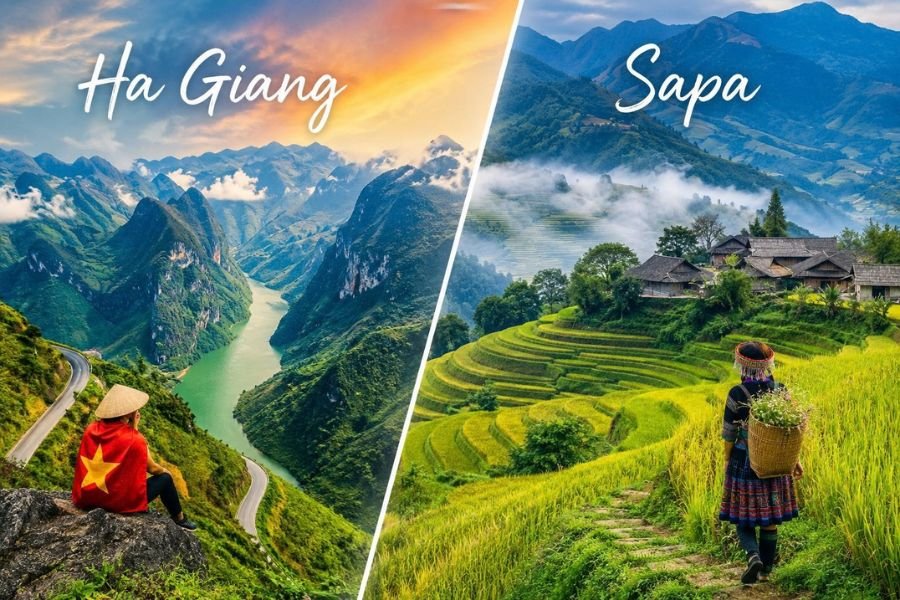
Sapa vs Ha Giang: Quick Comparison
Before exploring each destination in detail, here’s a quick look at their main differences.
| Feature | Sapa | Ha Giang |
|---|---|---|
| Landscape | Rice terraces, green valleys, misty mountains | Limestone peaks, deep canyons, mountain passes |
| Main experience | Trekking and village visits | Scenic road trips and cultural exploration |
| Travel style | Relaxed to adventurous | More adventurous and remote |
| Accessibility | Easier to reach from Hanoi | Longer road journey |
| Accommodation | Hotels, resorts, lodges, homestays | Guesthouses, homestays, selected hotels |
| Ideal duration | 2–3 days | 3–4 days for the Loop |
| Best for | Couples, families, hikers, first-time visitors | Adventure seekers, photographers, road-trip lovers |
| Main highlight | Muong Hoa Valley and Fansipan | Ma Pi Leng Pass and Dong Van Karst Plateau |
The short answer: Choose Sapa for trekking, beautiful rice terraces, and a more comfortable mountain escape. Choose Ha Giang for dramatic scenery, winding roads, and a more adventurous journey.
If you have enough time, visiting both can offer a more complete experience of Northern Vietnam.
1. Sapa vs Ha Giang: Which Has Better Scenery?
Both destinations are incredibly beautiful, but their landscapes create very different impressions.
Sapa: Green Valleys and Beautiful Rice Terraces
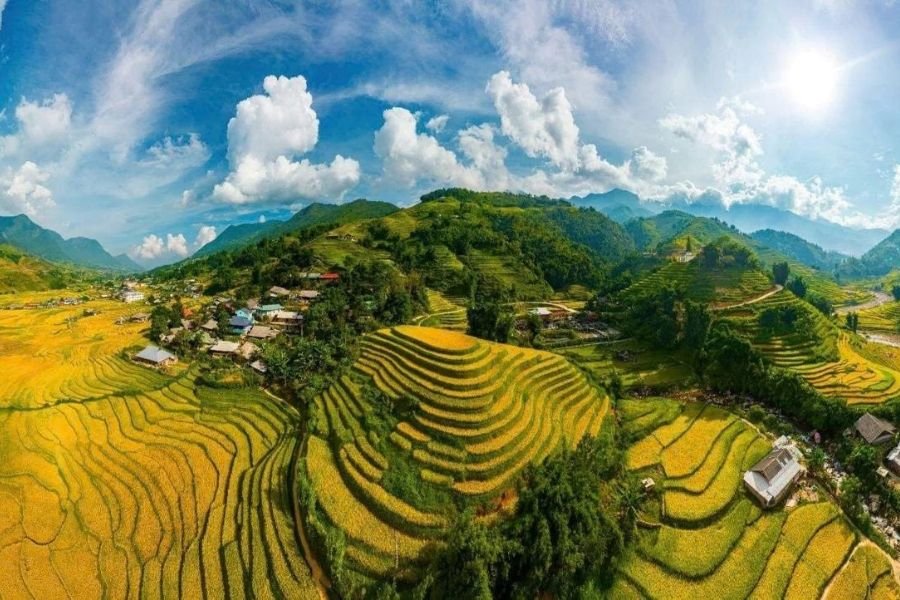
Sapa is one of Vietnam’s most recognizable mountain destinations.
Located in the Hoang Lien Son mountain range, the area is surrounded by terraced rice fields, lush valleys, and traditional villages.
One of its most famous landscapes is Muong Hoa Valley, where rice terraces follow the natural curves of the mountains.
Depending on the season, the fields may appear bright green, golden yellow, or filled with water that reflects the sky.
Sapa’s scenery is especially appealing to travelers who enjoy peaceful countryside views, nature walks, and photography.
The mountains are often covered in mist, creating a dreamy atmosphere, particularly in the early morning.
Best scenery in Sapa:
-
Muong Hoa Valley
-
Lao Chai and Ta Van villages
-
Fansipan Mountain
-
O Quy Ho Pass
-
Ta Phin village
If your idea of a perfect mountain escape includes waking up to views of rice terraces and spending the day walking through valleys, Sapa may be your ideal destination.
Ha Giang: Dramatic Mountains and Spectacular Roads
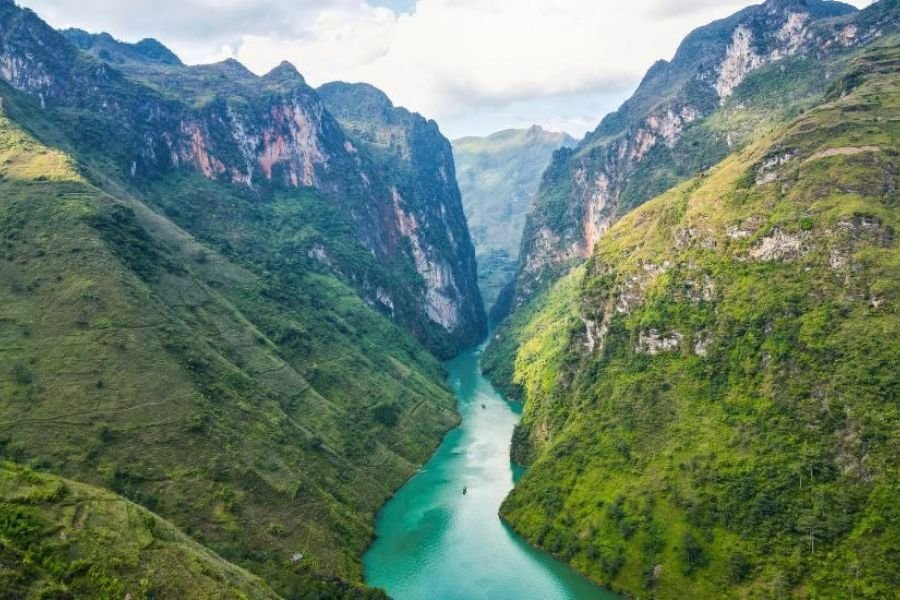
Ha Giang offers a completely different type of beauty.
Instead of wide valleys covered in rice terraces, much of the classic Ha Giang Loop passes through rugged limestone mountains, steep cliffs, and dramatic canyons.
The scenery feels wild and expansive, with winding roads cutting through towering mountain formations.
One of the most unforgettable sights is Ma Pi Leng Pass, where visitors can admire the Nho Que River far below.
The Dong Van Karst Plateau, recognized as a UNESCO Global Geopark, is another highlight.
Its rocky landscapes, remote villages, and extraordinary geological formations make Ha Giang feel unlike anywhere else in Vietnam.
Best scenery in Ha Giang:
-
Ma Pi Leng Pass
-
Dong Van Karst Plateau
-
Nho Que River
-
Quan Ba Heaven Gate
-
Sung La Valley
-
Lung Cu area
Ha Giang is particularly rewarding for travelers who love panoramic viewpoints, mountain roads, and dramatic natural landscapes.
Which is better?
Choose Sapa for lush greenery and rice terraces. Choose Ha Giang for rugged mountains and breathtaking road-trip scenery.
2. Trekking in Sapa vs the Ha Giang Loop
The biggest difference between these two destinations is how you experience them.
Trekking in Sapa: Explore the Mountains on Foot
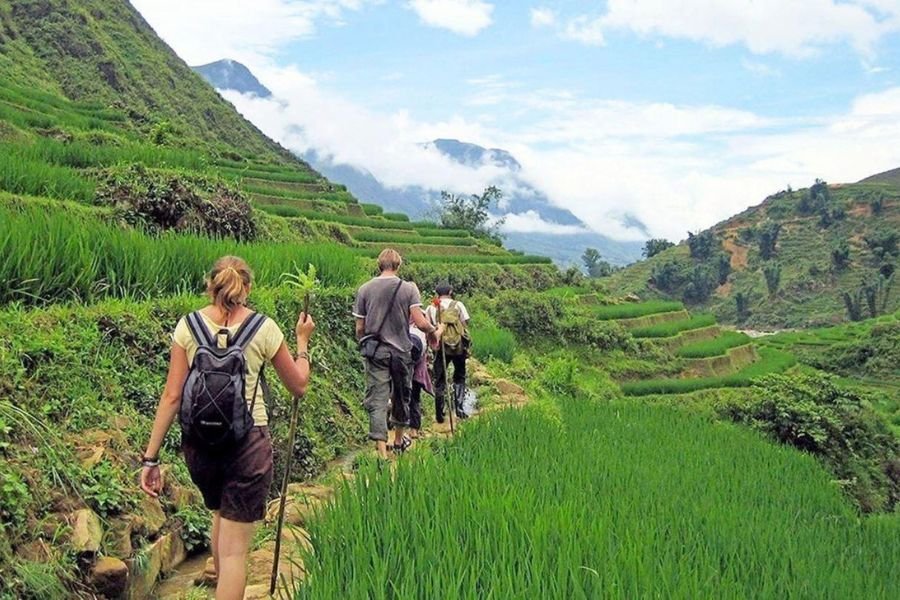
Sapa is one of Northern Vietnam’s best destinations for trekking.
Many visitors come specifically to walk through terraced rice fields, mountain paths, and traditional villages.
Popular trekking routes connect Lao Chai, Ta Van, and nearby communities.
Along the way, travelers can enjoy beautiful scenery and learn about local traditions.
Trekking experiences range from short, relatively easy walks to more demanding multi-day adventures.
A guided trek is a good option for visitors who want to understand the region’s culture while exploring safely.
You can also spend the night in a local homestay, enjoying a slower and more personal travel experience.
Sapa is ideal if you prefer exploring nature at walking pace rather than spending long hours on mountain roads.
The Ha Giang Loop: An Adventure on the Road

The Ha Giang Loop is one of Vietnam’s most famous road trips.
A typical journey takes three to four days and passes through destinations such as Quan Ba, Yen Minh, Dong Van, and Meo Vac.
The experience is about more than reaching individual attractions.
Much of the adventure comes from traveling between destinations, stopping at viewpoints, and discovering mountain communities along the way.
Many travelers choose an Easy Rider tour, where an experienced local driver handles the motorbike while the visitor rides as a passenger.
This allows you to enjoy the scenery without needing to navigate challenging mountain roads yourself.
Private car tours are another option for travelers who prefer greater comfort or do not want to travel by motorbike.
Important: The Ha Giang Loop includes steep mountain roads, sharp bends, and sections that can become dangerous in poor weather. Self-driving should only be considered by experienced riders with the appropriate legally recognized motorcycle licence and permits.
Which is better?
Sapa is better for travelers who love hiking and walking through nature.
Ha Giang is better for travelers who enjoy scenic road trips, mountain viewpoints, and a greater sense of adventure.
3. Cultural Experiences: Sapa or Ha Giang?
Northern Vietnam is home to many ethnic communities, each with distinctive traditions, languages, and ways of life.
Both Sapa and Ha Giang offer opportunities to learn about these cultures, although the experiences may feel different.
Cultural Experiences in Sapa
Sapa is home to communities including the Hmong, Red Dao, and Giay.
Travelers can visit villages, explore local markets, learn about traditional textiles, and stay in community-run homestays.
Because Sapa is an established tourism destination, many experiences are relatively easy to arrange.
Some villages receive large numbers of visitors, particularly during peak travel periods.
For a more personal experience, consider choosing a locally guided trek or staying outside Sapa town.
Cultural Experiences in Ha Giang
Ha Giang is known for its cultural diversity, with communities including the Hmong, Tay, Dao, and Lo Lo.
During a road trip, travelers pass through mountain villages, agricultural landscapes, and local markets.
Places such as Dong Van and Meo Vac are particularly interesting for visitors who want to explore traditional market culture.
Some communities are located in relatively remote areas, where daily life remains closely connected to agriculture and local traditions.
However, tourism has grown significantly along the Ha Giang Loop, so not every stop is quiet or untouched.
Responsible travel tip: Choose locally operated services when possible, ask permission before photographing people, and respect homes, religious spaces, and community customs.
Both destinations can offer meaningful cultural experiences when visited thoughtfully.
4. Sapa vs Ha Giang: Which Is Easier to Reach from Hanoi?
Transportation is an important consideration, especially if you have limited time in Vietnam.
Getting to Sapa from Hanoi
Sapa is generally easier to reach.
Travelers can take a sleeper bus, limousine van, or overnight train to Lao Cai followed by a road transfer to Sapa.
The direct road journey usually takes approximately five to seven hours, depending on the service and traffic.
The train is an appealing option for visitors who enjoy rail travel, although the final transfer from Lao Cai is still required.
Once in Sapa, you can explore the town on foot and arrange local transportation or guided excursions.
Getting to Ha Giang from Hanoi
Ha Giang requires a longer journey.
Travelers usually reach the Ha Giang Loop starting point by road, with buses and private transfers commonly taking around six to eight hours or longer depending on conditions.
There is no direct train service to the classic Loop starting point.
After arriving, visitors normally begin a multi-day journey through the mountains.
This means Ha Giang requires more planning and a greater time commitment than Sapa.
Which is easier? Sapa wins for convenience, especially if you’re visiting Northern Vietnam for only a few days.
5. Best Time to Visit Sapa vs Ha Giang
Weather can make a significant difference to your experience in both destinations.
Best Time to Visit Sapa
Sapa’s landscape changes dramatically throughout the year.
March to May: Generally pleasant for trekking, with spring scenery and increasingly green landscapes.
June to August: Rice terraces become lush and green, although the weather can be hot, humid, and rainy.
September to early October: A particularly beautiful period for golden rice terraces, depending on the local harvest schedule.
November to February: Cooler temperatures, misty mornings, and occasionally very cold mountain weather.
For many travelers, September is an excellent time to visit Sapa, especially if seeing golden rice terraces is a priority.
However, harvest timing varies by location and year.
Best Time to Visit Ha Giang
Ha Giang can be visited throughout the year, but different seasons offer different experiences.
March to May: Spring landscapes, seasonal flowers, and generally pleasant conditions.
June to August: Green mountain scenery, but heavier rainfall can increase the risk of slippery roads and landslides.
September to November: Often a rewarding period for mountain scenery, cooler weather, and seasonal flowers.
December to February: Colder temperatures, particularly at higher elevations, with possible fog and reduced visibility.
October and November are popular months for travelers interested in Ha Giang’s buckwheat flower season.
However, flowering conditions vary with weather and location.
For a detailed seasonal guide, read our Ha Giang in October article.
Which Destination Is Better in October?
October is a good month to consider both destinations.
Sapa may still offer beautiful rice terrace scenery in some locations, particularly early in the month, although many fields may already have been harvested.
Ha Giang offers impressive mountain landscapes and the possibility of seeing buckwheat flowers.
If you’re visiting later in October and your main priority is seasonal flowers and mountain road scenery, Ha Giang may be especially appealing.
If you prefer trekking and a more relaxed atmosphere, Sapa remains an excellent choice.
6. Accommodation: Which Destination Is More Comfortable?
Staying in Sapa
Sapa offers a wide variety of accommodation.
You can choose from budget guesthouses, boutique hotels, mountain lodges, and luxury resorts with spectacular valley views.
Some properties feature balconies overlooking rice terraces, heated rooms, and comfortable facilities.
Sapa is particularly attractive for couples and travelers who want to combine outdoor activities with relaxation.
Staying in Ta Van or another village outside the town center can provide a quieter atmosphere.
Staying in Ha Giang
Accommodation along the Ha Giang Loop is generally more focused on guesthouses, homestays, and small hotels.
Many travelers stay overnight in Yen Minh, Dong Van, Meo Vac, or Du Gia, depending on their route.
Some homestays offer private rooms and modern facilities, while others provide simpler accommodation.
Comfort levels vary, so checking room details before booking is important.
For travelers who want to experience local hospitality, a well-managed homestay can be one of the highlights of the journey.
Which is better? Sapa offers a broader range of comfortable and upscale accommodation, while Ha Giang is especially appealing for travelers who enjoy smaller, locally run places.
7. Sapa vs Ha Giang: Which Is More Budget-Friendly?
Both destinations can be explored on a range of budgets.
However, the total cost depends heavily on transportation, accommodation, tour style, and the number of days you spend there.
Typical Travel Costs in Sapa
A Sapa trip may include transportation from Hanoi, hotel accommodation, meals, and guided trekking activities.
Travelers can save money by staying in simple guesthouses and choosing shorter trekking routes.
Luxury resorts and private tours will increase the overall cost.
Typical Travel Costs in Ha Giang
A Ha Giang journey usually involves transportation from Hanoi, a multi-day Loop tour or private vehicle, accommodation, meals, and local activities.
An Easy Rider tour often includes a driver and several services in one package, but inclusions vary by operator.
Private car tours are usually more expensive, particularly for solo travelers or small groups.
Because the classic Ha Giang Loop takes three to four days, the total trip may cost more than a short Sapa visit.
Estimated Budget Comparison
These are broad planning estimates rather than live quotations. Amounts are in USD per person, assuming two travelers sharing accommodation where applicable.
| Expense | Sapa | Ha Giang |
|---|---|---|
| Typical trip length | 2–3 days | 3–4 days |
| Accommodation per night | $15–100+ | $10–60+ |
| Meals per day | $10–25 | $10–25 |
| Activities | Trekking guides, cable car, village visits | Easy Rider or car tour, viewpoints, boat trips |
| Main cost consideration | Accommodation and optional activities | Multi-day transport or tour package |
These estimates exclude international flights and can change with season, service level, and booking arrangements.
Budget tip: Compare complete itineraries rather than advertised tour prices alone. Check whether transfers, meals, entrance fees, accommodation, and insurance are included.
8. Safety and Travel Comfort: What Should You Know?
Safety is an important part of choosing between Sapa and Ha Giang.
Is Sapa Safe for Travelers?
Sapa is generally accessible for visitors with different fitness levels.
However, trekking trails can become slippery after rain, and some routes involve steep or uneven terrain.
Choose a route that matches your physical ability and wear suitable footwear.
Weather conditions can also change quickly in the mountains.
For families or travelers who prefer less demanding activities, Sapa offers sightseeing options that don’t require long hikes.
Is the Ha Giang Loop Safe?
The Ha Giang Loop requires greater caution because of its mountain roads.
Steep slopes, sharp turns, rain, fog, and occasional landslides can create challenging conditions.
Travelers should avoid treating the Loop as an easy motorbike experience.
If you’re unfamiliar with mountain riding, choosing a reputable Easy Rider service or a private car with an experienced local driver is usually the safer option.
For self-driving, verify your motorcycle licence, applicable international driving permit requirements, insurance coverage, and current Vietnamese regulations before renting a vehicle.
Never assume that a car driving licence alone permits you to ride a motorcycle.
Which Is Better for Families?
Sapa is generally easier for families, particularly those traveling with younger children.
Visitors can enjoy short walks, scenic viewpoints, comfortable accommodation, and cultural activities without committing to several days on mountain roads.
Ha Giang can still be an excellent family destination with a carefully planned private car itinerary, suitable accommodation, and realistic travel times.
The best choice depends on your family’s interests, ages, and comfort with long journeys.
9. Which Destination Is Better for Different Types of Travelers?
The right destination depends on what you want from your Vietnam adventure.
For First-Time Visitors to Vietnam
Choose Sapa.
It’s easier to organize, offers a wide range of accommodation, and provides an introduction to Northern Vietnam’s mountain scenery and local cultures.
For Adventure Seekers
Choose Ha Giang.
The Loop offers dramatic roads, mountain viewpoints, and a journey through remote highland landscapes.
For Couples
Choose Sapa for a relaxed mountain retreat, or Ha Giang for a shared adventure.
Sapa’s scenic lodges and countryside walks suit travelers looking for comfort and relaxation.
Ha Giang is ideal for couples who enjoy road trips and exploring less familiar places together.
For Photography Lovers
Both are excellent.
Sapa is especially beautiful for rice terraces, village scenes, and misty valleys.
Ha Giang offers spectacular mountain passes, limestone landscapes, and panoramic road-trip photography.
Explore more inspiration in our Vietnam Photography Spots guide.
For Slow Travelers
Choose Sapa.
Staying in a mountain village for several days allows you to enjoy the landscape without rushing.
You can take short walks, visit local markets, and spend time relaxing at your accommodation.
For Travelers Seeking Remote Landscapes
Choose Ha Giang.
Although the Loop is increasingly popular, the region still offers dramatic landscapes and opportunities to explore areas beyond the busiest stops.
10. Can You Visit Both Sapa and Ha Giang on One Trip?
Yes, and combining them can be a fantastic way to experience Northern Vietnam.
However, it’s important to allow enough time.
Sapa and Ha Giang are not neighboring towns, and traveling between them can take much of a day depending on the route and transportation.
Trying to visit both in just three or four days would feel rushed.
Suggested 7-Day Northern Vietnam Adventure
| Day | Destination | Experience |
|---|---|---|
| Day 1 | Hanoi → Sapa | Travel to Sapa and explore the town |
| Day 2 | Sapa | Trek through Muong Hoa Valley and local villages |
| Day 3 | Sapa → Ha Giang | Transfer day, with rest stops |
| Day 4 | Ha Giang Loop | Quan Ba and Yen Minh |
| Day 5 | Ha Giang Loop | Dong Van and surrounding highlands |
| Day 6 | Ha Giang Loop | Ma Pi Leng Pass and Meo Vac |
| Day 7 | Ha Giang → Hanoi | Return journey |
This is a compact itinerary. A fourth day on the Loop would require extending the trip or reducing time elsewhere.
If your schedule allows, eight or nine days will provide a more comfortable pace.
For travelers exploring the country beyond the northern mountains, our Vietnam 2 Week Itinerary offers additional ideas.
Frequently Asked Questions About Sapa vs Ha Giang
Is Sapa or Ha Giang more beautiful?
Both are beautiful in different ways. Sapa is famous for green valleys and terraced rice fields, while Ha Giang is known for rugged limestone mountains and dramatic mountain passes.
Is Ha Giang better than Sapa?
Ha Giang may be better for travelers seeking adventurous road trips and spectacular mountain scenery. Sapa is often more suitable for trekking, comfortable accommodation, and shorter visits.
Is Sapa or Ha Giang better for first-time travelers?
Sapa is generally easier for first-time visitors because transportation, accommodation, and guided activities are widely available.
Can you do the Ha Giang Loop without riding a motorbike?
Yes. You can travel as a passenger with an experienced Easy Rider or arrange a private car tour.
How many days do you need for Sapa and Ha Giang?
Allow approximately two to three days for Sapa and three to four days for the Ha Giang Loop, plus sufficient time for transfers.
Which is better for rice terraces?
Sapa is the more straightforward choice for travelers whose main goal is to see extensive rice terraces, particularly around Muong Hoa Valley. Ha Giang also has impressive rice-growing areas, notably Hoang Su Phi, but these are not on the classic Loop route.
Is Sapa or Ha Giang better in October?
Both can be rewarding. Sapa offers trekking and seasonal rice terrace scenery, while Ha Giang is particularly appealing for mountain landscapes and buckwheat flowers.
Final Verdict: Sapa or Ha Giang?
So, when comparing Sapa vs Ha Giang, which Northern Vietnam adventure should you choose?
There isn’t one answer that works for everyone.
Choose Sapa if you want:
-
Beautiful rice terraces and green valleys
-
Scenic trekking and village experiences
-
Comfortable mountain accommodation
-
A shorter and easier trip from Hanoi
-
A relaxed adventure suitable for different travel styles
Choose Ha Giang if you want:
-
Spectacular mountain passes and limestone landscapes
-
An adventurous multi-day road trip
-
Dramatic photography opportunities
-
Cultural experiences in remote highland communities
-
A journey that feels adventurous from beginning to end
And if you have enough time, why not experience both?
Together, Sapa and Ha Giang reveal two very different sides of Northern Vietnam — one shaped by beautiful terraced valleys, the other by rugged mountains and extraordinary roads.
At Maverick Journeys, we believe the best journey is the one that matches your interests, pace, and sense of adventure.
Whether you’re dreaming of trekking through Sapa’s rice terraces or discovering the legendary Ha Giang Loop, we’re here to help you plan a memorable experience.
Ready to explore Northern Vietnam? Contact Maverick Journeys to start planning your personalized adventure.