










If you are looking for rice terraces, mountain villages and peaceful countryside without traveling too far from Hanoi, Pu Luong deserves a place on your Vietnam itinerary.
Located in Thanh Hoa Province, around 160 kilometers southwest of Hanoi, Pu Luong Nature Reserve is a landscape of forested mountains, terraced rice fields, traditional villages, streams and waterfalls. It is also home to Thai and Muong communities whose villages have shaped the cultural landscape of the region.
Unlike destinations where the main goal is to rush between famous attractions, Pu Luong rewards travelers who slow down. Here, some of the best moments can be surprisingly simple: walking between rice fields, waking up to mist over the valley, eating a home-cooked meal or watching everyday village life unfold.
This Pu Luong Travel Guide covers the best things to do, where to stay, when to visit and how to plan a memorable slow-travel escape in Northern Vietnam.
Pu Luong at a Glance
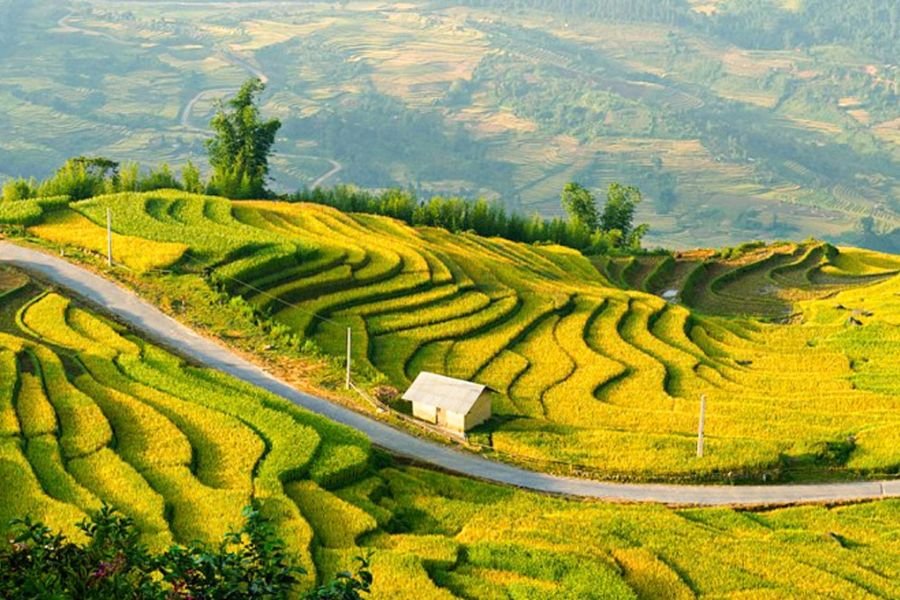
Pu Luong Nature Reserve covers more than 17,600 hectares and was established in 1999 to protect the area’s biodiversity. Its landscape combines tropical forest, limestone mountains, agricultural valleys and terraced rice fields.
For international travelers, its biggest appeal is the combination of nature and rural life.
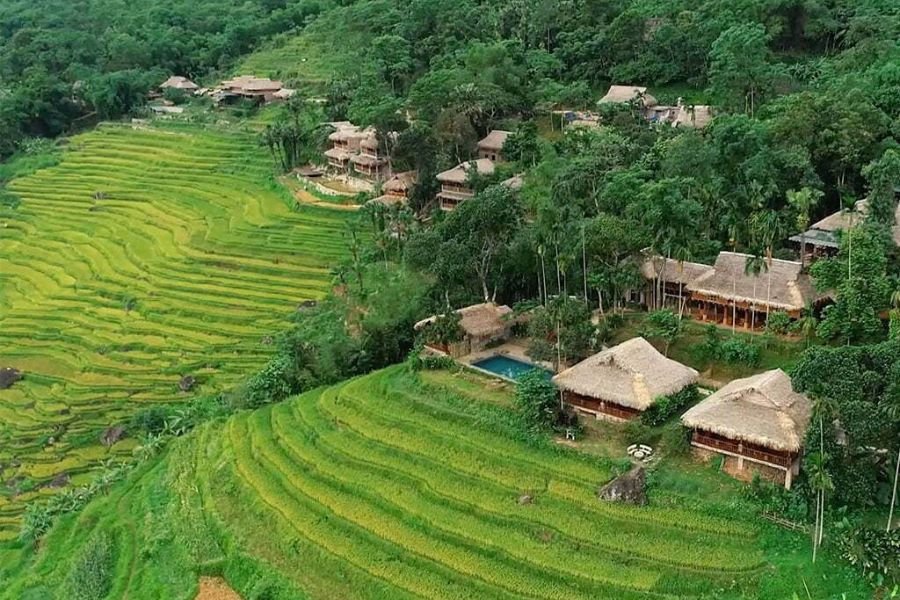
You can trek between villages in the morning, have lunch overlooking the rice terraces, visit a waterfall in the afternoon and spend the night in a traditional-style stilt house or a mountain retreat.
Pu Luong is particularly well suited to travelers interested in hiking, photography, rural culture and a slower style of travel.
Why Visit Pu Luong?
Vietnam has several famous mountain destinations, but Pu Luong occupies an interesting middle ground.
It is accessible from Hanoi in roughly four to five hours by road, yet the scenery feels far removed from the capital. Vietnam’s official tourism website describes the area as a landscape of rice paddies, cliffs, waterfalls and farming hamlets that receives fewer visitors than some better-known destinations.
That makes Pu Luong especially appealing if you want to experience the Vietnamese countryside without building an entire week around a remote mountain journey.
It also pairs naturally with other destinations in Northern Vietnam, including Ninh Binh and Mai Chau.
For a broader look at Vietnam’s terraced landscapes, see our guide to Vietnam Rice Terraces.
9 Best Things to Do in Pu Luong
1. Walk Through Pu Luong’s Rice Terraces
The rice terraces are the defining image of Pu Luong.
Rather than viewing them only from a roadside lookout, take time to walk through the valleys and along the paths connecting local communities.
Depending on the season, the landscape changes dramatically. Newly planted fields create layers of fresh green, while harvest season transforms parts of the valleys into shades of gold.
The terraces are integrated into everyday farming life, which makes walking through Pu Luong feel very different from visiting a purpose-built attraction.
For photographers, early morning and late afternoon usually offer softer light and more atmosphere than the middle of the day.
And remember: these fields are working farmland. Stay on established paths and avoid entering crops simply for photographs.
2. Stay in a Traditional Village
One of the most rewarding parts of any Pu Luong Travel Guide is not a specific attraction at all — it is staying overnight in the countryside.
Villages are scattered throughout the reserve, and traditional raised stilt houses remain an important feature of the landscape.
Pu Luong is home to Thai and Muong communities, while official tourism information highlights villages such as Don Village and the Son–Ba–Muoi area among places travelers can explore.
A village stay gives you more time to experience Pu Luong after day visitors have left.
Wake early, walk through the fields before breakfast and spend an evening surrounded by mountains instead of city traffic.
The experience can range from simple family-run homestays to more comfortable lodges and retreats.
3. Trek Through Pu Luong Nature Reserve

Walking is arguably the best way to experience Pu Luong.
Trails and rural paths pass through rice terraces, forest, valleys and small communities. Depending on your fitness and schedule, you can choose anything from a relaxed village walk to a longer full-day or multi-day trek.
Official Vietnam Tourism guidance notes that maps and marked trails can be limited in parts of the reserve and recommends using a local guide for more ambitious trekking routes.
A guide can also add context that a GPS route cannot — explaining local agriculture, village customs and the landscape around you.
Bring proper walking shoes, water and sun protection. After rain, trails can become slippery and muddy.
4. Visit Hieu Waterfall
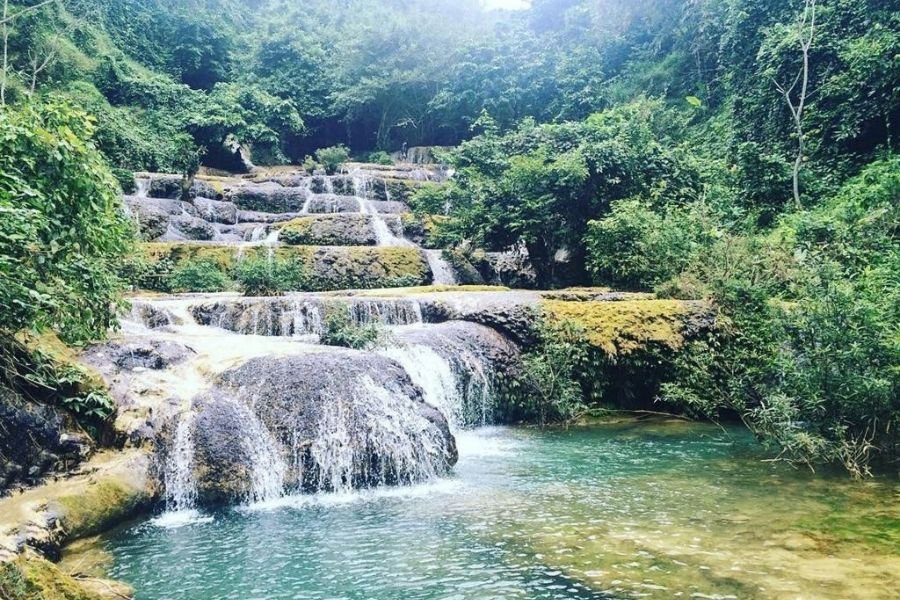
After hiking through the hills, Hieu Waterfall offers a refreshing change of scenery.
Near Hieu Village, a series of cascades runs down the hillside through a lush rural landscape. Vietnam Tourism describes reaching the falls via a short walk through rice fields from the upper part of the village.
The waterfall can be combined with village walking or trekking rather than treated as an isolated attraction.
Conditions can vary significantly with rainfall, so exercise caution around wet rocks and fast-moving water.
If you are unfamiliar with the area, a local guide can help you find appropriate access points.
5. See Pu Luong’s Traditional Waterwheels
One of Pu Luong’s most recognizable rural sights is its traditional bamboo waterwheels.
These structures are part of agricultural life, historically helping move water toward fields using the natural flow of streams.
Seeing them surrounded by forests and rice paddies provides a glimpse into the relationship between local communities and the landscape.
Rather than rushing in for a photograph and leaving, spend some time walking through the surrounding countryside. The sound of flowing water and the slower pace are precisely what make this part of Pu Luong memorable.
6. Explore Don Village
Don Village is one of the better-known communities within the Pu Luong area and a practical base for travelers.
The surrounding landscape features rice terraces, hills and traditional houses, while accommodation options make it relatively easy to spend a night or two nearby.
Walk instead of relying on a vehicle whenever practical.
Some of the most photogenic views are not marked attractions but ordinary stretches of path between houses, fields and hills.
This is also where the idea of slow travel in Pu Luong makes sense: give yourself enough time to observe rather than simply collect photographs.
7. Discover Son–Ba–Muoi
Travelers looking for a more remote experience can consider the Son–Ba–Muoi area.
Official tourism information identifies Son, Ba and Muoi among the notable villages within the Pu Luong Nature Reserve.
The journey itself is part of the experience, with mountain landscapes and a stronger sense of isolation than around the more accessible accommodation areas.
Road and weather conditions can affect accessibility, so this is one place where local advice is particularly valuable.
Do not build an overly tight schedule around a remote mountain journey. Leave enough time for changing conditions.
8. Cycle Through the Countryside
If trekking is not your preferred way to explore, cycling offers another perspective.
Quiet rural roads take you past rice fields, houses and mountain scenery. Some accommodation providers have bicycles available, although the terrain can range from gentle valley roads to demanding hills. Vietnam Tourism also highlights cycling as one of the ways to experience the area’s quieter countryside.
Ask your accommodation about current road conditions and choose a route appropriate for your fitness level.
You do not need to cover huge distances. A slow ride between nearby villages can be more enjoyable than attempting an ambitious mountain route.
9. Slow Down and Do Almost Nothing
This may sound strange in a travel guide, but one of the best things to do in Pu Luong is less.
Book accommodation overlooking the valley.
Wake up without an alarm.
Have coffee while watching clouds move across the mountains. Walk to a nearby village. Read a book in the afternoon. Stay outside for sunset.
Pu Luong works particularly well for travelers who want a break from itineraries built around constant transportation and sightseeing.
Sometimes the destination is the view outside your room.

Best Time to Visit Pu Luong
Choosing when to visit depends on what you want to see.
For green landscapes, late May and early June can be particularly attractive as young rice creates lush scenery. September and October are associated with harvest season, when terraced fields can turn golden.
Vietnam Tourism also notes that Pu Luong’s terraces are vibrant green from around August before golden harvest colors appear toward late October. Agricultural timing can vary from village to village and from year to year, so treat these periods as seasonal guidance rather than guaranteed dates.
May–June: Fresh Green Rice Fields
This is an excellent period if you prefer vivid green terraces.
The landscape feels fresh and intensely rural, although warmer weather and occasional rain should be expected.
September–October: Golden Rice Season
For many photographers, this is the most anticipated period.
As harvest approaches, green terraces gradually change to yellow and gold.
If golden fields are the main reason for your trip, check recent local conditions before traveling because individual fields may be harvested at different times.
November–April: A Quieter Side of Pu Luong
Outside the main rice seasons, Pu Luong can still be worth visiting for trekking, village stays and mountain scenery.
The terraces may not have the dramatic green or golden appearance seen in promotional photographs, but this can be a good time for travelers whose priority is simply escaping into the countryside.
How Many Days Do You Need in Pu Luong?
For most first-time visitors, 2 nights and 3 days provides a good balance.
A simple itinerary could look like this:
Day 1: Travel from Hanoi → check in → village walk → sunset over the terraces.
Day 2: Trek through rice fields and villages → local lunch → Hieu Waterfall or countryside exploration.
Day 3: Slow morning → short walk or cycling → return to Hanoi or continue to another destination.
If you only have one night, Pu Luong is possible, but a large portion of the trip will be spent traveling.
Three nights is better for photographers, hikers or anyone deliberately pursuing slow travel.
Where to Stay in Pu Luong
Accommodation is part of the experience here.
You will broadly find three styles:
Local homestays offer a simpler experience and a closer connection to village life.
Bungalows and ecolodges provide more privacy while retaining views of the countryside.
Mountain retreats and resorts cater to travelers who want pools, private rooms and higher comfort levels.
Vietnam Tourism notes that homestays make up a significant part of Pu Luong’s accommodation landscape, alongside a smaller selection of retreats and lodges.
When choosing where to stay, don’t look only at room photos. Check the location carefully.
A beautiful property far from the places you want to explore can add significant driving time on mountain roads.
For slow travel, staying somewhere you can walk directly into the surrounding countryside is often more valuable than having a long list of hotel facilities.
How to Get to Pu Luong from Hanoi
Pu Luong is approximately 150–160 km from Hanoi, with road journeys generally taking around four to five hours, depending on your starting point, route, traffic and final accommodation.
Private Car or Transfer
This is usually the most convenient option for couples, families and small groups.
It provides door-to-door transport and greater flexibility for stops along the way.
Shared Limousine or Shuttle
Shared transfers can be a more economical choice for solo travelers and couples.
Check whether the vehicle drops you at your accommodation or at a central point requiring another transfer.
Motorbike
Experienced riders may enjoy the journey, but mountain roads, weather and traffic conditions need to be taken seriously.
Do not choose a motorbike simply because it looks adventurous on social media. Your legal eligibility, riding experience and insurance coverage matter.
Pu Luong vs Ninh Binh: Which Should You Choose?
Pu Luong and Ninh Binh both offer beautiful rural landscapes, but the experiences are different.
Ninh Binh is generally easier to incorporate into a first-time Vietnam itinerary and is famous for limestone karsts, river journeys, temples and historical sites.
Pu Luong places more emphasis on mountain valleys, rice terraces, trekking, village stays and quiet countryside.
If you have time, there is no need to choose between them.
Combining Hanoi → Ninh Binh → Pu Luong can create a varied Northern Vietnam itinerary with city life, river landscapes, limestone scenery and mountain villages.
For more inspiration, explore our guide to the Best Places to Visit in Vietnam.
Slow Travel and Responsible Tourism in Pu Luong
Pu Luong’s appeal depends heavily on the landscapes and communities that travelers come to experience.
That makes responsible behavior particularly important.
Ask before photographing people at close range. Do not enter homes, fields or private property without permission. Avoid leaving rubbish on trails. Dress respectfully when visiting villages, and choose locally run services where appropriate.
Remember that rice terraces are not scenery created for tourism. They are agricultural land and part of people’s livelihoods.
Slow travel is not simply about staying longer.
It is about traveling with enough time and awareness to understand the place you are visiting.
What to Pack for Pu Luong
Pack for countryside conditions rather than city sightseeing.
Comfortable walking shoes are essential if you plan to trek. Lightweight clothing works well in warmer months, but bring an extra layer for cooler mornings and evenings. Rain protection is useful during wetter periods.
Also carry insect repellent, sunscreen, drinking water and a small amount of cash.
Do not assume every village shop, homestay or local service will accept international cards.
Is Pu Luong Worth Visiting?
Yes — particularly if your idea of a memorable Vietnam trip includes mountains, rice terraces, walking and quiet mornings rather than nightlife and major tourist attractions.
Pu Luong is not about checking off dozens of sights.
Its appeal lies in the combination of landscape and pace: forest-covered mountains above you, rice fields below, small communities between them and enough quiet to actually notice where you are.
For travelers already planning Hanoi and Ninh Binh, Pu Luong can also add a distinctly more mountainous and rural dimension to the itinerary.
Pu Luong Travel Guide FAQ
Is Pu Luong touristy?
Pu Luong has become increasingly established as a nature destination, with homestays, retreats and organized tours available. However, it still offers extensive rural landscapes and village experiences away from major urban tourism centers. Vietnam Tourism describes it as receiving fewer visitors than some neighboring destinations.
Is Pu Luong good for trekking?
Yes. Trekking is one of the main reasons to visit. Routes can include rice terraces, forest, hills and villages. For longer or less obvious routes, consider hiring a local guide because trail marking and maps can be limited.
When are the rice fields golden in Pu Luong?
September and October are generally associated with harvest season and golden terraces. Exact timing varies according to weather, planting schedules and individual villages.
Can you visit Pu Luong from Hanoi?
Yes. Pu Luong is roughly 150–160 km from Hanoi and typically takes around four to five hours by road.
How long should I stay in Pu Luong?
Two nights and three days is a good starting point for first-time visitors. Stay longer if you want extended trekking, photography or a genuinely slow-paced retreat.
Is Pu Luong suitable for families?
It can be, especially for families interested in nature and countryside experiences. However, choose accommodation and activities carefully according to children’s ages and mobility, as some trekking routes and mountain roads can be demanding.
Final Thoughts: Discover a Slower Side of Vietnam
The best journeys are not always the ones with the longest list of attractions.
In Pu Luong, a morning walk between rice terraces, lunch in a mountain village or an afternoon watching clouds drift across the valley can become the highlight of your trip.
That is what makes this destination different.
This Pu Luong Travel Guide is ultimately an invitation to experience another rhythm of Vietnam — one shaped by mountains, farming communities, forests and the changing colors of the rice fields.
Come for the terraces. Stay for the quiet.
And give yourself enough time to enjoy both.
Maverick Journeys — Your Vietnam Travel Expert
Unbound • Untouched • Unforgettable