










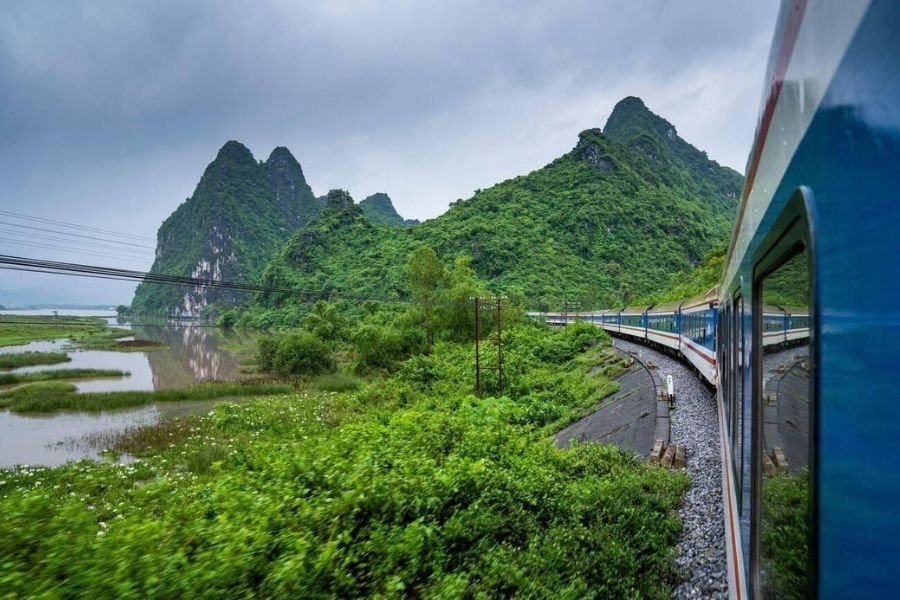
There is something special about seeing Vietnam from a train window.
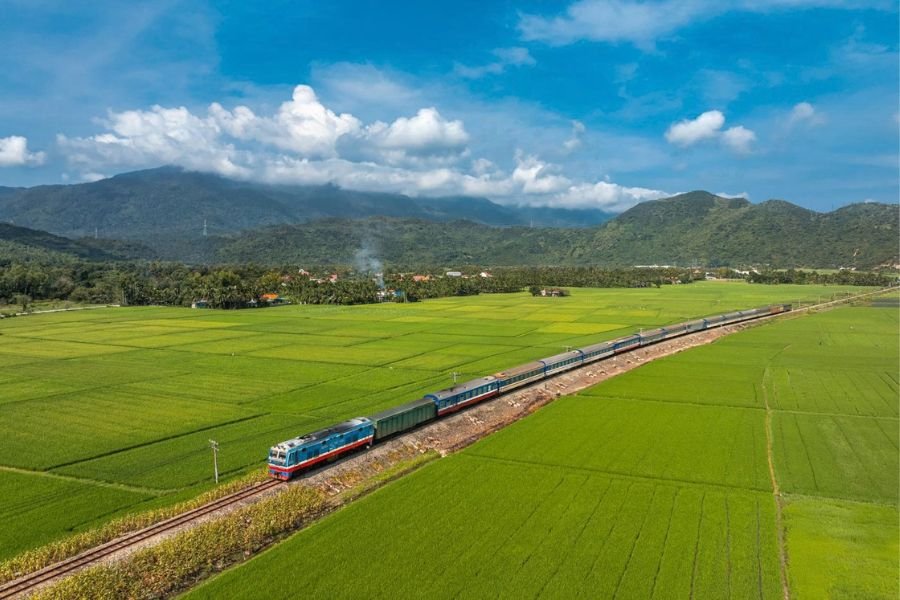
Rice fields replace busy streets. Mountains appear in the distance. Small towns, fishing villages and stretches of coastline slowly pass by while you sit back and watch the country change around you.
For travelers who have enough time, Vietnam Train Travel is more than transportation. It can become one of the most memorable parts of the journey.
Vietnam’s North–South railway connects Hanoi and Ho Chi Minh City, passing through several major travel destinations including Hue, Da Nang and Nha Trang. The complete journey covers roughly 1,700 kilometers and takes more than 30 hours, depending on the service.
But you do not need to travel the entire country by rail.
Some of Vietnam’s best train experiences last only a few hours.
This Vietnam Train Travel Guide explains the main routes, ticket options, sleeper cabins, booking process and practical details first-time travelers should know before boarding a train in Vietnam.
Why Travel Vietnam by Train?
Flying is faster. Private transfers can be more convenient. Buses sometimes reach destinations that trains cannot.
So why take the train?
Because rail travel lets you experience the distance between destinations rather than simply skipping over it.
Vietnam’s railway passes through rice fields, cities, mountains and coastal landscapes. The section between Hue and Da Nang is particularly scenic, with the railway winding between mountains and the sea.
Train travel can also save a hotel night when you choose an overnight sleeper.
For many travelers, that makes the railway particularly useful for combining major destinations on a longer trip.
If you are still planning your route through the country, our Vietnam Itinerary can help you decide which destinations work well together.
Understanding Vietnam’s North–South Railway
The country’s best-known railway route connects Hanoi in the north with Ho Chi Minh City in the south.
International travelers often refer to services on this route collectively as the Reunification Express, although this does not refer to just one train. Multiple services operate along the North–South railway.
You do not have to travel from one end of Vietnam to the other. In fact, using the railway for selected sections often makes much more sense.
Some of the most useful routes for international travelers include:
| Route | Why Take It? |
|---|---|
| Hanoi → Ninh Binh | Convenient short journey for countryside and limestone landscapes |
| Hanoi → Hue | Good overnight option connecting Northern and Central Vietnam |
| Hanoi → Da Nang | Overnight journey to Central Vietnam |
| Hue → Da Nang | One of Vietnam’s most scenic railway sections |
| Da Nang → Nha Trang | Longer journey with coastal scenery |
| Nha Trang → Ho Chi Minh City | Useful connection toward Southern Vietnam |
| Hanoi → Ho Chi Minh City | Full cross-country railway experience |
The complete Hanoi–Ho Chi Minh City journey takes well over a day, so most first-time visitors will find it more practical to combine trains with flights and road transfers.
1. Hanoi to Ninh Binh: An Easy First Train Journey
If you are unsure whether Vietnam Train Travel is for you, Hanoi to Ninh Binh is a good introduction.
The journey is relatively short, making it much easier than committing to an overnight train.
Once in Ninh Binh, travelers can explore destinations such as Trang An and Tam Coc, known for dramatic limestone karsts, waterways, rice fields and peaceful countryside.
The train is particularly useful if Ninh Binh is already part of a longer north-to-south itinerary.
However, remember that arriving at the railway station does not necessarily mean arriving at your hotel or attraction. You may still need a taxi or local transfer to reach areas such as Tam Coc or Trang An.
Factor that final transfer into your plans when comparing train travel with private road transport.
2. Hanoi to Hue: A Classic Overnight Journey
Hanoi to Hue is where train travel starts to become part of the adventure.
An overnight service allows you to leave Hanoi, sleep on the train and wake up in Central Vietnam without spending most of your sightseeing hours in transit.
For a journey of this length, a sleeper berth generally makes considerably more sense than a regular seat.
Hue itself deserves more than a quick stop.
Vietnam’s former imperial capital offers historic architecture, royal heritage, pagodas and one of the country’s most distinctive regional food cultures.
If you are planning to stop here, our Hue Travel Guide covers the city in more detail.
3. Hue to Da Nang: One of Vietnam’s Most Beautiful Train Rides
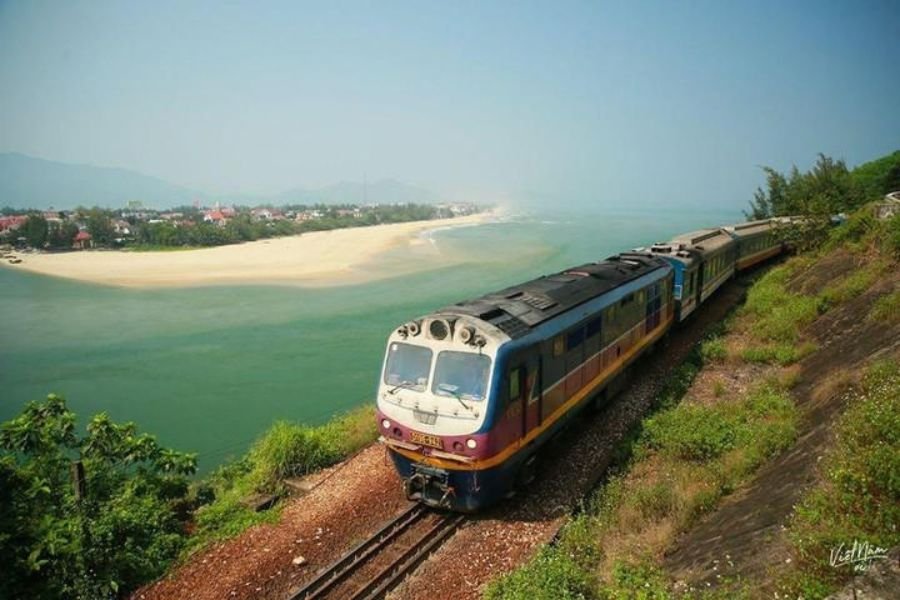
If you take only one daytime train during your trip, Hue to Da Nang deserves serious consideration.
This is one of those journeys where the transportation becomes part of the sightseeing.
The railway passes through a dramatic landscape where mountains meet the sea, with beautiful views around Lang Co and the Hai Van area.
Instead of sleeping through this section, try to travel during daylight.
Keep your camera or phone ready, but also spend some time simply looking out of the window.
After reaching Da Nang, travelers can stay in the city or continue to nearby Hoi An.
For those heading onward, our Hoi An Travel Guide is a useful place to continue planning.
4. Da Nang to Nha Trang: Coastline from Your Window
Continuing south, the railway connects Da Nang with Nha Trang.
This is a longer journey, but it can work well for travelers who enjoy slow travel and want to see more of Vietnam’s central coastline.
You trade the speed of a flight for hours of changing landscapes outside the window.
Whether that trade-off is worthwhile depends largely on your itinerary.
If you only have seven days in Vietnam, flying may make more sense.
If you have two or three weeks and enjoy the journey itself, rail travel becomes much more attractive.
This is why transportation in Vietnam should not be planned with a single rule. Sometimes flying is best; sometimes a private transfer is easier; and sometimes the train gives you an experience that the faster options cannot.
5. Nha Trang to Ho Chi Minh City
The railway also provides a useful connection between Nha Trang and Ho Chi Minh City.
Depending on the available service and your itinerary, you can choose a daytime or overnight journey.
An overnight train can help conserve valuable sightseeing hours, while traveling during the day provides more opportunities to watch Southern Vietnam unfold outside your window.
Once you reach Ho Chi Minh City, the pace changes completely.
Vietnam’s largest metropolis offers street food, markets, historic landmarks, rooftop views and energetic nightlife.
If this is your final stop on the railway, continue planning with our guide to Things to Do in Ho Chi Minh City.
Vietnam Train Classes Explained
Choosing the right seat or berth can make a significant difference, particularly on longer journeys.
The exact configuration varies between trains, but travelers will generally encounter seating and sleeper options.
Soft Seat
A soft seat works well for shorter daytime journeys.
Think Hanoi to Ninh Binh rather than Hanoi to Da Nang.
For a journey lasting only a few hours, paying for a sleeper berth is usually unnecessary.
For an overnight journey, however, sitting upright for hours may leave you tired before you even reach your destination.
Hard Sleeper
Hard-sleeper compartments are generally a more economical way to travel overnight.
They typically accommodate more passengers than soft-sleeper cabins and provide less space and privacy.
For budget-conscious travelers who still want to lie down overnight, this can be a reasonable compromise.
Soft Sleeper
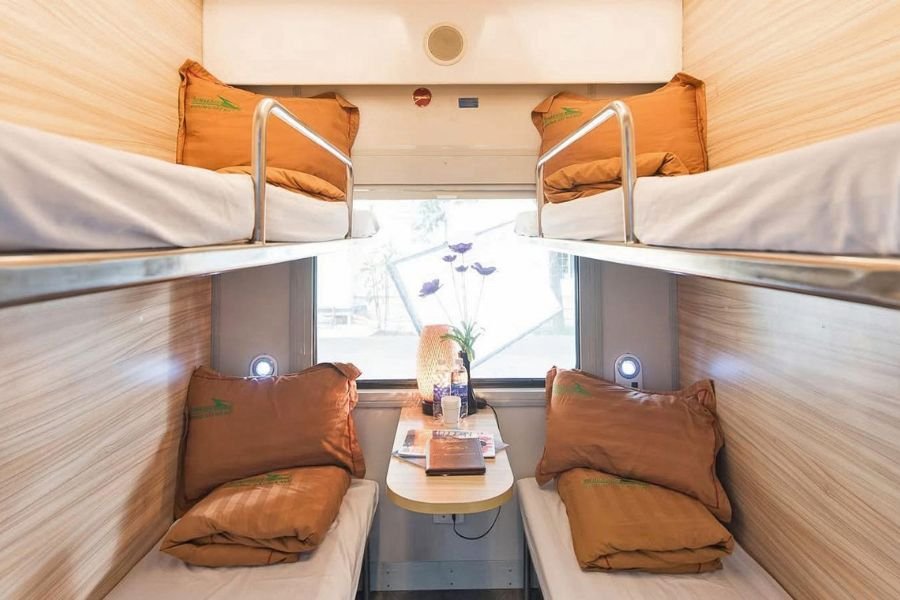
For international travelers taking a long overnight journey, soft sleeper is generally the most comfortable mainstream option.
A typical soft-sleeper cabin has four berths.
You will still be sharing a relatively small space with other passengers unless your group occupies the entire cabin, but the ability to lie down makes a significant difference on a long journey.
For routes such as Hanoi–Hue or Hanoi–Da Nang, this is the option many travelers will want to consider first.
Upper or Lower Berth: Which Should You Choose?
Your berth position matters more than you might expect.
A lower berth is easier to access and more convenient if you need to get up frequently during the journey.
It can be particularly useful for older travelers, parents traveling with children or anyone who does not want to climb to an upper bunk.
An upper berth can feel slightly more private because there is less movement around your bed, but you will need to climb up and down.
If you have a strong preference, book early enough to have a better selection.
How to Buy Vietnam Train Tickets
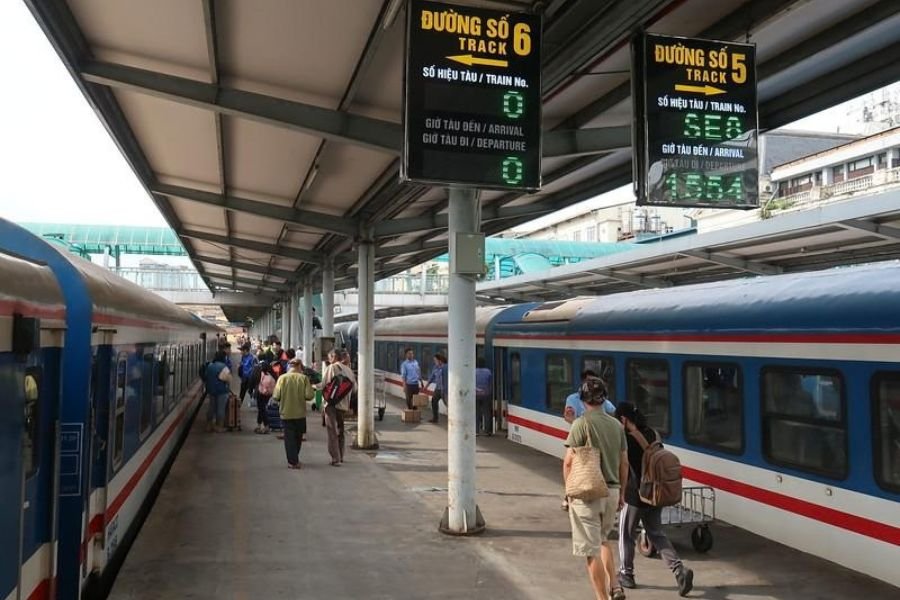
Train tickets can generally be purchased online, at railway stations or through travel agencies.
When booking, carefully check:
- departure and arrival stations
- travel date
- departure time
- train number
- seat or berth category
- passenger information
International travelers should have their passport details available when required during the booking process.
One of the easiest mistakes is selecting the wrong date, particularly when booking overnight services.
Always check the departure date and time again before completing your purchase.
Should You Book Vietnam Train Tickets in Advance?
For popular sleeper routes, booking in advance is recommended.
This becomes particularly important if you:
- want a specific upper or lower berth
- are traveling as a couple or family
- want several berths in the same cabin
- are traveling during a Vietnamese public holiday
- have a fixed itinerary with little flexibility
For short daytime routes outside busy periods, you may have more flexibility.
However, if a particular train is essential to your itinerary, there is little advantage in leaving the booking until the last minute.
What Is an Overnight Train in Vietnam Really Like?
This is one of the biggest questions first-time travelers have about Vietnam Train Travel.
The simplest answer is: expect an experience rather than luxury.
A standard sleeper compartment is functional.
You have a bed, basic bedding, shared space and the sounds and movement of a working railway.
You may sleep surprisingly well.
Or you may wake up several times during the night.
Either way, there is something memorable about opening the curtain in the morning and discovering an entirely different part of Vietnam outside your window.
Facilities vary between trains and carriages, so keep expectations realistic.
A train is not a hotel on wheels.
For an overnight journey, consider carrying a small travel kit with tissues, hand sanitizer, earplugs, an eye mask and a light layer of clothing.
A power bank can also be useful.
Food and Drinks on Vietnam Trains
Food availability varies between trains and services.
On longer journeys, you may find food and drinks available onboard or at certain points along the route.
However, it is better not to depend entirely on onboard options.
Bring some drinking water and a few snacks, particularly if you have allergies, dietary restrictions or specific food preferences.
At the same time, avoid bringing excessive amounts of food into a shared sleeper cabin.
Space is limited, and strong-smelling meals can make a small compartment uncomfortable for everyone.
Save some appetite for your destination.
Vietnam’s regional food culture is one of the best reasons to travel through the country slowly.
Luggage on Vietnam Trains
Traveling light makes railway journeys considerably easier.
You may need to carry your luggage through the station, onto the train and into a relatively confined carriage or sleeper compartment.
A medium suitcase or backpack is much easier to manage than several large pieces of luggage.
Keep important belongings such as your:
passport, wallet, phone, cash, cards and travel documents
with you rather than placing them somewhere difficult to monitor.
If you are traveling with unusually large luggage, sports equipment or bulky items, check the current luggage rules before departure.
Is Vietnam Train Travel Safe?
Train travel is widely used in Vietnam by local passengers and international visitors.
As with any form of shared public transportation, normal travel precautions apply.
Keep valuables secure, particularly when sleeping.
Do not leave your passport, wallet or phone unattended in shared spaces.
At large stations, check the train number and carriage carefully rather than simply following other passengers.
Most importantly, arrive with enough time to find your train.
Railway stations can feel confusing when you are using them for the first time, and arriving just a few minutes before departure creates unnecessary stress.
Train vs Plane vs Bus in Vietnam
There is no single best transportation option for every journey.
Choose the train when: scenery matters, you enjoy slow travel, an overnight sleeper fits naturally into your itinerary or the railway conveniently connects your destinations.
Choose a flight when: you have limited time and need to cover a long distance quickly.
Choose road transport when: your destination does not have a useful railway connection or door-to-door convenience matters more than the journey itself.
For example, flying from Hanoi to Ho Chi Minh City makes sense for many travelers with limited vacation time.
But taking the train between Hue and Da Nang can transform an ordinary transfer into one of the most scenic experiences of the trip.
The best Vietnam itineraries often combine different forms of transportation.
If you are planning a longer journey through the country, our Vietnam 2 Week Itinerary can help you decide where train journeys fit naturally.
9 Essential Vietnam Train Travel Tips
1. Book Popular Sleeper Berths Early
If you want a soft sleeper or a particular berth, do not wait until the day of departure.
Availability can become limited on popular routes and busy travel dates.
2. Double-Check Your Station
Make sure you know exactly where your train departs and where it arrives.
Also consider how you will travel between the railway station and your accommodation.
3. Enter Your Passenger Information Carefully
Your booking details should match your travel identification where required.
Check names and passport information carefully before confirming the ticket.
4. Consider a Soft Sleeper for Long Overnight Journeys
Saving a small amount of money is not always worthwhile if it means arriving exhausted.
For long overnight routes, additional comfort can make the next day of your trip much more enjoyable.
5. Take the Hue–Da Nang Route During Daylight
The scenery is one of the main reasons to choose this route.
If possible, avoid traveling through the most scenic section in darkness.
6. Bring a Light Layer
Air-conditioned carriages can sometimes feel cool, particularly at night.
A light jacket or extra layer takes very little luggage space and can make the journey more comfortable.
7. Carry Water and Snacks
Even when food is available, having your own water and a few snacks provides peace of mind.
8. Keep Valuables Close
Treat a sleeper cabin like any other shared travel environment.
Keep passports, money and electronics secure.
9. Leave Some Flexibility in Your Itinerary
Transportation schedules can change.
Avoid arranging an important international flight or another inflexible connection immediately after a long railway journey whenever possible.
A little buffer time makes traveling much less stressful.
Sample Vietnam Train Travel Itinerary
You do not need to cross the entire country by train to enjoy the experience.
A balanced route could look like this:
Hanoi → Ninh Binh: Daytime train
Spend one or two nights exploring the countryside.
Ninh Binh or Hanoi → Hue: Overnight sleeper
Spend one or two nights discovering Hue.
Hue → Da Nang: Scenic daytime train
Continue to Da Nang and nearby Hoi An.
Da Nang → Nha Trang: Train or flight depending on your available time.
Nha Trang → Ho Chi Minh City: Daytime or overnight train.
This approach gives you several different railway experiences without turning your entire holiday into one long train journey.
It also lets you combine the best parts of slow travel with the convenience of faster transportation when necessary.
Vietnam Train Travel FAQ
Is Train Travel in Vietnam Worth It?
Yes, particularly if you value scenery and slower journeys.
The train will not always be the fastest option, but that is partly the point.
On routes such as Hue–Da Nang, the journey itself can become one of the experiences you remember from Vietnam.
How Long Is the Train from Hanoi to Ho Chi Minh City?
The complete North–South journey covers roughly 1,700 kilometers and generally takes more than 30 hours, depending on the service.
For most first-time visitors, completing selected sections by train and using flights or road transfers elsewhere is more practical.
Can Foreigners Book Vietnam Train Tickets?
Yes.
International travelers can purchase train tickets and should have valid identification, such as a passport, available when required.
Check passenger information carefully when making the reservation.
Is a Sleeper Train Comfortable?
That depends on your expectations.
A soft sleeper provides a proper berth in a shared compartment and is much better suited to an overnight journey than a regular seat.
However, do not expect hotel-level comfort or complete privacy.
Think of it as part transportation, part travel experience.
Which Vietnam Train Route Has the Best Views?
The Hue–Da Nang railway is one of the most scenic sections for international travelers.
The combination of mountains, coastline and views around Lang Co and the Hai Van area makes it particularly memorable.
Do I Need to Book Vietnam Trains in Advance?
For sleeper berths and popular routes, advance booking is recommended.
It is especially useful when traveling during busy periods or when your itinerary depends on a particular departure.
Can I Take Luggage on a Vietnam Train?
Yes.
For most travelers with normal holiday luggage, train travel is manageable.
However, smaller and lighter luggage will make boarding and moving around the carriage much easier.
Check current conditions before traveling if you have oversized or unusual baggage.
Is Vietnam Train Travel Good for Families?
It can be.
Children may enjoy the novelty of sleeping on a train and watching Vietnam pass outside the window.
For overnight journeys, families should book early if they want berths close together or hope to occupy most or all of one compartment.
For families with young children, lower berths are generally easier to manage.
Final Thoughts: See Vietnam at a Slower Pace
Not every journey in Vietnam needs to be as fast as possible.
Sometimes the hours between two destinations become part of the story.
A train lets you watch cities give way to rice fields, mountains meet the coastline and ordinary scenes of daily life appear briefly outside your window.
Use flights when they save valuable time.
Use road transfers when they make logistical sense.
But if your itinerary allows it, leave room for at least one railway journey.
Whether it is an overnight sleeper from Hanoi to Central Vietnam or a few scenic hours between Hue and Da Nang, Vietnam Train Travel offers something an airport cannot:
The chance to watch the country unfold along the way.
Maverick Journeys — Your Vietnam Travel Expert
𝐔𝐧𝐛𝐨𝐮𝐧𝐝 • 𝐔𝐧𝐭𝐨𝐮𝐜𝐡𝐞𝐝 • 𝐔𝐧𝐟𝐨𝐫𝐠𝐞𝐭𝐭𝐚𝐛𝐥𝐞